People ask us what a broken torsion spring looks like, usually right after theirs breaks and the door stops dead. This week we pulled a snapped spring at a busy auto shop, and the photos from that job show it better than any diagram: a clean break straight through the coil, with the two halves sitting a visible gap apart on the shaft.
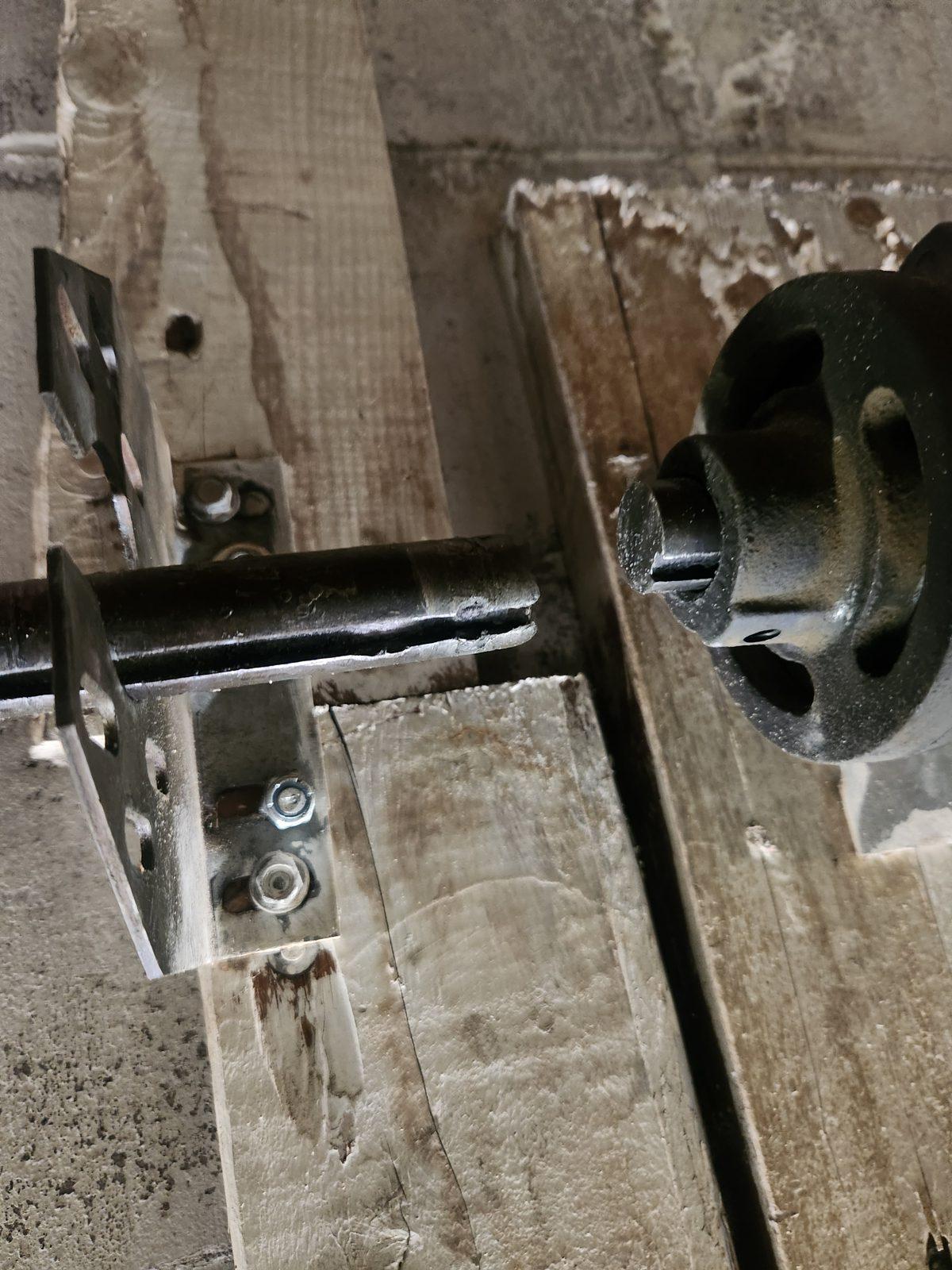
Why springs break like this
A torsion spring is a piece of steel that gets twisted and untwisted every single time the door moves. Standard springs are rated around 10,000 cycles. That sounds like a lot until you do the math on a commercial setting: a shop door cycling twenty or thirty times a day burns through 10,000 cycles in about a year and a half. Metal fatigue does the rest. The break is almost always sudden — the door works in the morning and is a dead weight by lunch.
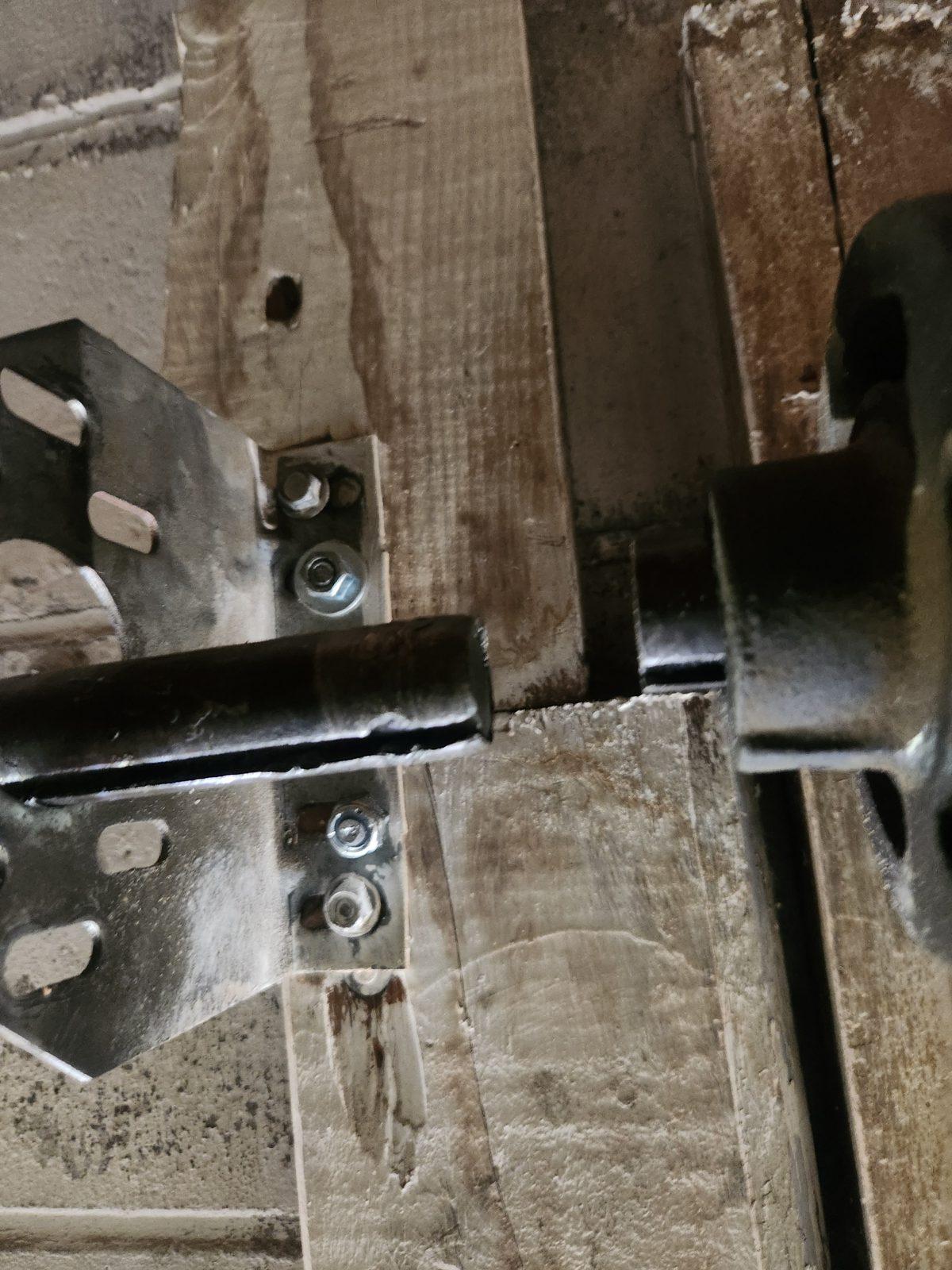
How to recognize it on your own door
Look up at the shaft above the door opening. If you can see a gap of an inch or two splitting what should be one continuous coil of spring, it has snapped. Other signs: the door feels enormously heavy on the manual release, the opener strains or gives up partway, or you heard a single loud bang from the garage — that bang is the spring letting go, and it is loud enough that people regularly mistake it for something hitting the house.
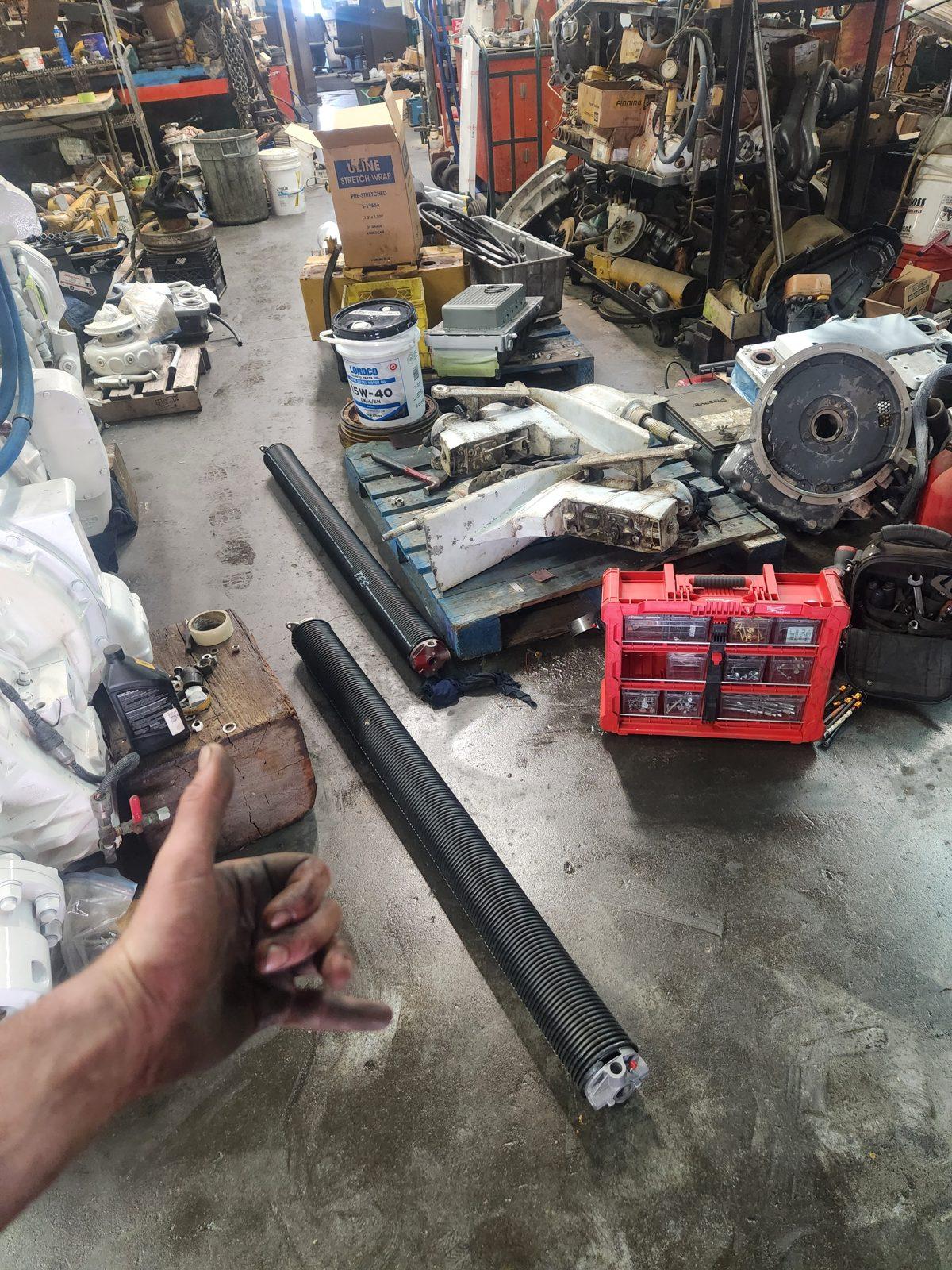
What not to do
Do not keep running the opener — with the spring gone it is lifting the door’s full weight, which burns out gears and can bend the top panel. And do not try to wind a replacement yourself; a loaded torsion spring stores enough energy to cause serious injury, which is why we wrote up whether you can replace a spring yourself honestly, and why the answer for most people is no. If you are wondering whether the door is usable in the meantime, short answer: not safely.
A broken spring repair is a same-day job for us in most of Metro Vancouver — we carry the common sizes on the truck. Call 778-873-7282 and describe what you see; we can usually confirm it is the spring over the phone.