Emergency Garage Door Repair Abbotsford — Spring Failure and Sudden Door Drop
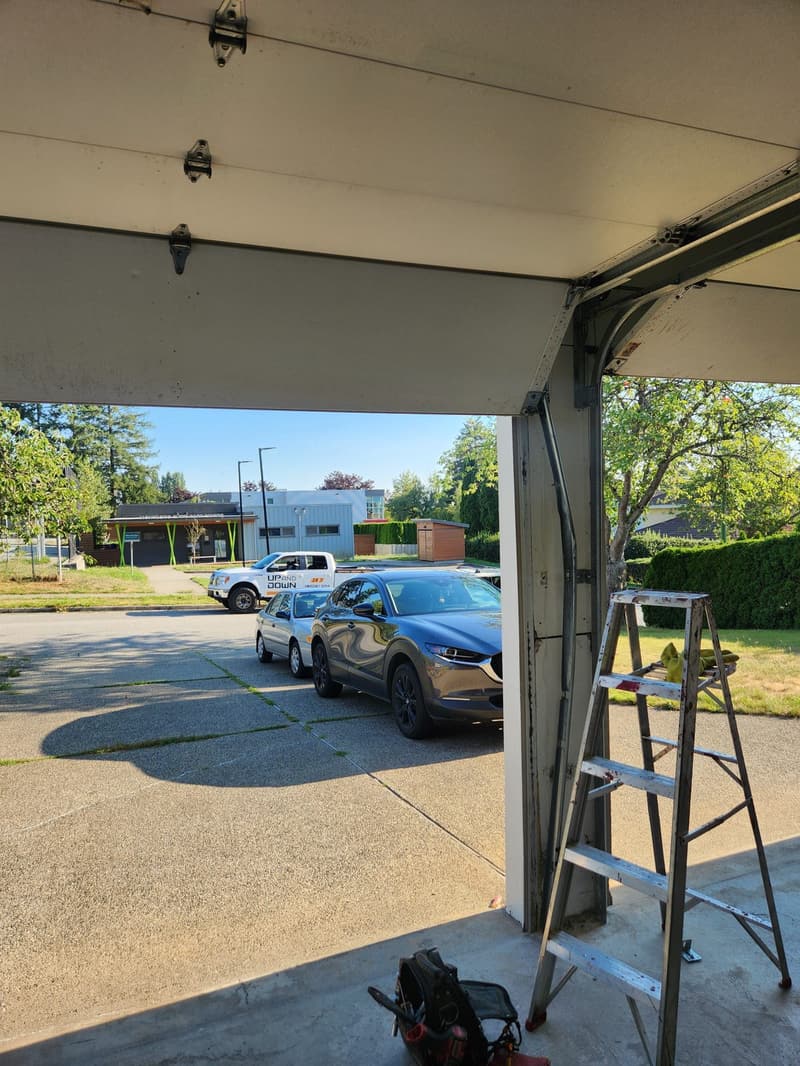
Torsion springs are the most common point of failure in residential garage doors across Abbotsford, particularly in older neighbourhoods like Mill Lake and Clearbrook where homes from the 1980s and 1990s still use original hardware. These springs counterbalance the door’s weight, typically ranging from 150 to 250 pounds for a standard double-door setup. When a spring breaks, the door can drop suddenly—sometimes with violent force—posing a serious safety risk. Attempting to operate the door manually or with the opener after a spring failure often results in further damage to the tracks, rollers, or panels. Technicians responding to these calls prioritize securing the door in place before replacing the spring with a correctly rated unit, matched to the door’s height, width, and material. Using the wrong spring tension can lead to premature wear or imbalance, so exact specifications are critical.
Cable Snarls and Off-Track Doors
Steel lifting cables work in tandem with torsion springs to raise and lower the door smoothly. In Abbotsford’s wet climate, especially during fall and winter months, moisture accelerates corrosion on these cables, particularly where they pass through the bottom brackets or drum assemblies. A frayed or snapped cable can cause one side of the door to lag, pulling the door off its vertical tracks. This is frequently seen in homes near the Sumas River floodplain or along South Fraser Way, where damp conditions persist. When a door comes off track, it often binds against the jamb or hangs at an angle, making manual operation impossible and risking panel damage. Repair involves realigning the door within the tracks, inspecting for bent rollers or damaged track sections, and replacing the cable assembly with galvanized or stainless steel alternatives suited to the local environment.
Opener Malfunctions During Power Events
Abbotsford experiences periodic power fluctuations due to grid load during extreme weather—such as the windstorms that sweep through the Fraser Valley in late autumn or the occasional ice buildup on lines near Highway 1. These events can damage garage door openers, particularly the logic board or motor capacitor. A common symptom is the door moving only a few inches before reversing, or not responding at all to the remote or wall console. Technicians diagnose these issues by checking voltage at the opener unit, inspecting the drive gear (often nylon, which strips under strain), and testing the safety sensors for misalignment or water ingress. In homes with older chain-drive models—still prevalent in subdivisions like Clayburn or Aberdeen—replacing worn sprockets or adjusting chain tension may restore function without needing a full unit replacement.
Sensor and Safety System Failures
Modern garage doors rely on photoelectric sensors mounted near the floor to prevent closing on obstructions. In Abbotsford’s agricultural zones, such as east of Townline Road or along Marshall Road, dust, pollen, and debris from nearby fields frequently accumulate on these sensors, causing false obstruction readings. Similarly, condensation inside the sensor housings during humid spring months can lead to intermittent faults. When sensors fail, the door will refuse to close, often flashing the opener light in a specific pattern to indicate the issue. Cleaning the lenses, checking wire integrity for rodent damage (common in rural-adjacent properties), and verifying alignment with a laser level are standard corrective actions. If the sensors are beyond repair, replacement units must be compatible with the opener’s brand and model to ensure proper communication.
Panel Damage from Impact or Stress
While less frequent than mechanical failures, damaged door panels constitute a valid emergency when they compromise security or weather sealing. In Abbotsford, impacts from vehicles—common in narrow driveways of older homes in areas like Bradner or Poplar—can dent or crack steel or aluminum panels. Wood doors, still found in heritage-style properties near the Trethewey House Historic Site, may split or warp due to moisture exposure. A damaged panel can prevent the door from sealing properly, allowing water ingress or reducing insulation value. Depending on the extent, repairs may involve panel replacement, reinforcement with steel backing, or, in severe cases, full door section replacement. Matching the original panel’s profile, gauge, and finish is essential for both function and aesthetic consistency, especially in neighbourhoods with strict architectural guidelines.
Frequently Asked Questions
What qualifies as an emergency garage door repair? An emergency involves situations where the door is inoperable, poses a safety hazard, or leaves your home unsecured—such as a broken spring, snapped cable, door off track, or complete opener failure during a power event. These issues require immediate attention to prevent injury, property damage, or vulnerability to intruders or weather.
Can I operate my garage door manually if the spring is broken? No. Attempting to lift the door manually after a spring failure is extremely dangerous due to the sudden loss of counterbalance. The door can fall rapidly, causing serious injury. Always disengage the opener and keep the door in the down position until a technician secures and repairs it.
How do I know if my garage door cables need replacement? Look for visible fraying, rust, or uneven tension when the door is in motion. If one side of the door moves slower than the other or the door appears crooked during operation, the cables may be compromised. Do not use the door—have it inspected immediately to avoid a sudden failure.
Also worth a look: garage door repair in Abbotsford.