Services
Locations
📞 (778) 873-7282
Home / Blog / Why Your Garage Door Bangs When Opening and How to Fix It

Why Your Garage Door Bangs When Opening and How to Fix It

Learn what causes a garage door to bang when opening, how to identify worn parts, and which fixes are safe for DIY versus when to call a pro.

Call (778) 873-7282
Licensed & insured
Open 24 hours
Based in Richmond
5-star rated

A banging noise when your garage door opens is usually caused by worn or misaligned rollers, loose hardware, or a door that’s binding in the tracks. The sound happens when the door jerks or jumps as it moves, often because the rollers aren’t tracking smoothly or the door panel is shifting sideways under tension. You’ll hear a loud clunk or bang at the same point in the travel each time—typically near the top or bottom of the opening cycle—and may see the door shake or lurch as it happens. Start by checking the rollers for flat spots, cracks, or missing bearings, and look for loose bolts on the hinges, track brackets, or roller shafts. If the door binds when you lift it manually, that’s a sign of track misalignment or roller failure.

Worn or Damaged Rollers
Rollers are the small wheels that ride inside the vertical and horizontal tracks. Over time, the nylon or steel casing can crack, bearings seize, or the wheel develops a flat spot from constant pressure. When a roller fails, it can’t roll smoothly, so the door lifts unevenly and slams into the track or jumps ahead, creating a bang. Inspect each roller by looking for visible wear, spinning them by hand to check for roughness, and listening for grinding. Nylon rollers are quieter but degrade faster in UV exposure; steel ones last longer but can rust. Replace any roller that wobbles, doesn’t spin freely, or shows damage—this is a safe DIY task if you have the right tools and the door is secured.
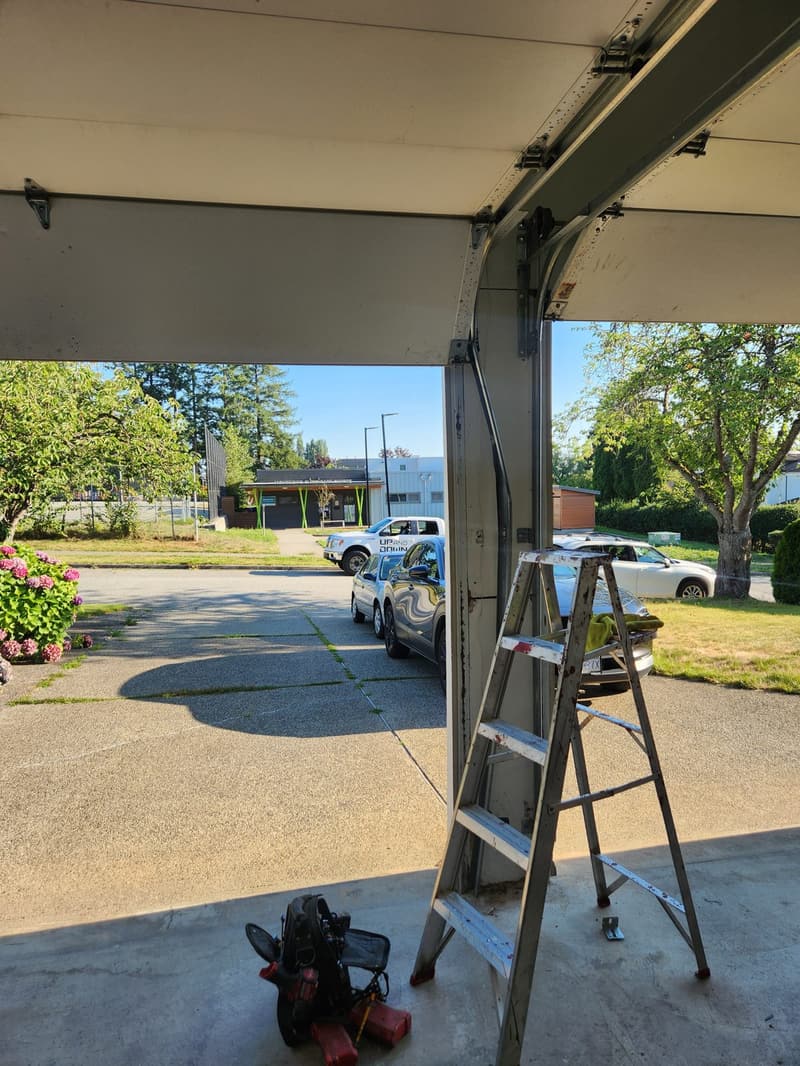
garage door technician on a ladder servicing a home door
Garage door technician on a ladder servicing a home door.

Loose Hardware on Hinges and Brackets
The hinges that connect door panels and the brackets that hold the tracks to the framing can loosen from vibration over time. When these bolts work loose, the door shifts slightly as it moves, causing it to hit the track or bind before snapping into place. Check all hinge bolts between panels and the lag screws securing the vertical and horizontal track brackets to the wall and ceiling. Use a socket wrench to tighten them—but don’t over-torque, as this can strip the wood or distort the track. If holes are stripped, fill them with wood glue and matchsticks or use longer screws. This is a routine maintenance check most homeowners can do safely.

Track Misalignment or Damage
The vertical and horizontal tracks must be parallel and properly spaced for the rollers to ride smoothly. If a track gets bent from impact, or the brackets loosen and let it drift inward or outward, the rollers will bind or jump the gap. Look for gaps between the roller and track, or signs of rubbing on the track’s inner flange. Use a level to check that the vertical tracks are plumb and the horizontal track slopes slightly back toward the garage. You can sometimes tap a bent section back with a rubber mallet, but if the track is creased or severely twisted, it needs replacement. Adjusting track alignment is DIY-friendly if you’re careful, but never force a bent track—it can snap under tension.

Door Panel Issues
Sometimes the bang comes from the door panel itself, not the hardware. If a panel is warped from moisture damage or impact, it can shift sideways as it lifts, causing the rollers to bind or the edge to catch on the track. This is more common in older wood doors or uninsulated steel doors in humid climates. Look for uneven gaps between panels as the door moves, or visible bowing in a section. You might also notice the door sticks at one point when operated by hand. Warped panels usually can’t be repaired and need replacement—this isn’t a DIY fix because removing and reinstalling panels requires managing spring tension and door weight.

When It’s the Springs (and Why You Shouldn’t Touch Them)
If the bang happens only when the door is opening and sounds like a loud snap or thump from above the door, it could be a torsion spring issue. A broken or slipping spring doesn’t provide smooth lift, so the door jerks as the opener strains to move it. You might see a gap in the spring coil, hear a bang when it breaks, or notice the door feels extremely heavy and won’t stay up. Torsion springs store immense energy—releasing it suddenly can cause serious injury or death. Never attempt to adjust, remove, or inspect torsion springs yourself. Same goes for extension springs with safety cables missing or frayed. This is strictly a professional job.

What You Can Safely Check Yourself
You can inspect rollers, tighten hinge and bracket bolts, and look for track damage or panel warping without tools beyond a wrench, level, and flashlight. Lubricate rollers, hinges, and bearing plates with silicone-based garage door lube—not WD-40—to reduce noise and wear. Operate the door manually after disconnecting the opener to feel for binding or roughness. If the door moves smoothly by hand but bangs only when the opener runs, the issue may be the opener’s force setting or drive gear—but start with the door mechanics first. If anything feels uncertain, especially around springs or cable drums, stop and call a technician.

Frequently Asked Questions
### Can lubricant fix a banging garage door?
Lubrication helps if the noise is from dry rollers or hinges, but it won’t fix a bang caused by worn parts, loose bolts, or track misalignment. If lubricating doesn’t reduce the noise within a day or two, inspect for physical damage or looseness.

Is it safe to open and close the door if it bangs?
Occasional use is usually safe if the door still opens and closes fully, but avoid using it if the bang is accompanied by jerking, sticking, or the door not staying put. Continued use can worsen the damage or cause a sudden failure.

How often should I inspect my garage door for issues like this?
Check rollers, hinges, and track brackets every six months, especially before winter. Look for wear, tighten loose bolts, and lubricate moving parts. Catching issues early prevents bigger problems and extends the life of your door.

Stuck door? Let's get it moving.

One call, a clear price, and the job done right — 24/7 across Metro Vancouver.

📞 Call (778) 873-7282