Services
Locations
📞 (778) 873-7282
Home / Blog / Why Your Garage Door Opener Is Making Noise and What to Check

Why Your Garage Door Opener Is Making Noise and What to Check

Common causes of noisy garage door openers: worn rollers, loose hardware, chain tension, and motor issues. Call (778) 873-7282.

Call (778) 873-7282
Licensed & insured
Open 24 hours
Based in Richmond
5-star rated

A noisy garage door opener usually means something is worn, loose, or out of alignment. The sound often starts as a squeak or rattle and gets worse over time. Ignoring it can lead to premature failure of parts or unsafe operation. Here’s how to diagnose the most common sources of noise and what you can safely check yourself.

Worn or Dry Rollers
Rollers guide the door along the tracks and take on constant friction. Steel rollers with worn bearings or dry nylon rollers can produce a grinding or squealing sound, especially during movement. If the noise is rhythmic and matches the door’s travel, inspect the rollers for visible wear, flat spots, or missing bearings. Nylon rollers are quieter than steel but still need occasional lubrication. Do not lubricate nylon rollers with petroleum-based products—use a silicone-based spray instead. Steel rollers benefit from a light oil on the bearing, but avoid getting lubricant on the track surface. If rollers are cracked, seized, or wobble excessively in the shaft, they need replacement. This is a DIY task if you have the right tools and can secure the door, but never attempt to remove rollers if the door is under tension.
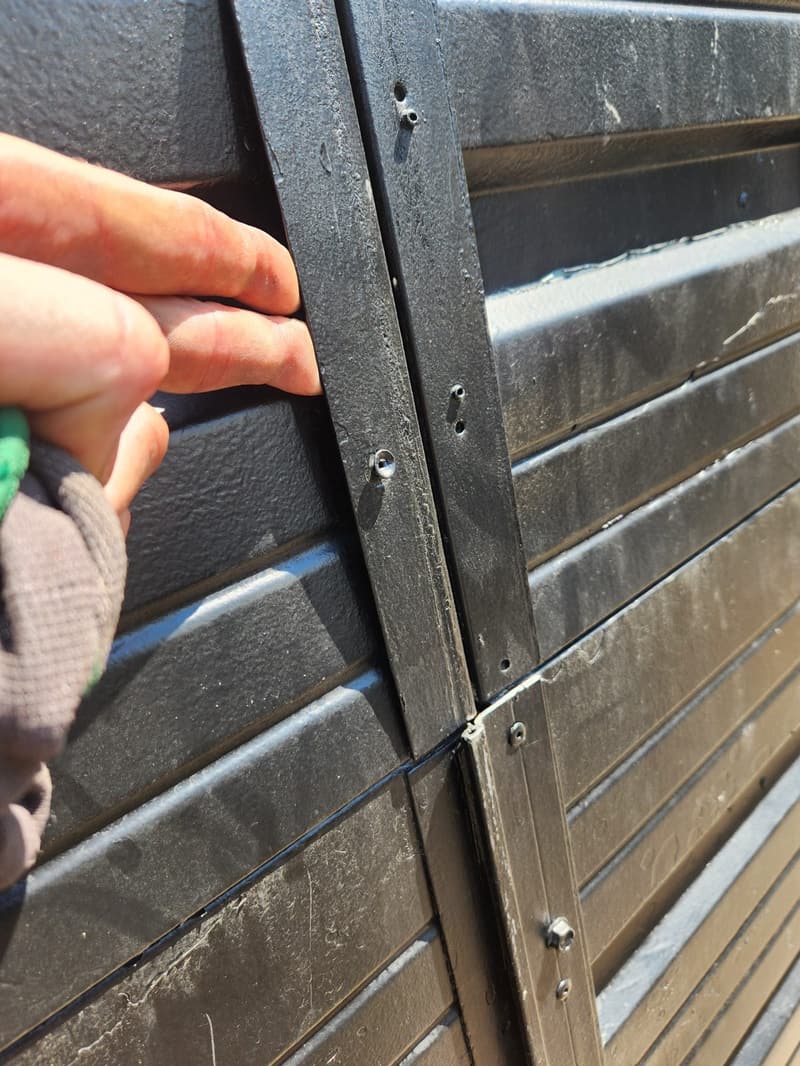
garage door panel and fastener repair
Garage door panel and fastener repair.

Loose Hardware
Vibration from daily operation loosens nuts, bolts, and screws over time. A rattling or vibrating noise, particularly when the door starts or stops, often comes from loose track brackets, hinge screws, or the opener’s mounting bolts. Check all visible fasteners on the door and tracks. Use a socket wrench to snug them—do not overtighten, as this can strip holes or bend thin metal. Focus on the top roller brackets and the opener’s rail connections to the ceiling. If holes are stripped, they may need larger screws or reinforcement. This is a safe DIY check, but if the door sags or tracks are bent, stop and consult a technician.

Chain or Belt Tension and Condition
Chain-drive openers make a slapping or clicking noise when the chain is too loose or has stiff links. A tight chain can whine or bind. Belt-drive units may squeak if the belt is misaligned, worn, or contaminated with oil. To check chain tension, disconnect the opener and manually move the door halfway. The chain should have about 1/4 inch of deflection midway between the sprocket and the idler pulley. Too much slack causes slapping; too little strains the motor. Look for rust, kinks, or frozen links in the chain. Belts should be free of cracks, fraying, or glazing. Lubricate the chain lightly with a garage door-specific lubricant—never use WD-40 as a primary lubricant. Adjusting tension requires accessing the adjustment nut on the trolley; if you’re not confident, leave it to a pro. Never attempt to adjust a chain while the opener is connected to power.

Motor and Gear Issues
A grinding or humming noise from the opener unit itself often indicates worn motor gears or a failing capacitor. If the door moves slowly or strains to lift, the motor may be struggling. Internal gears are plastic and can strip under load, especially if the door is unbalanced or obstructed. You might hear a motor run but the door doesn’t move, or it moves in jerks. This is not a DIY repair—opening the motor housing risks electric shock and voids any remaining warranty. If the opener is over 10–15 years old, gear wear is common. Test by disconnecting the door and trying to lift it manually; if it’s heavy or uneven, the problem may be the door, not the opener. But if the door moves freely and the motor still grinds, the opener likely needs replacement or professional servicing.

Door Balance and Spring Condition
An imbalanced door forces the opener to work harder, creating strain noises. To test balance, disconnect the opener and lift the door halfway. It should stay put without drifting up or down. If it falls or rises, the springs are likely worn or incorrectly tensioned. Torsion springs (mounted above the door) and extension springs (along the sides) store dangerous amounts of energy. Never attempt to adjust, remove, or inspect them yourself. A sudden release can cause serious injury or death. If the door is unbalanced, stop using the opener and call a technician. This is not a judgment on skill—it’s a safety requirement based on physics.

What You Can Do Safely
Homeowners can safely: inspect rollers for wear, tighten accessible bolts with hand tools, lubricate rollers, hinges, and springs (not tracks) with silicone-based lubricant, check chain/belt tension and condition, and test door balance. Stop if you encounter stripped hardware, bent tracks, or any component under spring tension. Lubricate every 3–6 months depending on use and climate. Coastal areas may need more frequent attention due to salt air.

When to Call a Technician
Call a professional for: spring adjustment or replacement, cable repair, motor/gear servicing, chain tension adjustment if you lack experience, track realignment, or if the door binds during manual operation. Up & Down Garage Doors serves Metro Vancouver and can diagnose and repair noisy openers safely. Reach us at (778) 873-7282.

Frequently Asked Questions

Can I use WD-40 to quiet my garage door?
WD-40 is a water displacer, not a lubricant. It can attract dust and degrade rubber components over time. Use a silicone-based or lithium-based garage door lubricant instead for rollers, hinges, and springs.

Why does the noise only happen when the door is cold?
Metal contracts in cold temperatures, increasing friction in tight spots. Lubricants also thicken, reducing effectiveness. This often points to dry rollers or stiff hinges that need proper lubrication for low-temperature performance.

Is a noisy opener dangerous?
Not usually, but it can signal advancing wear. Ignoring noise may lead to sudden failure—like a broken spring or snapped cable—which creates real hazards. Address noise early to prevent secondary damage.

Stuck door? Let's get it moving.

One call, a clear price, and the job done right — 24/7 across Metro Vancouver.

📞 Call (778) 873-7282