Up and Down Garage Doors provides Metro Vancouver homeowners with precise lubrication specifications — lithium grease for torsion springs and bearing plates, PTFE spray for roller stems and hinge pins, and zero lubricant on tracks — matched to coastal humidity and temperature cycles that accelerate wear on 0.250-inch wire torsion springs and 11-ball nylon rollers.
Garage Door Lubrication Guide — What to Lubricate and With What
Torsion Springs — Lithium Grease Only
Apply white lithium grease (NLGI Grade 2) to the full length of torsion springs. Standard residential springs use 0.250-inch or 0.262-inch oil-tempered wire (ASTM A229) wound to 10,000-cycle or 25,000-cycle ratings. Lithium grease penetrates between coils and resists washout from Fraser Valley rain and salt air. Do not use silicone spray — it lacks the film strength to prevent coil-to-coil friction on high-cycle springs.
Roller Stems and Hinge Pins — PTFE Dry Spray
Use PTFE (Teflon) dry lubricant on 11-ball nylon rollers (standard 2-inch diameter, 7/16-inch stem) and 14-gauge hinge pins. PTFE repels dust and grit that accumulate in Richmond and Delta garages near construction zones. Avoid oil-based products — they attract debris that scores roller races within weeks.
Bearing Plates and Center Bracket — Lithium Grease
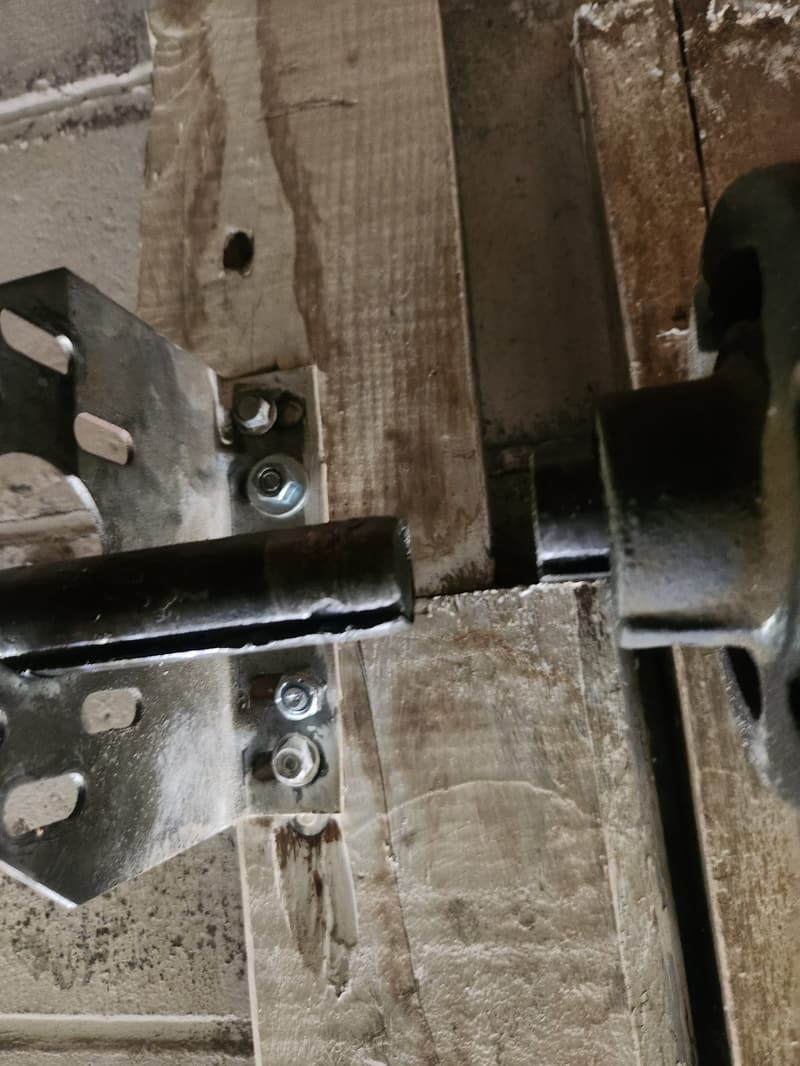
Grease the stationary cone bearing plate and center bracket where the spring anchor bracket bolts to the header. These are 1/2-inch Grade 5 carriage bolts with lock nuts. Lithium grease prevents galling on the 1-inch OD bearing races during 4-season thermal cycling.
Lock Bars and Latch Mechanisms — Silicone Spray
Light silicone spray on slide lock bars and T-handle latch pivots prevents binding without staining weatherstripping. Use sparingly — excess migrates to track surfaces.
What Never to Lubricate
Tracks — Zero Lubricant
Never apply grease, oil, or spray to vertical or horizontal tracks. 12-gauge galvanized track (2-inch width, 0.105-inch wall) relies on clean steel for roller traction. Lubricant causes rollers to hydroplane, increasing opener load by 15-20% and accelerating nylon roller wear. Clean tracks with mineral spirits and a lint-free rag only.
Opener Chain or Belt — Factory Lubrication Only
LiftMaster 8500W jackshaft openers and 84504R/84505R belt-drive units ship with factory-applied PTFE-impregnated chain lube or dry belt coating. Adding aftermarket lubricant voids warranty and attracts grit that shears belt cogs or stretches chain pitch beyond 1/2-inch spec.
Weatherstripping and Bottom Seal
Petroleum-based products degrade PVC bulb seals (standard 3-inch U-profile) and TPE bottom astragals within one winter freeze-thaw cycle. If friction noise occurs, replace the seal — do not lubricate.
Lubrication Intervals for Metro Vancouver Climate
Coastal Standard: Every 6 Months
Richmond, Ladner, Tsawwassen, and White Rock homes face salt-laden air and 1,600 mm annual rainfall. Inspect and re-lubricate springs, rollers, and bearings in March and September. Humidity above 80% washes lithium grease from spring coils within 180 days.
Inland Standard: Every 12 Months
Burnaby, Coquitlam, Port Coquitlam, Maple Ridge, and Surrey (north of 88th Ave) see lower salt exposure. Annual lubrication in April aligns with post-winter inspection. Temperature swings from -5°C to 30°C cause metal fatigue on 0.250-inch wire springs — fresh grease reduces stress risers.
High-Cycle Doors: Every 3 Months
Doors exceeding 4 cycles/day (common in multi-family buildings near SkyTrain corridors) need quarterly lithium grease on springs and PTFE on rollers. 25,000-cycle springs (0.262-inch wire, 2.0-inch ID) reach fatigue limit faster without consistent film maintenance.
Component Specifications Reference
Torsion Spring Wire Diameters and Cycle Ratings
Standard residential: 0.250-inch wire (10,000 cycles), 0.262-inch wire (25,000 cycles), 0.273-inch wire (50,000 cycles). Inside diameter typically 1.75-inch or 2.0-inch. Length calculated by IPPT (inch-pounds per turn) formula — never guess. Wrong wire diameter causes premature failure within 2,000 cycles.
Roller and Hinge Gauge Standards
11-ball nylon rollers: 2-inch OD, 7/16-inch stem diameter, 14-gauge (0.083-inch) stem wall. 10-ball steel rollers: 2-inch OD, 7/16-inch stem, 12-gauge (0.109-inch) stem wall — require lithium grease on bearings, not PTFE. Hinges: 14-gauge galvanized steel (0.075-inch) for residential, 13-gauge (0.090-inch) for high-lift conversions.
Cable and Drum Specifications
7×19 galvanized aircraft cable: 1/8-inch diameter (standard 7ft door), 5/32-inch diameter (8ft+ doors). Cable drums: 4-inch cable groove diameter for 1/8-inch cable, 5.25-inch for 5/32-inch. Never lubricate cables — oil wicks into strands and masks broken wires during visual inspection.
FAQ
Can I use WD-40 on garage door springs?
No. WD-40 is a water-displacing solvent, not a lubricant. It strips factory oil from 0.250-inch torsion spring wire, leaving bare metal that rusts within weeks in Metro Vancouver humidity. Use NLGI Grade 2 white lithium grease only.
Why do my rollers still squeak after spraying silicone?
Silicone spray lacks the shear stability for 11-ball nylon roller bearings under 150-lb door loads. PTFE dry film bonds to the 7/16-inch stem surface and survives the 2-inch roller rotation cycle. Silicone flashes off within days.
How do I know if my springs are 10,000 or 25,000 cycle?
Measure wire diameter with a micrometer: 0.250-inch = 10,000 cycles, 0.262-inch = 25,000 cycles. Color-coding on cones (red/white/blue) indicates wind direction, not cycle rating. If unknown, assume 10,000-cycle and lubricate every 6 months.
Should I lubricate the opener rail on a belt-drive unit?
No. LiftMaster 84504R and 84505R belt drives use a steel-reinforced polyurethane belt that runs dry. Lubricant causes belt tooth skip on the 36-tooth sprocket. Clean rail with dry cloth only.
What lubricant works best for cold Vancouver winters?
White lithium grease rated to -40°C maintains film on torsion springs at -10°C (common in January). PTFE spray functions to -30°C on rollers. Avoid “all-temperature” aerosols that thin below 0°C.
My door has a jackshaft opener — any special lubrication needs?
LiftMaster 8500W and 87504-267 jackshaft units couple directly to the torsion tube. Lubricate the torsion springs and bearing plates per schedule. Do not grease the coupler or motor output shaft — sealed bearings are maintenance-free.
Get Professional Lubrication Service
Proper lubrication extends spring life by 30-40% and reduces opener amp draw. Up and Down Garage Doors technicians carry calibrated torque wrenches for 1/2-inch carriage bolts, micrometers for wire verification, and NLGI Grade 2 lithium grease rated for coastal BC conditions. Call 778-873-7282 or request a quote online.
Get an instant quote | Richmond repair service | LiftMaster 8500W jackshaft service | Belt-drive opener maintenance | Contact us