When a garage door won’t open and the issue traces to the bottom bracket, the problem is usually mechanical binding or component failure at the point where the lift cable attaches to the door’s bottom corner. The bottom bracket is a steel fitting that secures the lift cable to the door panel and guides it toward the drum on the torsion shaft. If this bracket is bent, rusted, or the cable has come off its groove, the door will bind during travel, often stopping just off the floor. You might hear a scraping noise, see the door sag on one side, or notice the cable is loose or frayed near the bottom. This is not a torsion spring issue—those are mounted above the door and under high tension—but the bottom bracket system is still critical for safe, smooth operation.
Garage Door Wont Open Bottom Bracket Problem — Common Causes of Bottom Bracket Failure
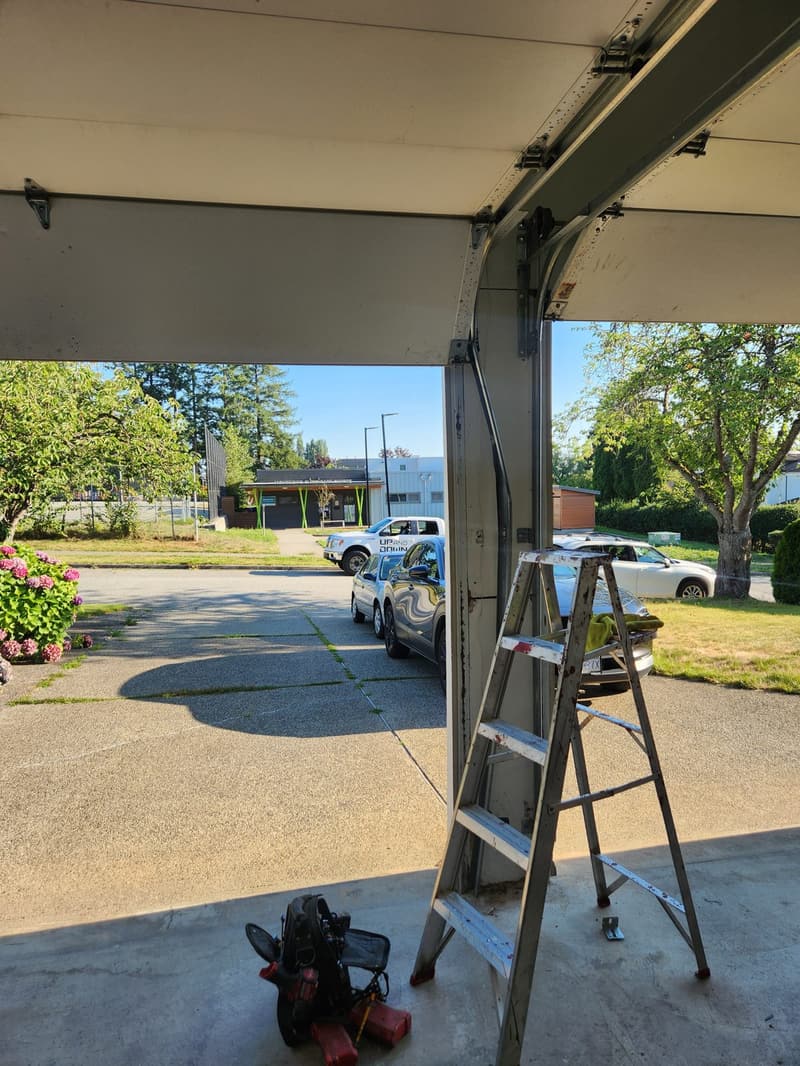
The most frequent cause is cable derailment. Over time, the lift cable can wear, fray, or jump out of the groove on the bottom bracket due to misalignment, impact damage (like backing into the door), or corrosion. If the bracket itself is bent from a hit, it changes the cable’s angle, causing it to rub against the door track or jamb. Rust is another factor, especially in coastal Metro Vancouver areas where salt air accelerates corrosion. A rusted bracket may crack or seize, preventing the cable from moving freely. In some cases, the wooden door panel around the bracket can rot or split, allowing the bracket to pull loose under load.
What the Failure Looks and Sounds Like
Visually, inspect the bottom corners of the door where the cables attach. If one side is lower than the other, or the cable is slack while the other side is tight, that indicates a bottom bracket issue on the slack side. Look for the cable sitting outside the bracket’s groove or lying against the door face. You might see rust streaks, a bent bracket, or splintered wood around the mounting screws. Audibly, a binding cable often produces a loud scraping or grinding noise as the door tries to move—this is the cable dragging on the track or bracket. The door may jerk or stall repeatedly in the same spot during opening or closing.
What Homeowners Can Safely Check Themselves
You can perform a visual inspection with the door fully closed. Disconnect the opener by pulling the emergency release cord (this is safe and allows manual movement). Then, lift the door halfway by hand—it should stay put if the springs are balanced. If it drops or rises, that’s a spring issue, not a bracket problem. Focus on the bottom brackets: check for cable position, bracket alignment, rust, and damage to the door jamb or panel. Never attempt to adjust or remove the bottom bracket while the door is under load or the cable is tight. If the cable is off the drum or frayed, do not try to rewind it—this risks sudden release of tension.
When This Is Not a DIY Repair
Replacing a bottom bracket or lift cable requires releasing tension from the torsion springs to slacken the cable system. Even with the door open, the springs store significant energy that can cause severe injury if mishandled. A slipping winding bar or incorrect cable reinstallation can lead to the door crashing down. While inspecting and identifying the problem is safe for homeowners, the actual repair—cable replacement, bracket realignment, or panel reinforcement—should be done by a technician who understands spring tension and cable tracking. If the door panel is rotted around the bracket, that may require partial panel replacement or reinforcement, which also involves handling the door’s weight.
Preventive Maintenance Tips
Lift cables and bottom brackets benefit from occasional lubrication with a silicone-based spray on the cable where it contacts the bracket—avoid grease, which attracts dirt. Inspect the brackets twice a year for rust or misalignment, especially after winter. Keep the door tracks clean and aligned so the door doesn’t pull sideways, which stresses the bottom corners. If you notice the door closing unevenly or hear new noises, address it early—small cable fraying is easier to fix than a complete derailment or broken bracket under load.
Frequently Asked Questions
Can I fix a bottom bracket problem without touching the springs?
No. To safely remove or adjust the bottom bracket or lift cable, the tension must be removed from the lift system, which requires disengaging the torsion springs. Even with the door open, the springs are loaded and must be unwound using proper tools and training. Attempting this without spring knowledge risks sudden cable release or door collapse.
Why does my garage door cable keep coming off the bottom bracket?
This usually happens due to misalignment—either the bracket is bent, the door track is skewed, or the door panel has shifted, causing the cable to exit its groove. Impact damage from vehicles or gradual rust weakening the bracket can also allow movement. A frayed cable may develop a snag that catches and pulls it out of position.
Is a noisy bottom bracket dangerous if the door still works?
A scraping or grinding noise indicates metal-on-metal contact, which accelerates wear on the cable and bracket. Left unchecked, this can lead to cable failure, which may cause the door to drop suddenly or become jammed. While not an immediate collapse risk like a broken spring, it should be repaired to prevent further damage and ensure reliable operation.
For professional assessment and repair of garage door bottom bracket issues in Metro Vancouver, contact Up & Down Garage Doors at (778) 873-7282.