If your garage door won’t open and you suspect a hinge issue, start by checking the hinges along the door panels for visible damage, bending, or seized pins. A hinge problem typically prevents the door from flexing properly as it rolls along the tracks, causing binding or sudden resistance during operation. You might hear grinding, popping, or see the door jerk unevenly when attempting to open it. This guide explains how hinges fail, what you can safely inspect, and when professional help is necessary.
Common Hinge Failure Modes
Garage door hinges connect the door panels and allow them to pivot as the door moves along the vertical and horizontal tracks. Over time, hinges can wear out due to metal fatigue, corrosion from moisture, or impact damage. The most frequent failure is the hinge pin seizing inside the knuckle, which stops the panel from rotating relative to its neighbor. In other cases, the hinge leaf itself cracks or bends, especially on older steel doors or after a vehicle impact. When a hinge seizes, the door cannot articulate correctly, causing it to bind against the track or rollers.
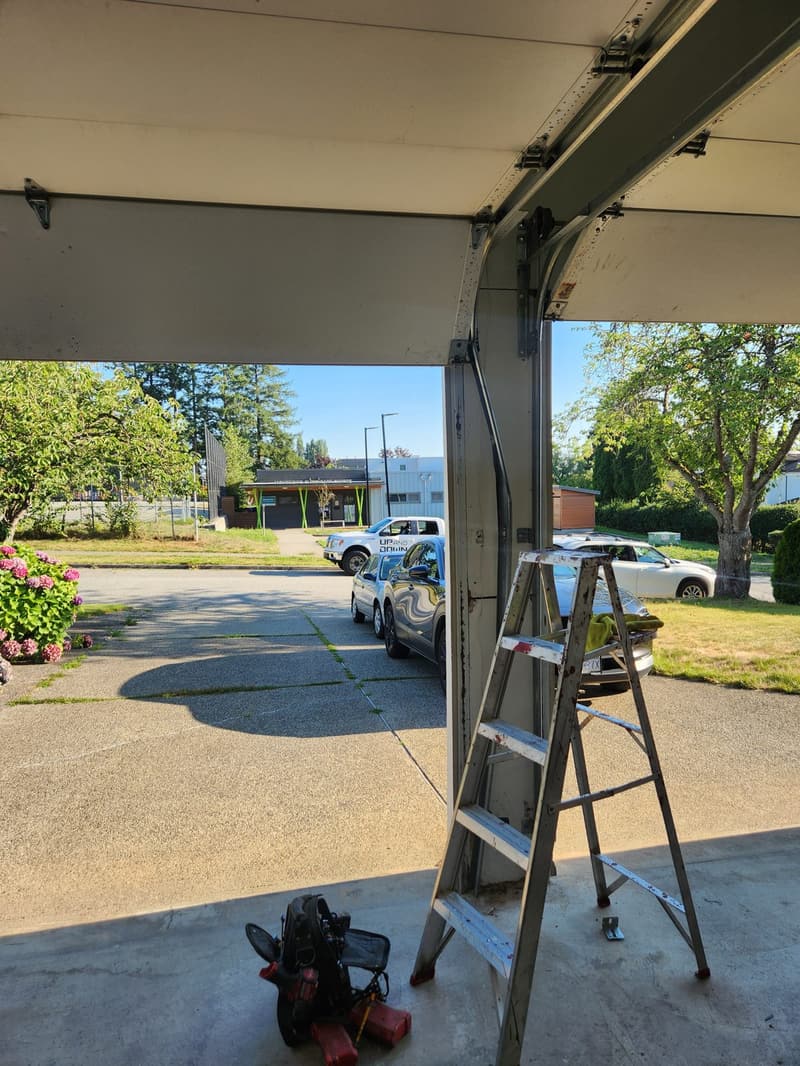
Visual Signs of Hinge Damage
Inspect each hinge while the door is closed. Look for gaps between the hinge leaves, rust buildup around the pin, or visible deformation in the metal. A seized pin often shows no movement when you try to wiggle the door panel side-to-side at that hinge point. If the hinge leaf is bent, you may notice the door panel sitting unevenly or rubbing against the track. Pay special attention to the top and bottom hinges on each section, as they bear the most stress during operation. Use a flashlight to check hard-to-see areas, particularly on insulated doors where hinges are recessed.
Audible and Operational Clues
A failing hinge often produces a loud popping or snapping sound as the door moves, indicating the pin is suddenly slipping or jumping within the knuckle. You might also hear grinding if the hinge is rubbing against the track or roller shaft due to misalignment. Operationally, the door may stall at a specific point during opening or closing, requiring extra force to move past that spot. If the door opens manually with difficulty but the opener strains or trips its overload sensor, hinge binding is a likely contributor.
What You Can Safely Check Yourself
You can perform a basic hinge inspection without tools beyond a flashlight and gloves. Manually lift the door to the midpoint and release it—if it stays put, the springs are likely balanced, isolating the hinge as the suspect. Examine each hinge for loose mounting screws; tighten them if they’ve backed out, but do not over-torque and strip the wood or metal backing. Lubricate the hinge pins with a silicone-based spray if they appear dry or corroded, but avoid grease which attracts dirt. Never attempt to remove a hinge pin or disassemble a hinge while the door is under tension.
When Hinge Issues Indicate Bigger Problems
Sometimes what seems like a hinge problem is actually a symptom of another issue. For example, a door that’s come off its track will put lateral stress on the hinges, mimicking hinge failure. Similarly, broken cables or failing rollers can cause the door to bind, transferring abnormal loads to the hinges. If multiple hinges show damage or the door appears skewed in the opening, stop operation and inspect the tracks, rollers, and lift cables before focusing solely on hinges.
DIY Limits and Safety Warnings
Tightening loose hinge screws or lubricating accessible pins is within the scope of a careful homeowner. However, if the hinge is structurally damaged—cracked, severely bent, or the pin is immobile despite lubrication—replacement requires removing the door panel from the track. This process involves managing the door’s weight and risks sudden movement if the springs are improperly restrained. More critically, never attempt to adjust, remove, or repair anything connected to the torsion spring system, including the spring itself, cables, or bottom bracket. These components store lethal energy and must only be handled by trained professionals using proper winding bars and safety protocols.
Frequently Asked Questions
### Can a single bad hinge prevent the door from opening at all?
Yes, if a hinge is completely seized or the door panel is bent enough to jam in the track, it can stop the door from moving. Even one faulty hinge creates enough resistance to stall the opener or make manual operation extremely difficult.
Is it safe to lubricate hinges with WD-40?
WD-40 is a water displacer, not a long-term lubricant, and can attract dust and grit that worsen hinge wear. Use a silicone-based lubricant designed for garage doors instead, applying it sparingly to the pin and knuckle area.
How often should garage door hinges be inspected?
Inspect hinges at least twice a year, ideally in spring and fall, as part of routine door maintenance. Look for wear, tighten loose fasteners, and lubricate moving parts to prevent premature failure.
For persistent hinge problems or if you’re unsure about the door’s balance or spring condition, contact Up & Down Garage Doors at (778) 873-7282 for a professional assessment.