Coastal salt air corrodes garage door hinges by depositing chlorides that break down steel protective layers, leading to rust, increased friction, and eventual seizure. This is especially true in Metro Vancouver neighbourhoods near the ocean or Fraser River where salt-laden winds are frequent.
How Salt Causes Corrosion on Steel Hinges
Salt particles in the air settle on metal surfaces and attract moisture, forming an electrolyte solution. Chloride ions penetrate protective coatings like paint or zinc plating, triggering electrochemical rust. Unlike inland areas, the constant dampness and salt exposure prevent the metal from drying, accelerating oxidation. Over time, rust builds up in the hinge knuckles and around the pin, increasing resistance to movement.
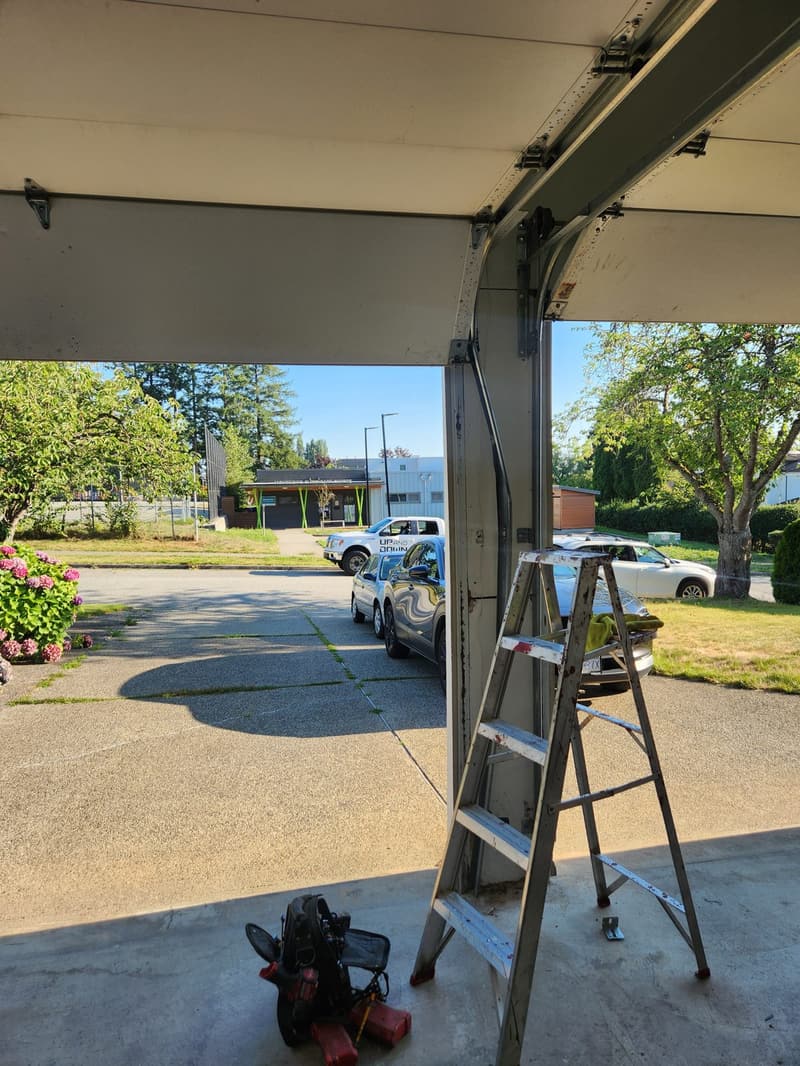
What Corroded Hinges Look and Sound Like
Visually, you’ll see orange-brown rust streaks emanating from the hinge joints, especially on the bottom sections where spray accumulates. The hinge may appear swollen or flaky. Audibly, a corroded hinge produces a loud, grinding squeak during operation—different from the dry, metallic chirp of unlubricated hinges. As rust worsens, the door may bind or jerk at specific points in its travel.
What Homeowners Can Safely Inspect
With the door closed and disconnected from the opener, visually inspect each hinge for rust buildup, particularly around the pin and mounting screws. Try to wiggle the door panel side-to-side at each hinge; excessive play indicates worn holes or corrosion. Spraying a small amount of silicone-based lubricant on the hinge pin can temporarily reduce noise if rust is light, but it won’t reverse existing corrosion.
When Lubrication Isn’t Enough
If the hinge is seized, rusted through, or the screw holes are stripped due to corrosion, lubrication will not restore function. Forcing a stuck hinge can bend the door panel or damage the track. Severely corroded hinges must be replaced. This involves supporting the door panel, removing the old hinge, and installing a new one with proper galvanized or stainless steel hardware—never reuse old screws in corroded wood.
Why You Shouldn’t DIY Spring-Related Work
While hinge replacement is manageable for experienced DIYers, never attempt to adjust, remove, or repair torsion springs or cables. These components are under extreme tension and can cause serious injury or death if mishandled. If your door feels heavy, won’t stay open, or the springs show rust, contact a technician. Spring work requires specialized tools and training.
Preventive Measures for Coastal Homes
Choose hinges made from 304 or 316 grade stainless steel for new installations—they resist salt corrosion far better than standard galvanized steel. Apply a marine-grade corrosion inhibitor to hinges every six months, focusing on the pin and knuckle areas. Rinse the door with fresh water monthly during dry seasons to remove salt buildup, but avoid pressure washing, which can force water into crevices.
Frequently Asked Questions
### Can I paint over rusted hinges to stop the corrosion?
Painting over rust only hides it temporarily; the corrosion continues underneath and will eventually lift the paint. You must remove loose rust with a wire brush or sandpaper, apply a rust converter, then prime and paint—but replacement is often more reliable.
How often should I inspect my garage door hinges if I live near the ocean?
At minimum, inspect hinges twice a year—before and after the wet season. In high-exposure areas like West Vancouver or Richmond near the shore, check quarterly for early signs of rust or stiffness.
Are nylon hinges a good alternative to metal in salty air?
Nylon hinges resist corrosion but are not suitable for most residential garage doors; they lack the strength to handle repeated cycling and UV degradation can make them brittle over time. Stick with properly coated or stainless steel metal hinges.
For professional assessment or hinge replacement in coastal areas, contact Up & Down Garage Doors at (778) 873-7282.