Services
Locations
📞 (778) 873-7282
Home / Blog / Why Does a Garage Door Keypad Break? Common Causes and Fixes

Why Does a Garage Door Keypad Break? Common Causes and Fixes

Learn why garage door keypads fail, from wiring issues and weather damage to button wear and signal interference. Call (778) 873-7282.

Call (778) 873-7282
Licensed & insured
Open 24 hours
Based in Richmond
5-star rated

A garage door keypad breaks when its internal circuit is disrupted, buttons fail to register input, or wireless communication with the receiver is lost. This stops the door from opening or closing via code entry, forcing reliance on remotes or manual operation. The failure often starts intermittently—sometimes working, sometimes not—before ceasing entirely. Understanding the root cause helps determine whether it’s a simple fix or requires professional service.

Weather Exposure and Moisture Ingress
Outdoor keypads are sealed against rain and humidity, but gaskets degrade over time, especially in BC’s wet climate. When moisture enters the housing, it corrodes circuit boards and causes short circuits or erratic behavior. You might notice the keypad working on dry days but failing during or after rain. Condensation inside the cover is a clear sign. Wiping the exterior won’t help if moisture is trapped inside. If corrosion is visible on the battery terminals or circuit board, the keypad likely needs replacement—cleaning won’t restore reliability once oxidation spreads.
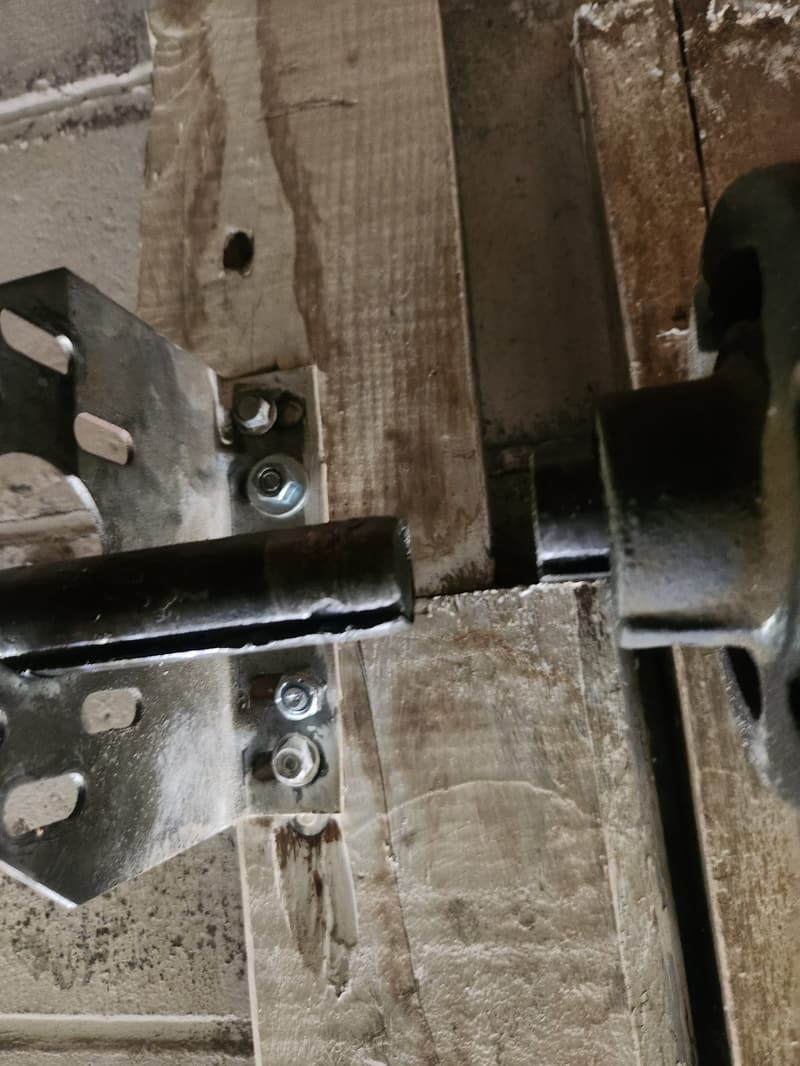
broken torsion spring showing the gap where it snapped
Broken torsion spring showing the gap where it snapped.

Button Wear and Contact Failure
Repeated pressing wears down the rubber keypad buttons and the underlying contact points. Over time, certain numbers—often the most-used ones like 1, 2, 3, or your code digits—stop responding. You may need to press harder or multiple times to get a signal. This isn’t just dirt; it’s physical degradation of the conductive pad beneath the button. Cleaning with isopropyl alcohol might temporarily improve response if grime is blocking contact, but worn contacts require keypad replacement. No amount of lubrication fixes this internal wear.

Wiring Issues and Physical Damage
Wired keypads connect to the garage door opener via low-voltage wires running through the wall jamb. These wires can be nicked during installation, chewed by rodents, or broken from door vibration. If the keypad is completely dead—no lights, no response—check for visible wire damage where it enters the wall or opener. Loose terminals at the opener end can also interrupt the circuit. Tightening screws on the terminal block may restore function, but frayed or severed wires need splicing or replacement. Never bypass safety checks when working with opener wiring.

Battery Failure and Power Issues
Most wireless keypads run on batteries, typically a 12V or 9V block. Weak batteries cause intermittent operation, dim backlighting, or failure to transmit a signal—even if the keypad lights up when pressed. Cold temperatures reduce battery output, making failures more common in winter. Replace batteries annually as preventive maintenance. If the keypad has no power at all, check for correct battery orientation and clean terminals. Some models have a fuse on the circuit board; a blown fuse looks like a broken filament inside a small glass tube and requires board-level repair or replacement.

Signal Interference and Receiver Problems
Sometimes the keypad works fine, but the garage door doesn’t respond. This points to a communication breakdown between the keypad and the opener’s receiver. Nearby electronics—LED lights, security systems, or even LED bulbs in the garage—can emit radio frequency noise that drowns out the keypad’s signal. Try turning off suspect devices to test. If the issue started after installing new lighting, that’s a likely culprit. Repositioning the opener’s antenna or adding a ferrite choke to the wiring may help, but persistent interference often requires upgrading to a keypad on a different frequency.

When to Replace vs. Repair
Surface cleaning, battery changes, and tightening wire connections are safe DIY steps. If the keypad responds inconsistently after these, or if buttons are physically stuck or missing, replacement is the most reliable fix. Internal circuit board damage, corroded traces, or sealed-unit failures aren’t field-repairable for most homeowners. Never attempt to open a sealed keypad housing expecting to resolder components—moisture protection is compromised upon reassembly. For wired models, if wiring runs inside the wall and is damaged, fishing new cable may require professional access.

Safety Note: What Not to Touch
While keypad repair is low-risk, never confuse it with garage door opener servicing. The opener contains high-tension torsion springs that store lethal energy. Adjusting or removing these springs without proper tools and training can cause sudden release, resulting in serious injury or death. Similarly, the opener’s drive mechanism (chain, belt, or screw) and motor capacitors pose risks. If your issue involves the door not moving at all, strange noises during operation, or visible spring wear, stop and contact a technician. Keypad failure is electronic; door movement failure is mechanical—and often hazardous.

Frequently Asked Questions
### Can I use any keypad with my garage door opener?
No. Keypads must match the opener’s brand and frequency or be explicitly listed as compatible. Universal keypads exist but require correct programming and may not support all features like temporary codes or backlighting.

Why does my keypad work sometimes but not others?
Intermittent operation usually points to weak batteries, moisture-related corrosion, or loose wiring. Start by replacing batteries and inspecting for water inside the housing before assuming deeper electrical issues.

Is it safe to clean the keypad with water?
Avoid spraying water directly. Use a slightly damp cloth for surface cleaning, then dry immediately. For internal contact cleaning, use isopropyl alcohol on a cotton swab—never pour liquid into the keypad housing.

Stuck door? Let's get it moving.

One call, a clear price, and the job done right — 24/7 across Metro Vancouver.

📞 Call (778) 873-7282