Freezing temperatures cause the metal in a garage door bottom bracket to contract, which can lead to misalignment, increased friction, and premature wear on the rollers and track. The bottom bracket secures the lifting cable to the door panel and transfers tension from the springs to lift the door. When temperatures drop below freezing, especially in Metro Vancouver’s damp cold, moisture can freeze in the bracket’s pivot points or around the cable anchor, restricting movement. This added resistance forces the opener motor to work harder, often resulting in strain, overheating, or tripped breakers. You may notice the door moving slower than usual, making grinding or popping noises near the bottom corners, or stopping partway during operation. In some cases, the door may appear uneven when closed, with one side sitting lower than the other due to the bracket shifting or the cable slipping slightly on its anchor.
How Freezing Temperatures Affects Garage Door Bottom Bracket
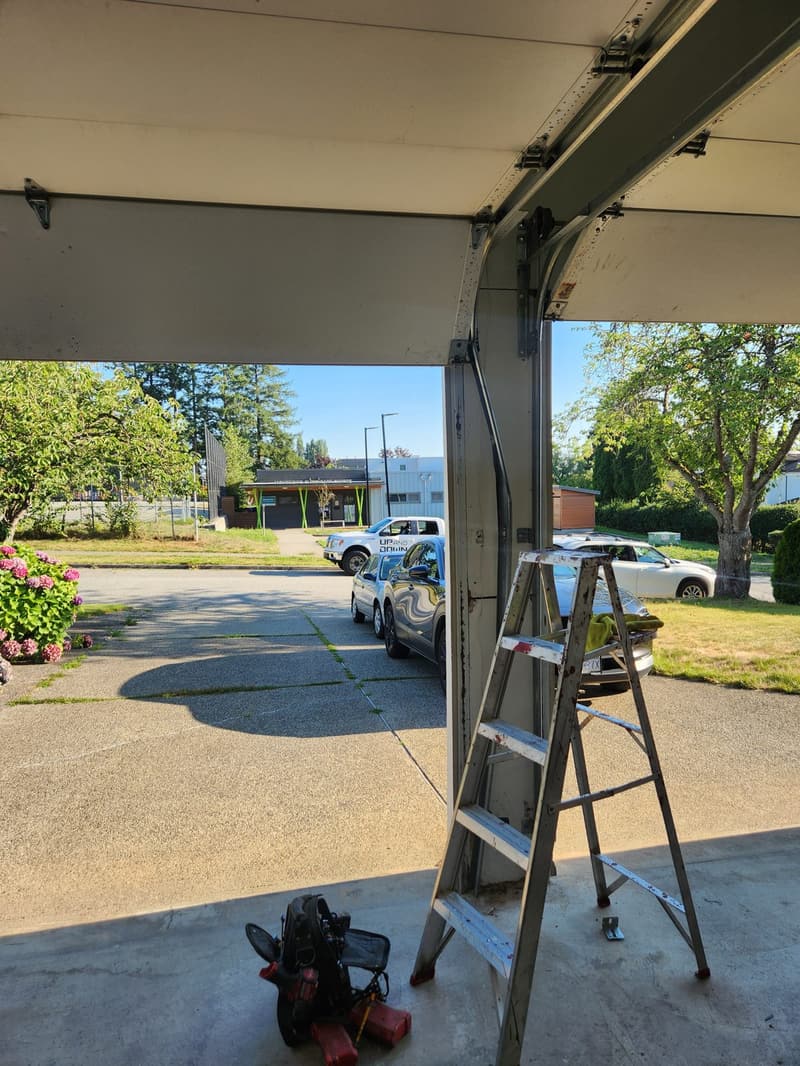
Signs of Freeze-Related Bottom Bracket Issues
Listen for unusual noises during operation: a sharp clicking or ticking near the bottom of the door often indicates the cable is catching or jumping on a frozen anchor point. A grinding sound may suggest the roller is binding due to bracket misalignment. Visually, check if the door hangs unevenly when closed — use a level on the bottom seal to confirm. Frost or ice buildup around the bracket or cable is a clear sign moisture has penetrated and frozen. If the door reverses immediately after hitting the floor, it could be due to increased resistance triggering the opener’s safety sensors, not necessarily a sensor fault.
What Homeowners Can Safely Inspect
You can visually examine the bottom brackets from inside the garage with the door closed. Look for ice, frost, or rust accumulation around the bolt and cable connection. Check that the bolt is snug but not over-tightened — excessive torque can distort the bracket. Spin the rollers by hand (with the door disconnected from the opener) to feel for roughness or flat spots that may have developed from prolonged strain. Lubricate the roller stems and hinges with a silicone-based lubricant rated for low temperatures — never use WD-40 as a lubricant, though it can displace moisture before applying proper lube. Avoid spraying lubricant directly on the cable or bracket pivot if ice is present; thaw the area first naturally or with a hairdryer on low heat.
When to Stop and Call a Professional
Do not attempt to loosen, tighten, or remove the bottom bracket bolt if the cable is under tension. The lifting cable is connected to the bottom bracket and runs up to the cable drum, which is under constant torque from the torsion springs. Disturbing this assembly without proper tools and training can result in sudden cable release or spring failure, both of which pose serious injury risks. If the door is stuck, uneven, or making loud snapping noises, disconnect the opener and manually lift the door — if it feels excessively heavy or binds at the bottom, stop and contact a technician. Any adjustment involving the bracket’s position relative to the track or cable tension requires releasing spring tension, which is not a DIY task.
Long-Term Effects of Repeated Freeze-Thaw Cycles
Repeated freezing and thawing accelerates fatigue in the steel bracket and can cause micro-cracks around stress points like the bolt holes. Over time, this may lead to bracket failure, where the bolt shears or the bracket cracks, allowing the cable to detach. A detached cable can cause the door to fall suddenly or become jammed in the track. Additionally, prolonged misalignment wears the rollers unevenly and can bend the track, increasing repair complexity. In strata buildings, where multiple doors share similar exposure, proactive inspection before winter reduces emergency calls and extends hardware life.
Frequently Asked Questions
### Can I use a heat lamp or space heater to thaw a frozen bottom bracket?
Applying direct, concentrated heat to the bottom bracket is not recommended. Rapid temperature changes can cause uneven expansion in the steel, increasing the risk of micro-fractures. Instead, allow the garage to warm naturally or use a low-setting hairdryer from a safe distance to gently thaw ice. Never use open flames or propane heaters near garage door components due to fire and seal damage risks.
Does lubricating the bottom bracket prevent freezing?
Lubrication helps reduce friction but does not prevent moisture from freezing inside the bracket assembly. A silicone-based lubricant applied to the pivot point and roller stems can minimize ice adhesion and protect against rust, but it won’t stop water from entering. The best prevention is keeping the garage interior above freezing and ensuring weather seals are intact to limit moisture intrusion.
Why does my garage door opener strain more in cold weather even if the door moves freely by hand?
If the door lifts smoothly when disconnected from the opener but strains under motor power, the issue may lie in the opener’s drive gear or belt, not the bottom bracket. Cold temperatures thicken grease in the opener’s rail and reduce battery efficiency in backup systems. However, increased resistance from a partially frozen bracket or icy roller can still contribute — so both the door hardware and opener should be evaluated if performance drops in winter.
For professional assessment of cold-weather garage door performance, contact Up & Down Garage Doors at (778) 873-7282.