Services
Locations
📞 (778) 873-7282
Home / Blog / How Long Does a Garage Door Safety Sensor Last?

How Long Does a Garage Door Safety Sensor Last?

Garage door safety sensors typically last 5-10 years. Learn what causes failure, how to test them, and when replacement is needed for Metro Vancouver homes.

Call (778) 873-7282
Licensed & insured
Open 24 hours
Based in Richmond
5-star rated

Garage door safety sensors generally last between 5 and 10 years under normal residential use in Metro Vancouver’s climate. Their lifespan depends on exposure to moisture, physical impact, and electrical stability rather than a fixed expiration date. These sensors, mounted near the floor on either side of the door opening, use an infrared beam to detect obstructions and prevent the door from closing on people, pets, or objects.

How Safety Sensors Work Physically
Each sensor pair consists of a sender and a receiver. The sender emits a low-power infrared beam across the door threshold. The receiver picks up this beam and sends a signal to the garage door opener’s control board indicating the path is clear. If the beam is interrupted—by a person, a tool, or even debris—the receiver stops sending the signal, and the opener refuses to close the door or reverses if already closing. This is a fail-safe design: no beam means no closure.
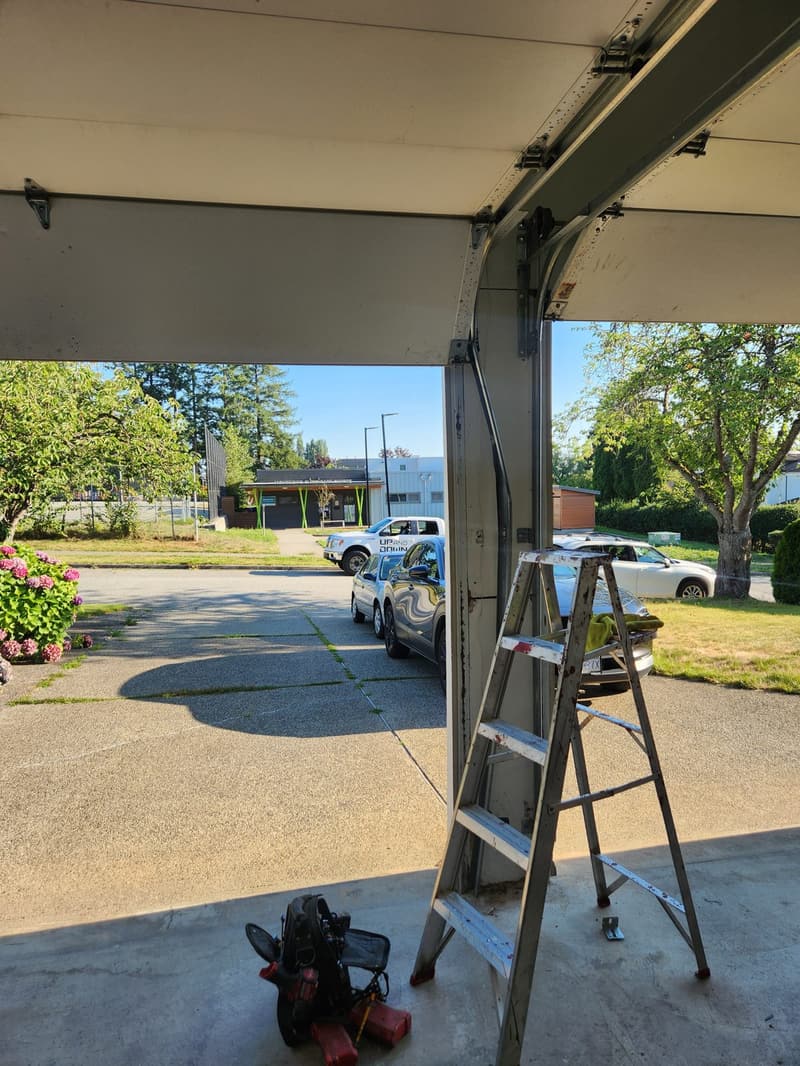
garage door technician on a ladder servicing a home door
Garage door technician on a ladder servicing a home door.

What Causes Sensor Failure Over Time
The most common failure mode is misalignment. Sensors must be precisely aligned; even a slight shift from bumping, settling of the garage frame, or vibration from the door’s movement can break the beam. Moisture ingress is another major factor—rain, condensation, or groundwater can seep into the sensor housing, corroding internal contacts or fogging the lens. Physical damage from lawn equipment, shovels, or vehicle bumpers can crack the housing or knock the sensor off its bracket. Electrical issues, such as power surges or frayed wiring from rodent damage, can also disrupt the signal.

What Failure Looks and Sounds Like
When sensors fail, the garage door opener will typically refuse to close the door. Instead, the door may start to close, then reverse immediately after moving a few inches. The opener’s light will often flash rapidly—commonly 10 flashes—to indicate a sensor fault. You might hear the motor run briefly, then stop and reverse. In some cases, the door won’t respond to the remote or wall button at all for closing, though opening may still work. There is usually no grinding or scraping noise; the failure is electronic and behavioral, not mechanical.

How to Test and Inspect Sensors Yourself
Start by checking the sensor lights. Each unit has a small LED: one should be steadily lit (sender), the other should also be lit when aligned (receiver). If one or both are off or flickering, inspect for dirt, spider webs, or moisture on the lenses. Clean them gently with a dry cloth. Next, verify alignment—both sensors should point directly at each other. Use a level or sight along the top edge to ensure they’re at the same height. Loosen the mounting screws slightly, adjust until both LEDs are solidly lit, then retighten. Check the wiring for visible damage, especially where it enters the sensor or runs along the wall. If the LEDs remain off after cleaning and realignment, the sensors likely need replacement.

When Sensor Replacement Is Necessary
Replace sensors if cleaning and realignment don’t restore solid LED indicators, if the housing is cracked or corroded, or if the wiring is brittle or severed. Sensors are low-voltage devices and safe for homeowners to replace—no special tools or electrical expertise are needed beyond basic wiring matching (typically white to white, black to black, or following color-coded labels). Always disconnect power to the opener before handling wires. After installation, realign the sensors and test the door’s closing function with an obstruction in the beam to confirm it reverses properly.

What Not to DIY: High-Tension Components
While sensor replacement is a safe DIY task, never attempt to adjust, repair, or replace torsion springs, extension springs, cables, or the spring anchor brackets. These components store extreme mechanical energy and can cause severe injury or death if mishandled. If the door is unbalanced, springs are broken, or cables are frayed, stop using the door and contact a professional. Sensors are a safety feature, but they don’t protect against failures in the door’s lifting mechanism.

Frequently Asked Questions
### Can sunlight interfere with garage door safety sensors?
Yes, strong direct sunlight can overwhelm the infrared receiver, causing it to falsely detect an obstruction. This is more common at low sun angles in the morning or evening. Shielding the sensors with a small visor or relocating them slightly (while maintaining alignment) can help.

Do safety sensors wear out even if the door is rarely used?
Yes. Environmental factors like moisture, temperature swings, and corrosion affect sensors regardless of use frequency. A sensor in a damp, unheated garage may fail sooner than one in a dry, temperature-stable space, even with fewer cycles.

Are aftermarket safety sensors compatible with any garage door opener?
Most modern sensors are universal and work with major brands like Chamberlain, LiftMaster, Genie, and Craftsman, but you must match the wiring style and connector type. Check your opener’s model number and consult the sensor manufacturer’s compatibility guide before purchasing.

Stuck door? Let's get it moving.

One call, a clear price, and the job done right — 24/7 across Metro Vancouver.

📞 Call (778) 873-7282