

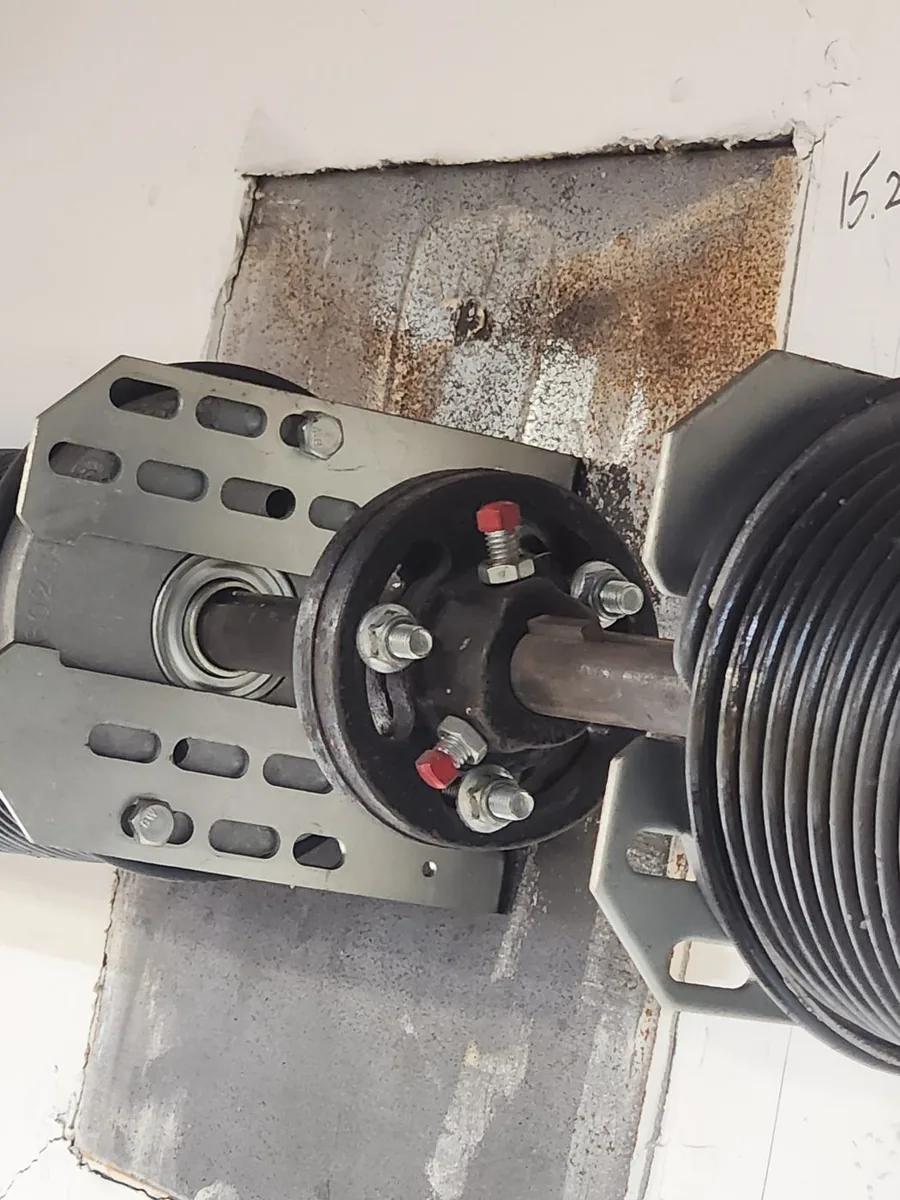
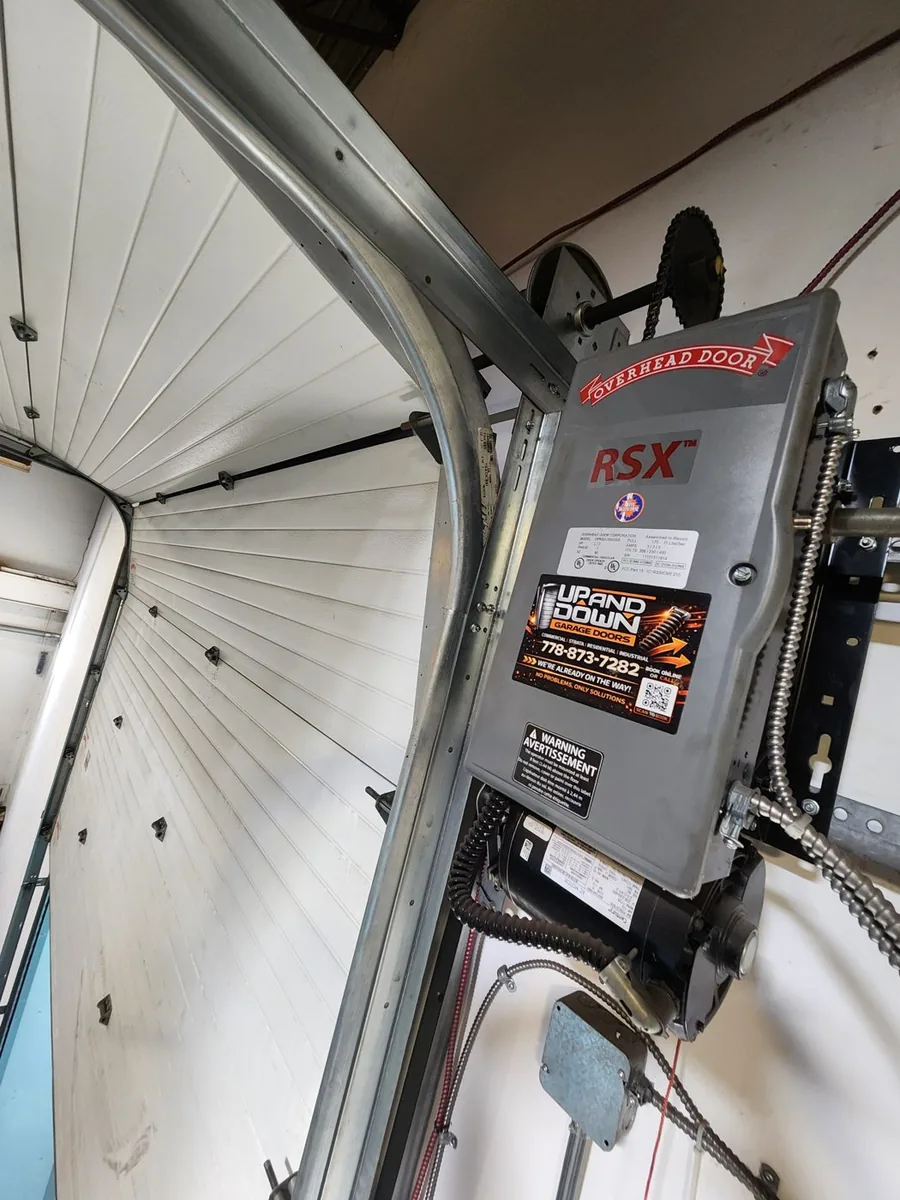
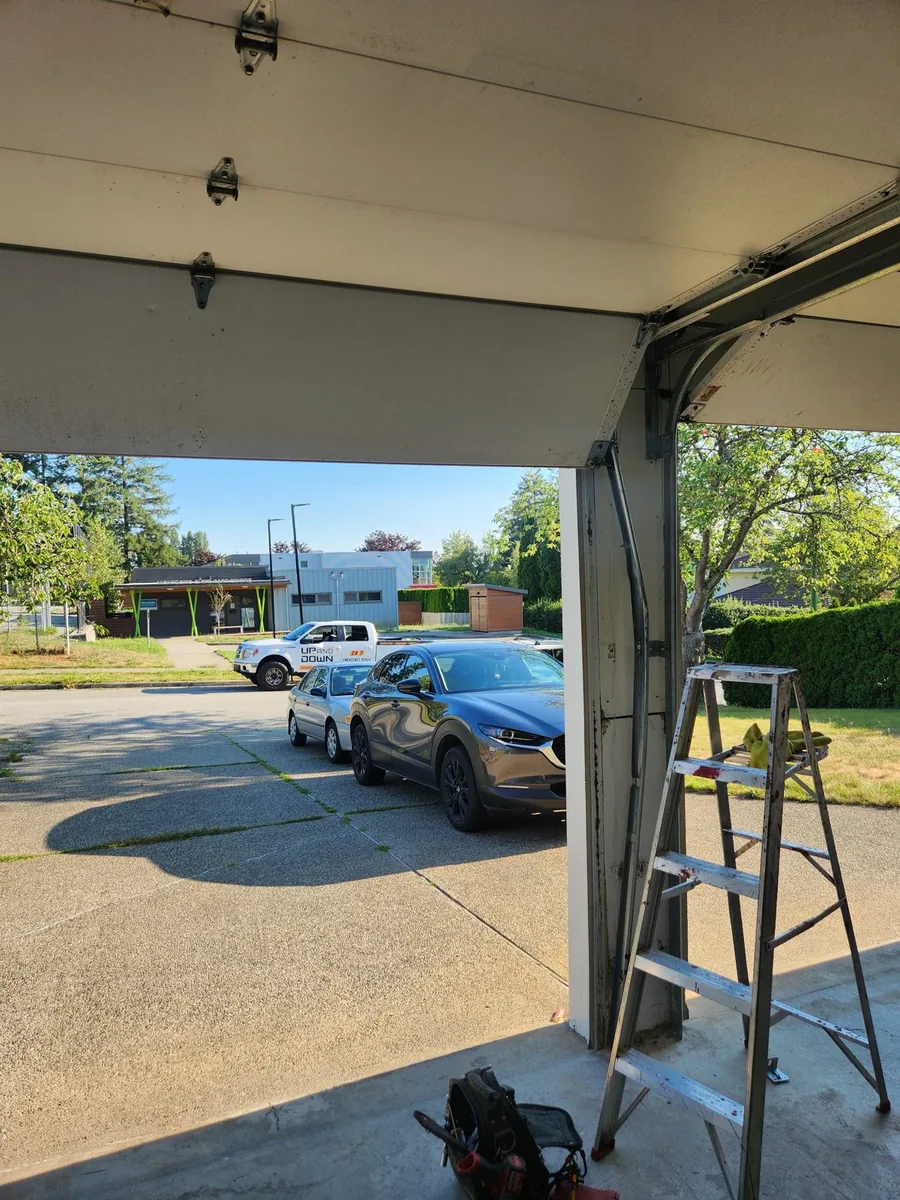
Springs are sized for one number: the weight of your door on the day it was installed. They don't know you painted it, glued faux carriage-house trim to the panels, swapped in a glass section or screwed a storage rack to the track. Every one of those changes the weight the springs have to carry, and the springs never get adjusted to match unless somebody does it on purpose.
Why does added weight matter to garage door springs?
The springs are what lift the door. The opener just moves a door the springs are already holding up. On a properly balanced door, the springs carry nearly all the weight, which is why a working door feels light when you lift it by hand. DASMA, the door manufacturers' association, covers this in its Technical Data Sheet 176: springs are designed for the door's original intended weight, and if weight is added to the sections afterwards, the door "could become unbalanced such that operation is not smooth, possibly even resulting in damaged or broken springs." The same sheet warns that the opener can be "overworked or cease functioning."
Garage doors are heavier than most people guess. DASMA's figure is anywhere from 90 pounds to over 500 pounds. Springs chosen for a door at one weight have no margin for a door that has since got heavier.
What kinds of changes add weight?
- Paint. How much it adds depends on the door and on how many coats have gone on over the years. DASMA's spring sheet (TDS 190) names painting specifically as something occupants do that can push a door past the manufacturer's weight specification.
- Decorative overlays and trim. Carriage-house straps, faux hinges, wood or composite cladding. TDS 176 lists "adding decorative trim of any material type" among the things that can cause trouble.
- Swapping sections. Replacing a solid section with a windowed one, or an uninsulated section with an insulated one, changes the weight of that panel. (This one is our note, not DASMA's.)
- Anything hung on the door or the track. Bike hooks, storage platforms, a ladder rack bolted to the horizontal track. DASMA's advice is that aftermarket accessories for hanging things from garage door track "should be avoided."
The track is a separate problem
Weight hung from the tracks doesn't just load the springs. TDS 176 warns it can make the horizontal track "twist, buckle or deform," which can let the door come out of the track. The tracks are built to guide a moving door, not to act as a shelf. If you've got a storage platform tied into the door track, have it mounted independently of the door and track.
How do I know if my door is out of balance?
DASMA's home-inspection checklist (TDS 167) includes a simple manual test. Only do it if both springs are intact: if a spring is broken, don't operate the door at all. If the door is hard to lift at any point, stop and lower it. With the door closed, disconnect the opener using the emergency release, lift the door by a safe handhold to fully open, then lower it to about halfway and let go. A balanced door stays put. The checklist asks two specific questions: does the door stay fully open, and does it stay "in the partially open position 3-4 feet above the floor?"
- If it drifts down, the springs aren't carrying enough of the weight. That's what you'd expect after weight has been added.
- If it creeps up, there's more spring force than the door needs.
A couple of cautions. DASMA notes that when you disengage an opener, the door may move unexpectedly, so stand clear and keep your fingers away from the section joints. And if anything about the test feels wrong, the checklist's own instruction is to stop and call a trained technician. The test is for noticing a problem, not fixing it. Adjusting springs is technician work: winding bars and a loaded spring injure people.
Can't you just add a turn to the springs?
Sometimes a small adjustment is all a door needs, and sometimes it isn't. The number of turns on a torsion spring is set by the door manufacturer's instructions for that door. DASMA's TDS 190 covers both sides of getting it wrong: too much torque puts extra force on the other counterbalance parts and is a safety issue for the installer, and too little leaves the door drifting down from the open position. If the door now weighs well beyond what the springs were built for, adding turns trades a balance problem for a short spring life. The right fix is a spring set sized for the door as it is today.
For a door whose weight is in question, TDS 190 describes the proper way to find out: a trained technician can weigh it with a scale after the spring system has been disabled. Springs should be sized from that number, not from the old one.
Planning a makeover? Tell us first
If you're thinking about cladding, overlays, a new windowed section or a heavy paint job, it's worth having the door's balance checked before and after, and the springs resized if the door now needs it. The maintenance checklist has the other things worth checking once a year, and how long springs last explains how load and daily use add up.
If the door is already drifting, sagging on one side or making the opener strain, call or text (778) 873-7282, or see spring repair and opener repair. The paint stripe on a spring identifies the spring, not the door it's now carrying. Our post on spring colour codes explains why.
Sources: DASMA Technical Data Sheets #176 "Adding Weight to a Garage Door Assembly" (reaff. 6/19), #190 "Factors Affecting Spring Cycle Life" (reaff. 2/21) and #167 home-inspector checklist (rev. 3/21).