

How a sectional door is put together
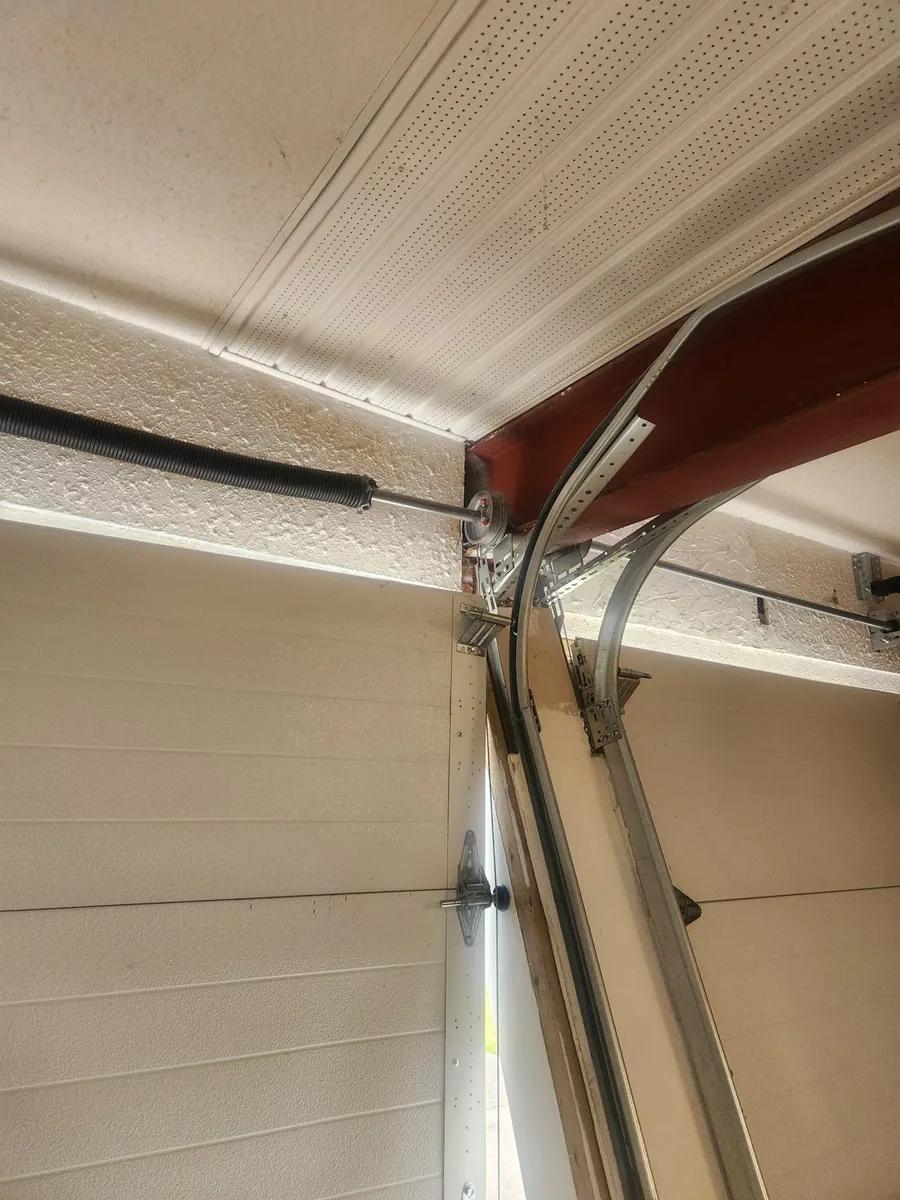
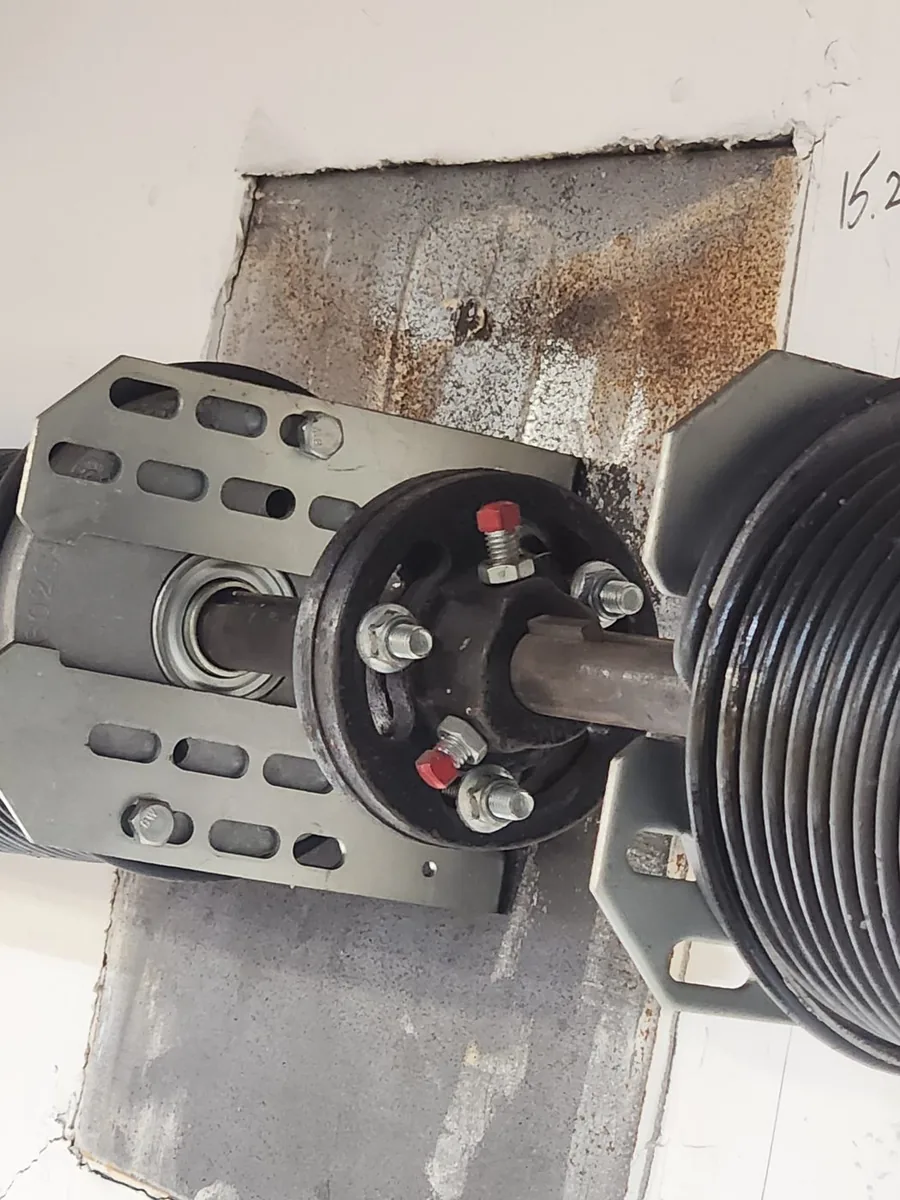
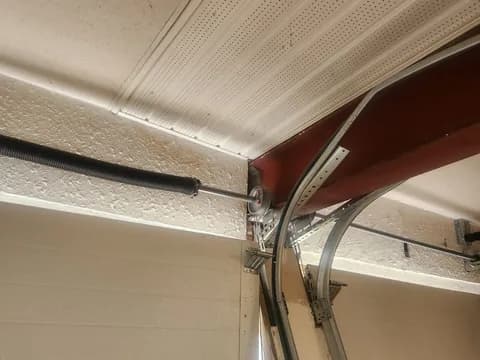
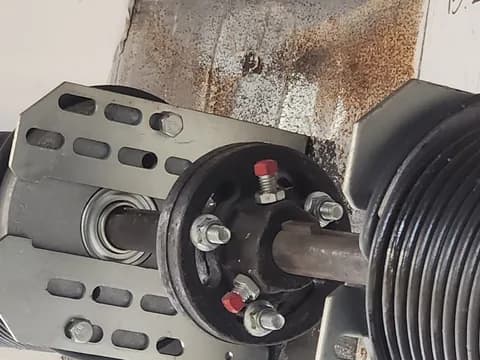
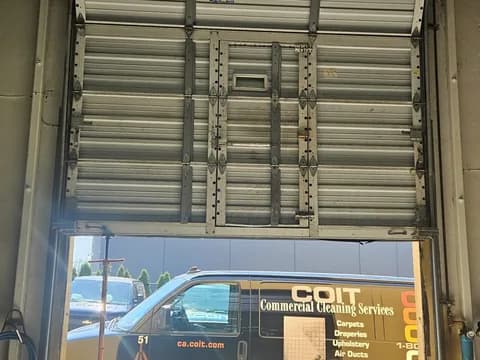
A sectional garage door is four or five panels hinged together, riding on rollers inside a track, with its weight carried by springs through cables and drums. Nearly every service call we run in Metro Vancouver comes down to one of about eight part families. The hinges and rollers let the door bend around the curve. The springs, cables and drums do the lifting. The bearings and plates hold the torsion shaft so it can turn. The struts keep wide panels straight. The seals keep the rain out, which in Richmond and Vancouver is most of the year.
Knowing which family a part belongs to tells you two useful things before you phone anyone: whether the part is under spring tension (and therefore not something to loosen), and what to measure so the replacement is right the first time.
Which parts are safe to handle yourself
Three groups carry stored energy and are off-limits without training: torsion springs and their winding cones, extension springs and their pulleys, and the cables and bottom brackets that those springs pull on. A loose set screw on a cone or a bottom bracket bolt backed out with the spring wound is how people lose fingers. Our page on replacing a spring yourself goes through what actually happens.
Everything else is ordinary bolt-on hardware once the door is closed and the opener is unplugged: hinges away from the bottom, rollers (with the right method), struts, perimeter seals, bottom seals and lubrication. Each part page says plainly which side of that line it falls on.
What to measure before you call
- Springs: wire size from a 10- or 20-coil measurement, inside diameter, length, and which end of the shaft it sits on. The measurement guide shows how, and the spring calculator turns door weight and drum size into a wire size and length.
- Rollers: wheel diameter (2" or 3"), stem length (4", 7" or 7.5") and whether the stem is plain or has a bearing.
- Hinges: the number stamped on the leaf (#1 to #10) and the steel gauge: 14 for most houses, 11 for commercial.
- Cables: diameter (1/8" on most houses, 3/32" on light doors, 5/32" on heavy or commercial) and length from the bottom bracket to the drum with the door down.
- Drums: the model cast into the side, usually 400-8 or 400-12 on a house, D525-144 on a high-lift, 5250-18 on commercial.
- Track: 2" or 3" width, and 12" or 15" radius on the curve.
- Seals: the profile shape (T, bead or bulb) and the width of the retainer channel.
Why we stock generic parts
Most of the hardware on a residential door is interchangeable across brands: a #2 hinge, a 2" nylon roller with a 4" stem or a 1/8" cable fits the same door whether the panels came from Amarr, Hörmann, Raynor or a builder's house brand. That is why the truck carries bins of hardware rather than brand kits, and why most repairs finish in one visit. The exceptions are panels, some weather seal profiles and a few full-view aluminium door parts, which do have to be ordered by brand; those are covered on the doors and openers catalogue.
Our wet-climate notes
Metro Vancouver is hard on hardware. Steel rollers rust at the stem and squeal, bottom seals go hard and split after a few winters of sitting in water, cables fray at the bottom bracket where road salt and standing water meet, and bearings in end plates seize when the grease washes out. Each part page has a section on what the climate does to that particular part and how often to look at it. The short version: a yearly maintenance visit catches most of it, and a proper lubrication twice a year does the rest.
Not sure which part you need?
Send a photo of the part to (778) 873-7282 on WhatsApp or text, or use the contact page. We identify it, bring the right one, and fit it the same visit.
Contact us(778) 873-7282