

Earthquakes Canada counts roughly 300 small earthquakes in southwestern British Columbia every year. Almost none are felt. But on average about once a decade the region gets a damaging crustal quake, and geologists expect a much larger offshore subduction earthquake at some point. When the shaking stops, the garage door is one of the first things people try to use, often because the car is inside and the power is out.
That's exactly when a garage door can hurt someone. A sectional door is held up by springs under heavy tension and guided by steel track bolted to the framing. Shaking can loosen those bolts, pop rollers out of the track or slacken a cable. This guide walks through how to check your garage door after an earthquake, in the right order, using the checklist the door industry itself publishes.
First: your own safety, then the garage
PreparedBC's earthquake advice is to drop, cover and hold on during shaking, then count to 60 before getting up so loose objects have time to settle. Expect aftershocks and drop, cover and hold on each time one hits. Know how to shut off your electrical panel, water and gas, and if the gas is shut off at the meter, don't turn it back on yourself; PreparedBC says only a licensed gas contractor can do that safely.
So before you touch the garage door:
- If you smell gas in the garage, leave it alone and get out. A garage often holds the furnace, water heater or gas meter, and an opener motor can spark.
- Look up. Shelving, bikes on hooks and stored items on ceiling racks shift in a quake. Check nothing is hanging over the door or opener.
- If the walls around the door opening are cracked, racked or pulled away, don't operate the door. The track is fastened to that framing.
DASMA's guidance says the same about the structure: if you aren't sure the framing around the door is sound, call a building contractor or design professional first.
The visual check, with the door closed
DASMA, the North American door manufacturers' association, publishes a technical data sheet (TDS-174) written for homeowners checking a sectional garage door after high wind, seismic activity or flooding. It splits the job into a visual inspection and then an operational one. The visual part comes first, with the door down and a flashlight and step stool on hand:
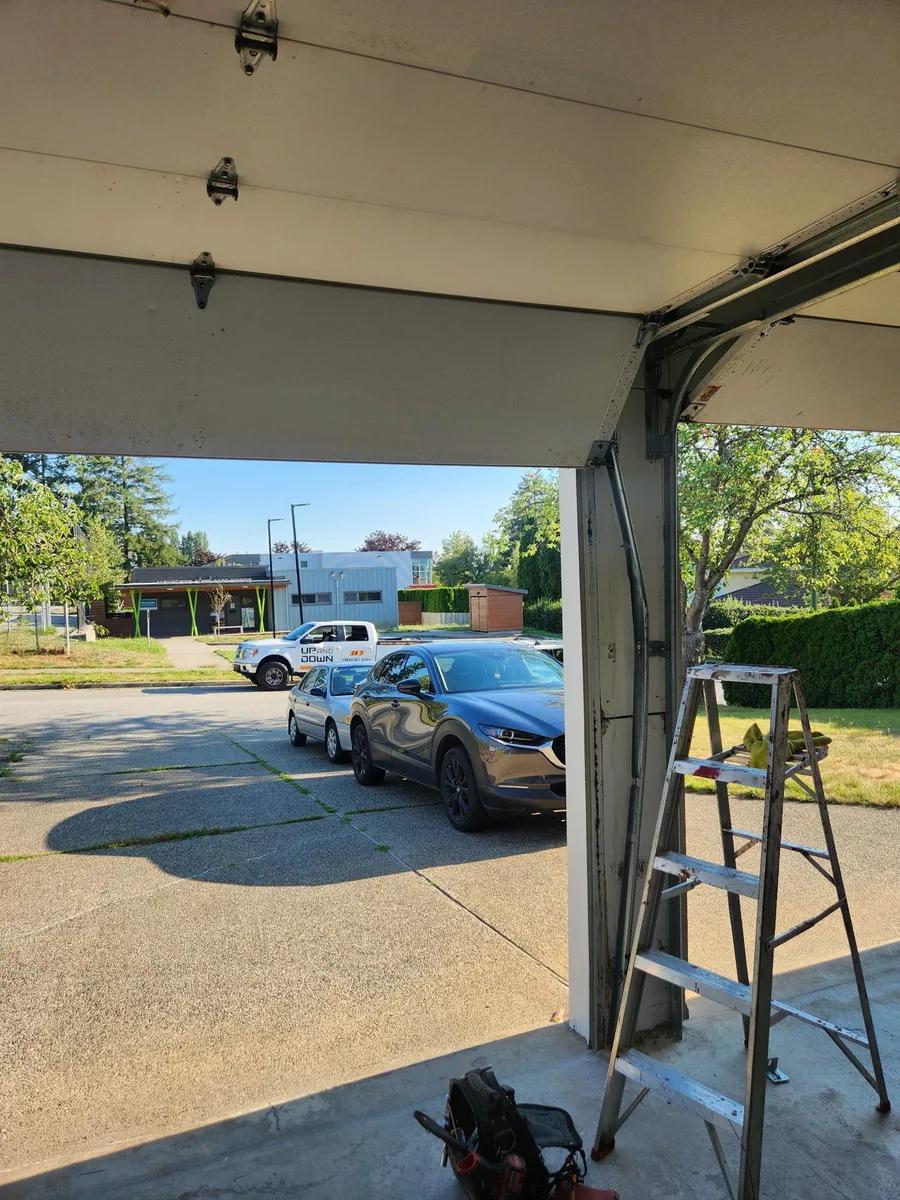
- Alignment. Does the door sit square in the opening? Look for cracked or broken glass in any windows.
- Opening frame. Check that the jambs and header are still firmly attached to the house, with no loose or pulled connections.
- Track. Look along both vertical tracks and the horizontal track overhead for loose fasteners or track that has shifted out of line.
- Rollers. Every roller should sit in the track without being forced. You should be able to slide and turn each roller shaft in its bracket.
- Brackets and hinges. All roller brackets and hinges should be tight.
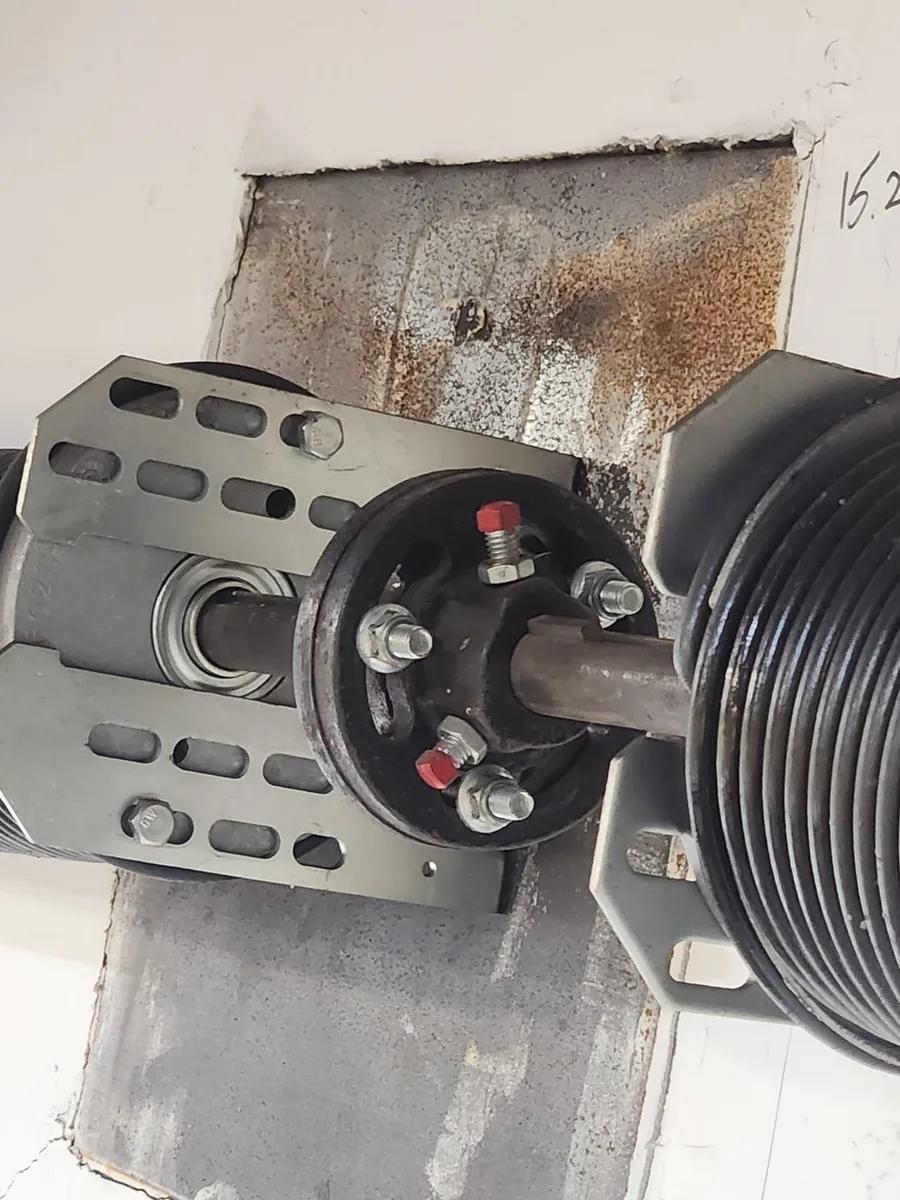
- Springs and cables. Look for loose cables or anything in the spring system that has worked loose. Look only. Don't touch springs, cables, or the bolts and brackets they're fastened to.
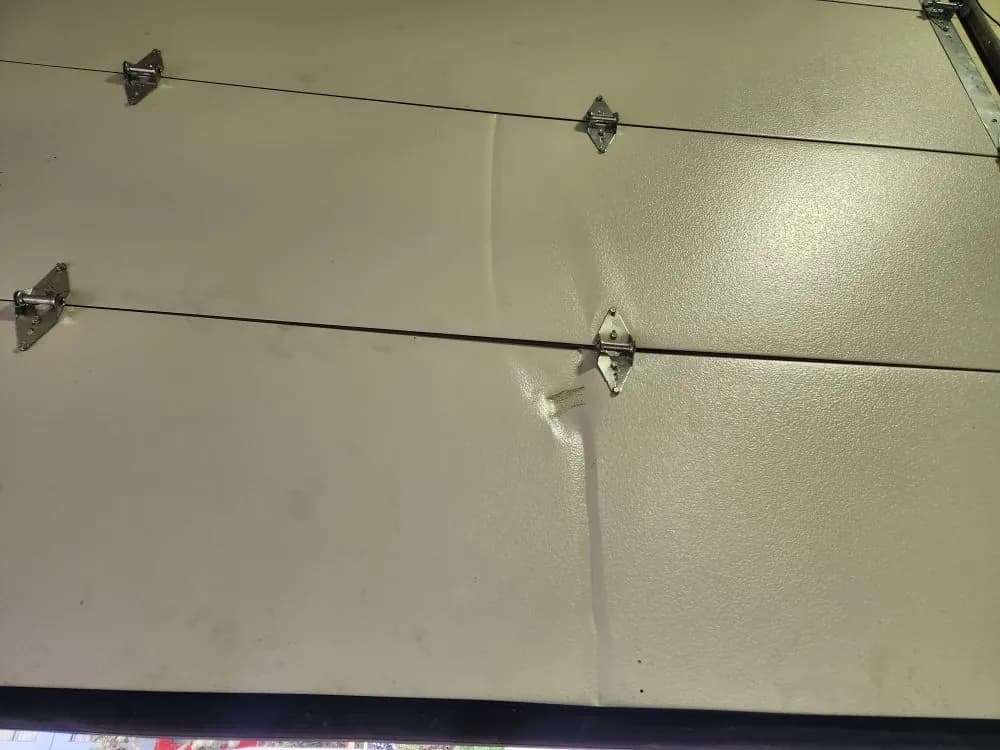
- Panels. Check each section inside and out for cracks, dents or buckling. On wood doors, watch for splitting around the hinge and bracket screws.
TDS-174 is blunt about what happens next: if you see any problem during the visual check, stop there. Don't move on to the operational check. Call a trained door technician.
What problems look like in real life
A cable hanging loose beside the door, or wound unevenly on one drum, is a sign the door has shifted or a cable has come off. Our cable off drum guide explains why that one's dangerous. A roller sitting outside the track or a door hanging lower on one side points to an off-track door. A gap in a torsion spring means it has broken, and the door is now far heavier than it looks. Our crooked door guide covers what an uneven door usually means.
Opening a garage door after an earthquake, by hand
Only if the visual check found nothing wrong, move on to the operational check. TDS-174 lists the steps in order, done from inside the garage:
- Disconnect the opener. Pull the red release handle with the door closed. If the door starts moving on its own once it's disconnected, stop.
- Release any manual lock. If the lock seems to be under tension from the door, leave it locked and stop.
- Lift a few inches. Slowly. If it's too heavy or hard to move, stop.
- Keep lifting while you watch. The rollers should move smoothly and stay in the track. Any binding, swaying or strain on the rollers, hinges, sections or track means stop.
- Find the balance point. Somewhere along the way it should take about as much effort to lift the door as to lower it.
- Open fully. The door should stay up on its own. If it drifts down, stop.
Don't force the door with the opener or a pry bar. If the door is closed, the track looks straight and the cables are tight, disconnect the opener and try lifting the door a few inches by hand. If it's heavy, binds or a cable is slack, stop, lower it and call a technician.
If the door gets stuck partway, don't let go and don't leave it hanging. TDS-174 says to lower it carefully to the closed position and call a technician. More on handling a disconnected door in our power outage guide.
Not until you've looked at it with the door closed. DASMA's homeowner checklist says to start inside the garage with the door down, check the track, rollers, hinges, cables and panels, and stop the moment you see a problem. If everything looks right, you can then try lifting it by hand, slowly.
The red release cord, and why the door must be closed
Only if the door is fully closed. With the door open, a broken spring or slack cable can let it drop as soon as the opener lets go. LiftMaster's manual says to use the release only when the door is closed, because weak or broken springs or an unbalanced door could make an open door fall rapidly.
The same manual says never to use the release handle to pull the door up or down. Use the door's handles or gripping points instead. DASMA's TDS-165 explains that residential sectional doors are meant to have handles or gripping points inside and out, near the bottom of the door, and warns that the joint between two sections is not a safe place to grip. Fingers get caught there.
Reconnecting the opener and testing the reverse
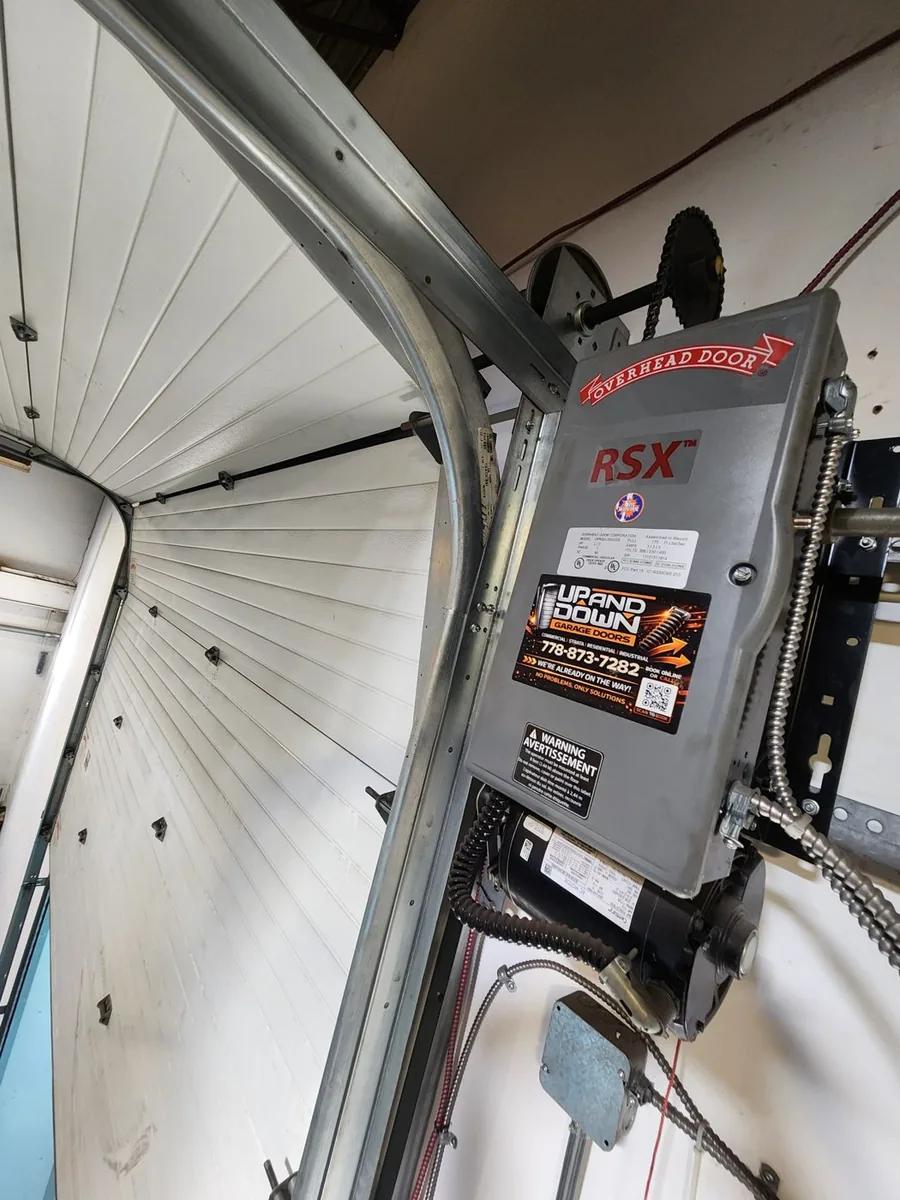
Earthquakes and power cuts often come together, so the last step is getting the opener back in service safely. TDS-174 says to wait until power is restored before reconnecting, then disable or remove any door locks and test the reversing feature as the opener's manual describes.
Wait until power is restored and the door has passed the hand test: it lifts smoothly, stays put partway and stays up when fully open. Then reconnect the trolley, disable any manual lock, and test the auto-reverse by placing an object in the door's path as your opener manual describes.
Also check the photo-eyes at the bottom of each track. Shaking can knock them out of alignment, and an opener won't close with a blinking sensor light. Our safety sensor guide covers realignment.
When to stop and call a technician
Checking a garage door after an earthquake is mostly about knowing when to stop. Here's a plain summary of what DASMA tells homeowners to hand off:
| What you find | What to do |
|---|---|
| Loose or slack cable, gap in a spring | Don't operate the door. Call a technician. |
| Bent, twisted or loose track, roller out of track | Don't operate the door. Call a technician. |
| Cracked, dented or buckled sections | Stop the check. A technician decides repair or replace. |
| Jambs or header pulled from the wall | Call a contractor about the framing first. |
| Door heavy, binds or won't stay up when lifted by hand | Lower it carefully to closed. Call a technician. |
| Everything passes | Reconnect the opener once power is back and test the auto-reverse. |
It's worth a look. DASMA's guidance for technicians says to check the whole door system for signs of stress or fatigue after seismic activity, including loose fasteners, twisted or opened-up track and bent roller stems. Those can hide in a door that still opens.
For technicians, TDS-175 goes further: inspect ball-bearing rollers for looseness or missing bearings, check that the door stays near the half-open position, and give the owner the full set of repair or replacement options. If damage is serious, it suggests the technician's written assessment go to the owner's insurer.
Getting ready before the next one
Most of what helps after a quake is done beforehand:
- Learn where your opener's red release handle is, and practise using it with the door closed.
- Keep a flashlight in the house, not just in the garage, so you can do the visual check during an outage.
- Keep the area under the door and along the tracks clear of stored items that could fall into them.
- Know where your panel, water shut-off and gas meter are. PreparedBC recommends every household know how to turn these off.
- Get worn springs, frayed cables and loose track fixed now. A door that's already out of balance is the one most likely to fail when it's shaken.
If your garage door is jammed, crooked or has a loose cable after an earthquake, don't force it. Call us at (778) 873-7282, or see our emergency garage door repair page. New clients: 10% off labour on your first repair — mention NEW10 when you book (one per household/business, work booked by Dec 31, 2026).