

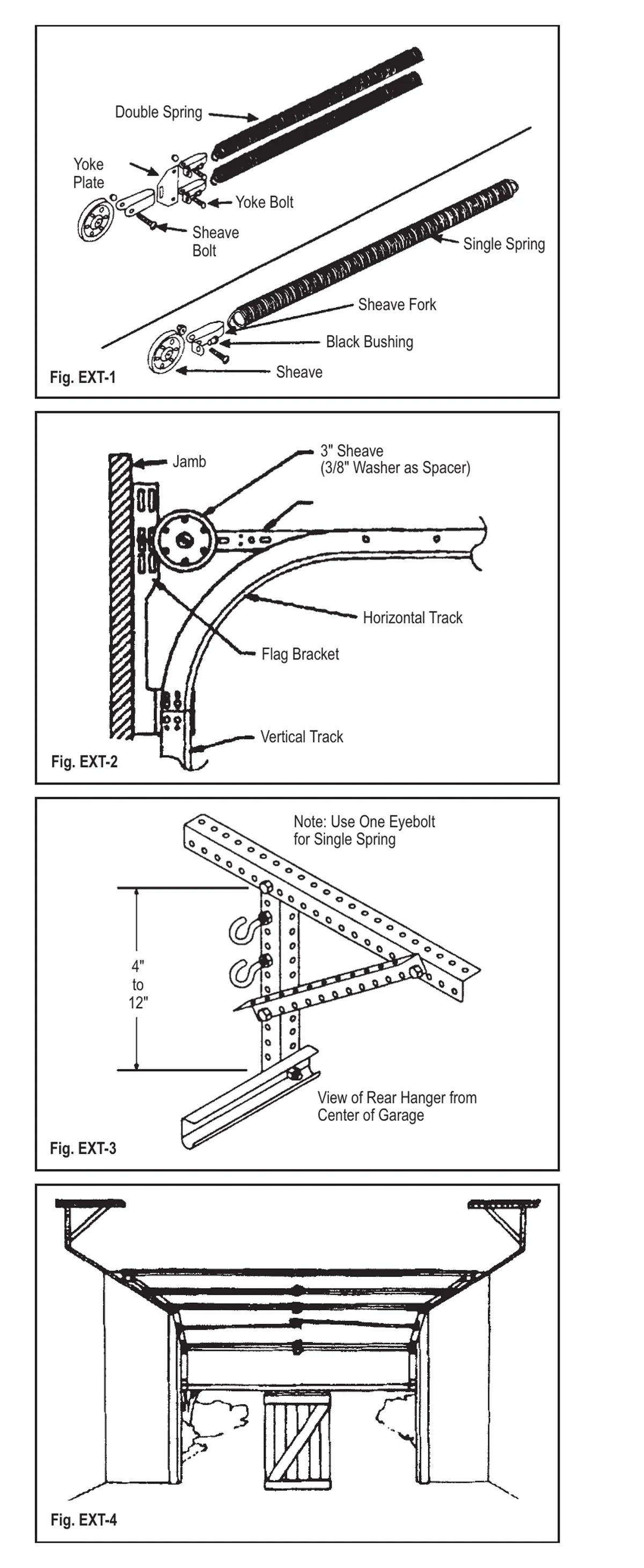
Short answer. An extension to torsion conversion takes the stretched springs and their cables off the sides of the tracks and replaces them with torsion springs on a tube over the door. You need a solid wood anchor pad and enough room above the opening. Clopay sets its jambs and pad 12 inches above the opening for 12 inch radius track. Extension doors without containment cables are a hazard today, so this is often a safety fix as much as an upgrade.
What an extension to torsion conversion removes
An extension spring door lifts on two long springs running beside the horizontal tracks, or four on some double doors. Clopay's extension supplement shows each spring hooked to an eyebolt at the rear track hanger. A sheave on the spring's end carries the lift cable down to the bottom bracket. An extension to torsion conversion takes all of that off. The springs and sheaves go. So do the eyebolts, clips and lift cables.
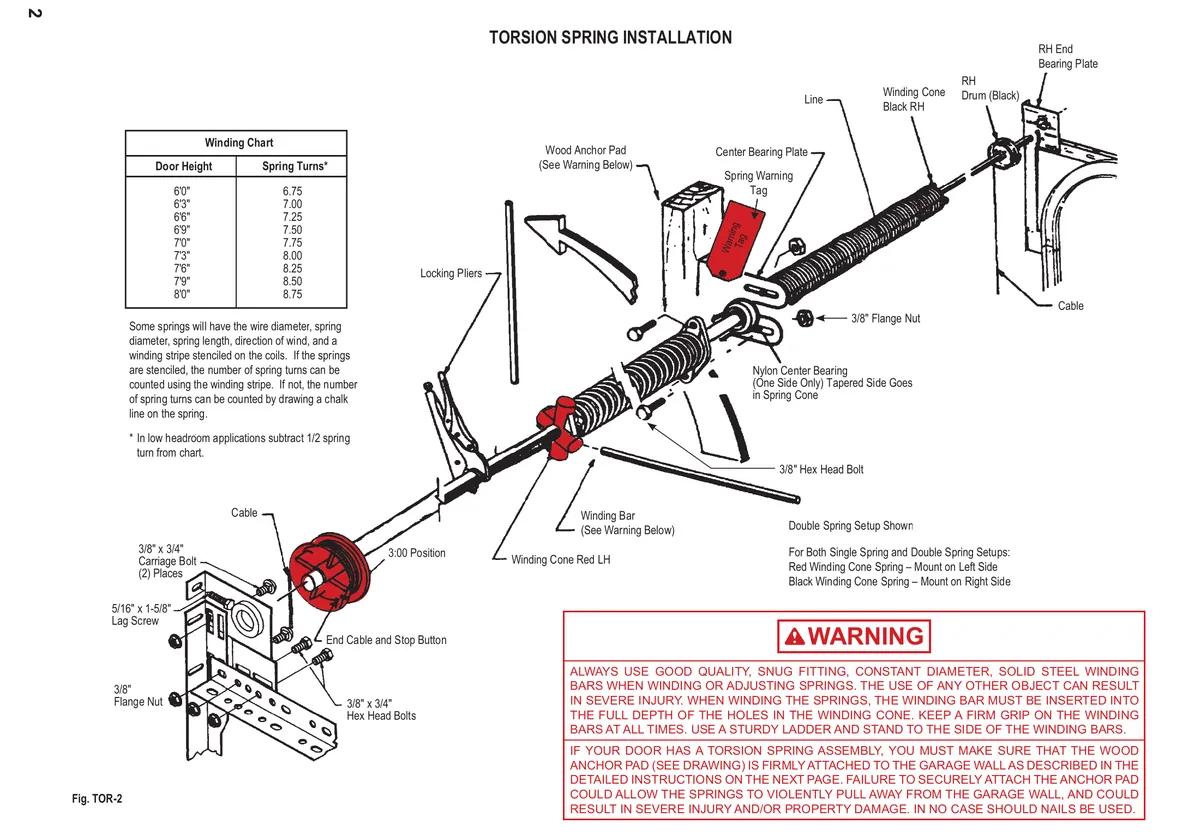
In their place goes a torsion tube on bearing plates, with a center plate on a wood pad. One or two torsion springs and a pair of cable drums finish it. The track usually stays.
The containment cable problem
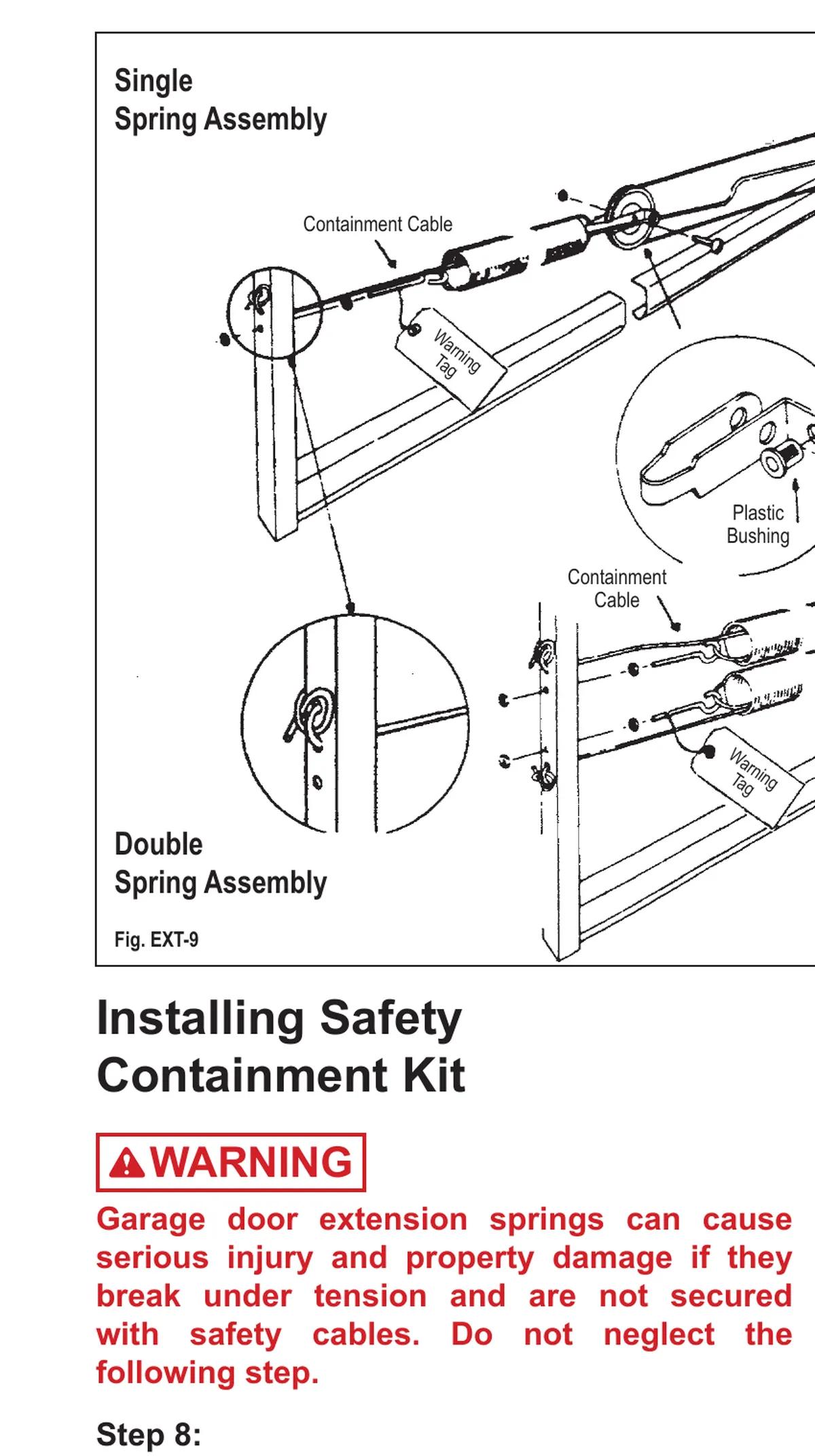
Clopay prints this warning on every extension door. Extension spring doors must never be operated without a properly installed spring containment cable. Their supplement explains why. Extension springs can cause serious injury and property damage if they break under tension and are not secured with safety cables. The cable runs through the middle of each spring and ties off at the rear hanger and the angle.
DASMA's home inspection checklist, TDS 167, asks the same question. Are the springs restrained by a cable or shaft. It notes that torsion springs on a shaft are contained by design. Older garages here often have extension springs with no cable at all. That alone is worth a call.
What the opening needs
A torsion spring wants room above the door and something solid to bolt to. Clopay's torsion supplement sets the side jambs and the center anchor pad 12 inches above the opening for 12 inch radius track and 15 inches for 15 inch radius track. The pad has to be good southern yellow pine or one of Clopay's listed hardwoods, lagged into the framing. Our bearing plates and anchor pads page has the details.
If the header is low or the framing is soft, we may add blocking first. If there is truly no room, a low headroom track kit or staying on extension springs with proper containment can be the right answer.
Sizing the new springs
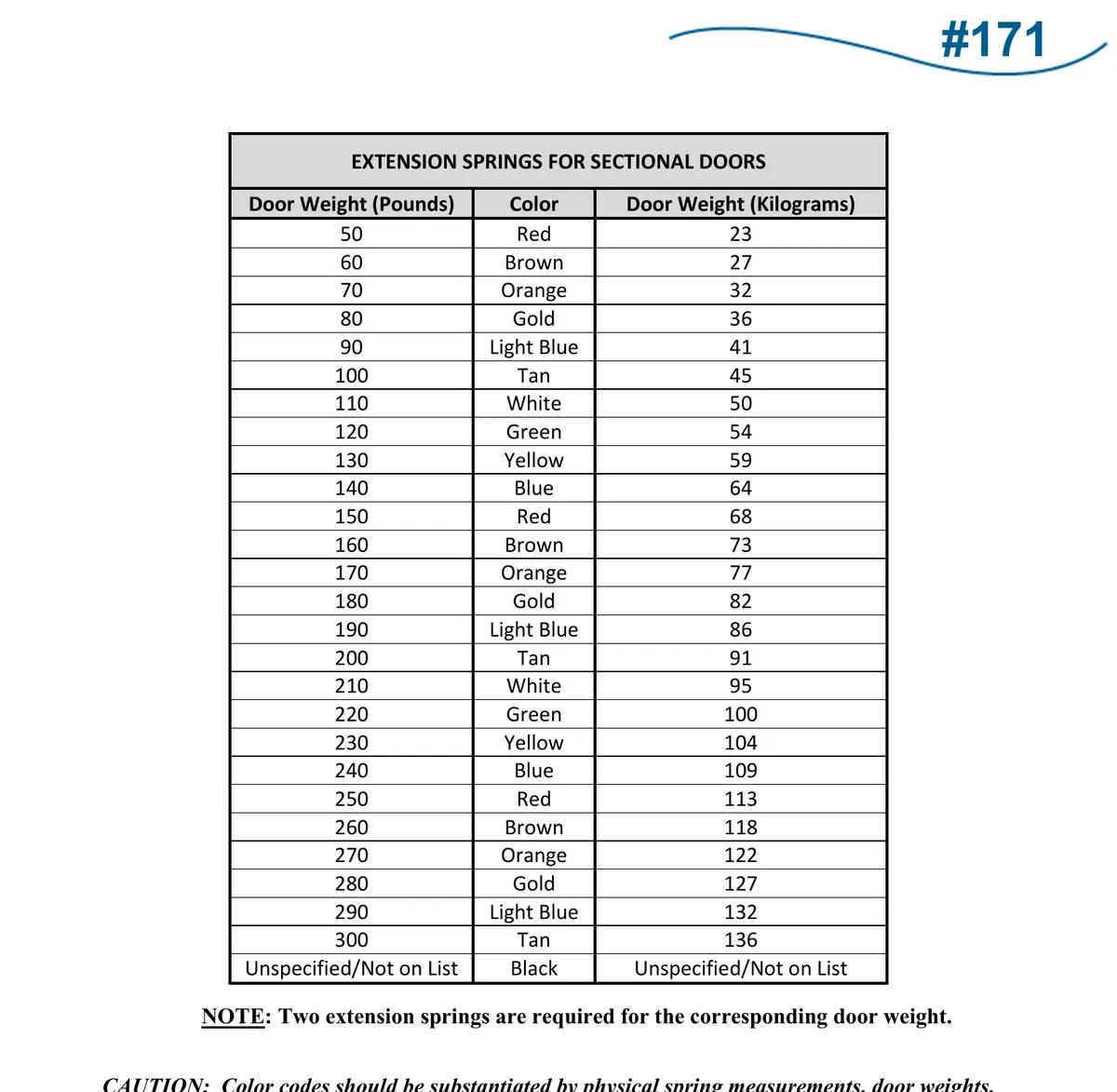
An extension spring is sized by door weight. DASMA TDS 171 lists extension spring colours by door weight, 50 lb up to 300 lb, with two springs used per door. A torsion spring is sized by door weight and height. The drum and the cycle life you want matter too. So we weigh the door first. Our spring calculator shows the same math we use, and added weight explains why a door that got insulated or re skinned weighs more than the label says.
Is it worth it
Our opinion. On a heavier double door that runs every day, yes. Torsion gives smoother travel, the springs are contained on the tube, and there are fewer moving parts beside the track. On a light single door used twice a week, a fresh pair of extension springs with containment cables is a fair repair. We will tell you which one we would do on our own garage.
More background is on torsion vs extension springs and extension springs.
Book a look
Call (778) 873-7282. We come out and weigh the door. We check headroom and the header, then quote the conversion and the repair side by side. If a spring has already broken, see broken spring repair.