

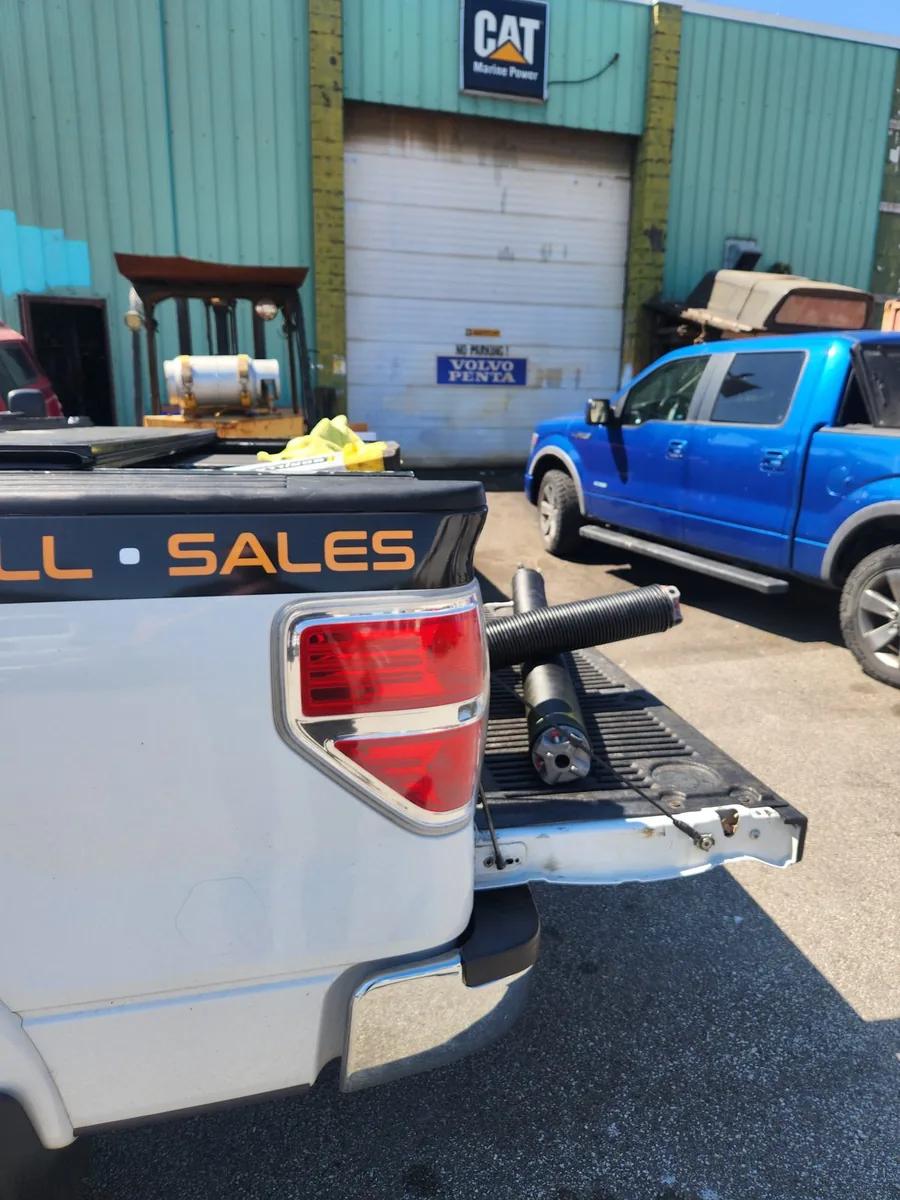
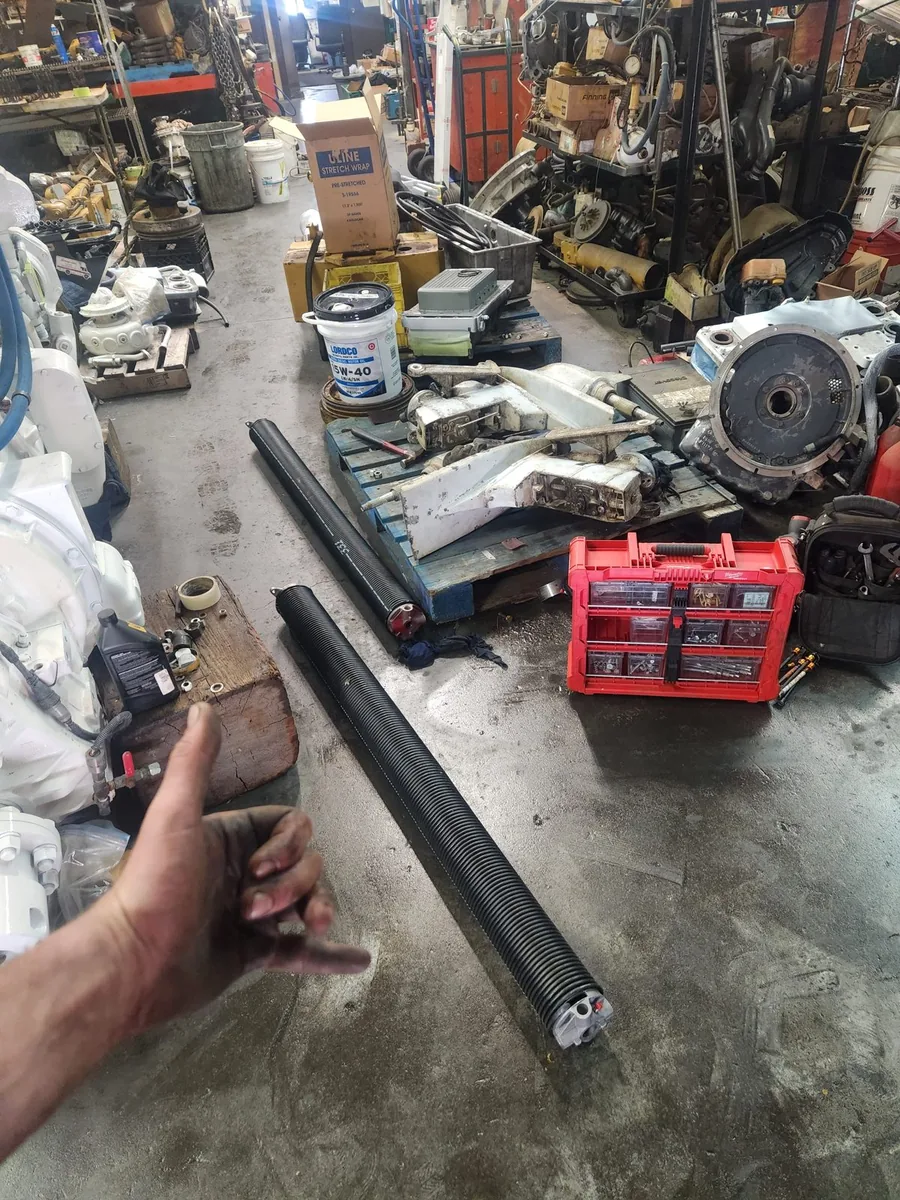
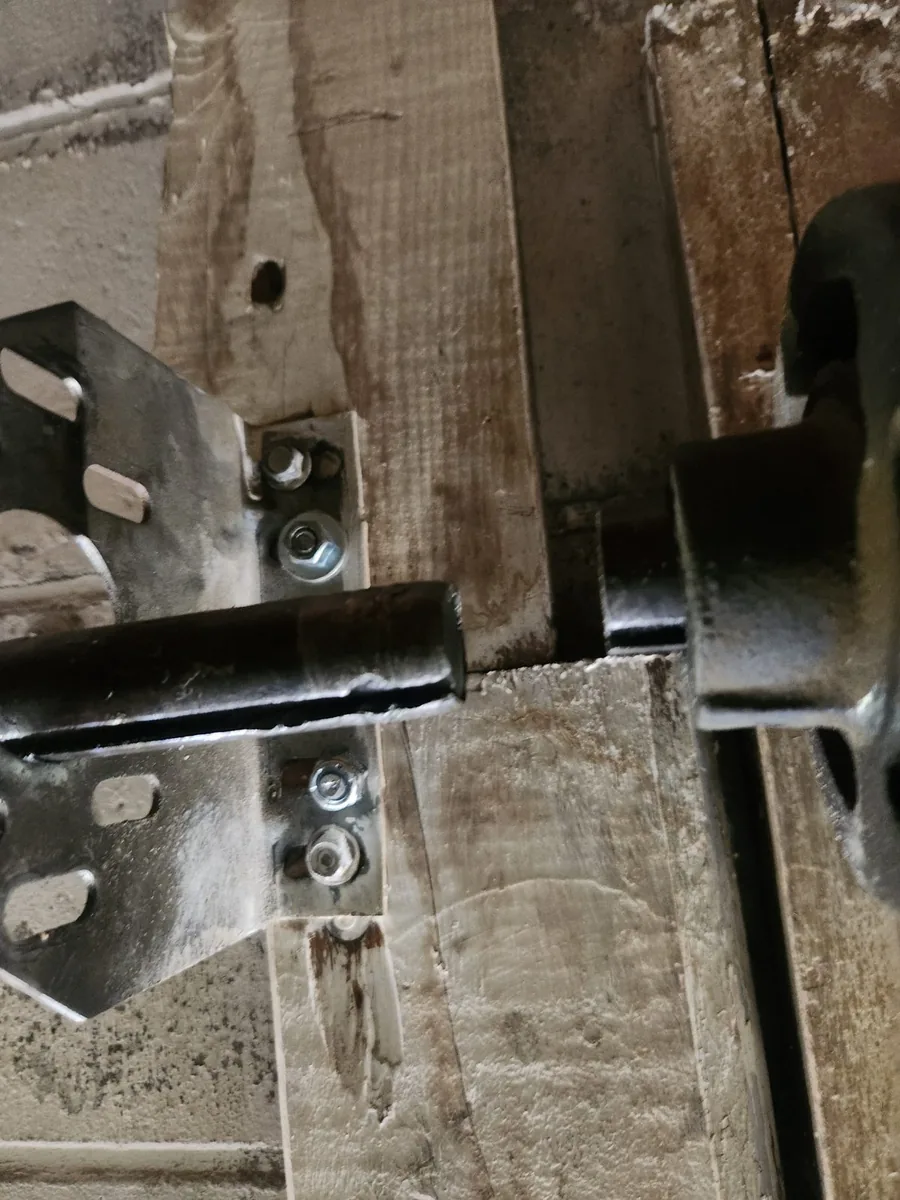
What a torsion spring is
A torsion spring is a coil of oil-tempered steel wire slid over the shaft above the door, anchored at the centre bracket by a stationary cone and wound up at the other end with a winding cone. As the door closes, the cables unwind off the drums, the shaft turns and the spring winds tighter. When the door opens, the spring unwinds and turns the shaft the other way, pulling the cables back onto the drums and lifting the weight. The opener only has to move what the spring does not carry, which on a properly balanced door is nearly nothing. Our torsion vs extension page compares the two systems if your door has springs along the horizontal tracks instead.
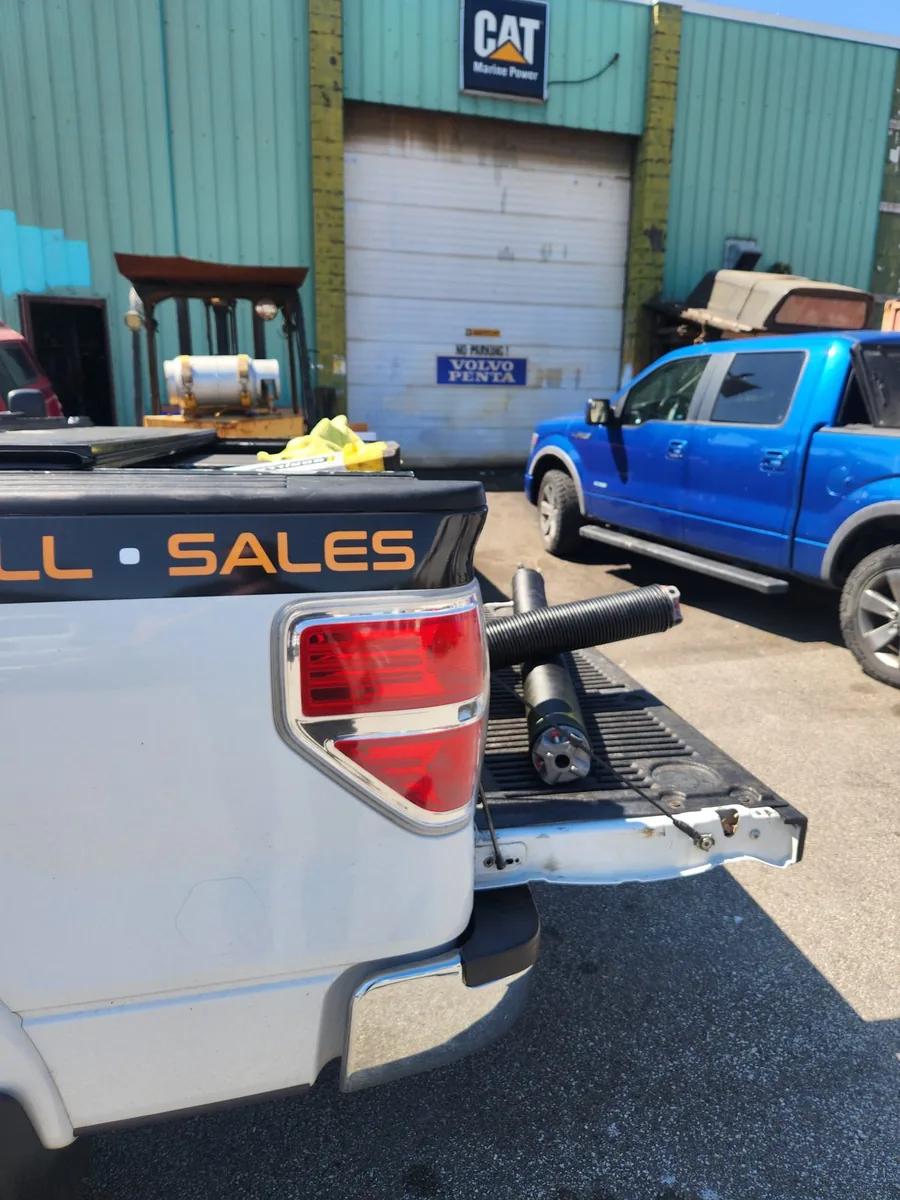
The four numbers that define a spring
Every torsion spring is described by wire diameter, inside diameter, overall length and wind direction. Together they fix how much torque the spring gives per turn (its IPPT, inch-pounds per turn), how many turns it can safely take, and how many cycles it will last.
| Spec | Residential range | How to read it |
|---|---|---|
| Wire diameter | .192" to .273" (most houses .207" to .250") | Measure 10 or 20 coils tight, divide. See the measurement guide |
| Inside diameter | 1 3/4" or 2" (2 5/8" on some heavy doors) | Stamped on the cone, or measure across the inside of the coil |
| Length | 20" to 40" unwound | Measure coil to coil, not including cones, with the spring unwound; wound length is a few inches longer |
| Wind | Left or right | Looking at the spring end-on, wire that goes clockwise away from you is right-wound. Right-wound springs mount on the left of centre |
The wire diameter is the one that matters most and the one people get wrong. A .243" spring and a .250" spring look identical, and a 10-coil measurement separates them by less than a sixteenth of an inch, which is why we measure 20 coils. Our wire size page works through why a small change in wire changes the stress so much, and the colour code page explains the paint dab on the end coil.
One spring or two
A single-car door under about 120 lb often runs one spring. Double doors, insulated doors and anything 16' wide should have two, one left-wound and one right-wound, meeting at the centre bracket. Two springs halve the load on each, which lowers the stress in the wire and roughly doubles the cycle life for the same wire size; it also means that if one breaks, the other still holds part of the weight so the door does not slam. When one spring of a pair breaks we replace both: the survivor has the same cycles on it and will go within months.
Cycle ratings
Builder-grade springs are made for about 10,000 cycles, one cycle being an open and a close. At four cycles a day that is roughly seven years; at ten a day, under three. The spring lifespan page has the arithmetic. Longer life comes from thicker wire, a larger inside diameter or a longer spring carrying the same load at lower stress. The practical limit is the shaft: a high-cycle pair is longer, and on a double door with two springs there has to be room between the centre bracket and the end bearing plates. The spring calculator shows the wire and length for each cycle tier so you can see whether it fits before deciding.
How to tell the spring is the problem
- A bang from the garage, then a door that will not lift or that the opener strains on and gives up. Look up: a broken torsion spring has a visible 2" gap in the coil.
- Door opens six inches and stops, or the opener's safety reverse trips going up.
- Door is very heavy to lift by hand with the opener disconnected. A balanced door should stay put at waist height; the balance test takes one minute.
- Cables slack or looped off the drum on one side: usually a broken spring, sometimes a drum set screw that has let go.
- Door crooked in the opening: often one spring of a pair gone, or a cable issue. See off-track repair.
Why springs fail early here
Three things shorten spring life around Metro Vancouver. Moisture: a spring in a damp, unheated garage in Burnaby or North Vancouver develops surface rust that starts fatigue cracks, which is why a light oil coat twice a year is in our lubrication guide. Added weight: a wood door repainted several times, or a steel door with new trim or glass, can gain enough weight to push the spring past what it was sized for; see added weight and springs. And wrong sizing: a spring that is close but not right gets wound extra turns to compensate, which raises the stress every cycle.
Not a DIY part
A wound torsion spring on a 16' door is holding around 200 lb of door through roughly seven and a half turns. Releasing that with the wrong bar, a loose cone set screw or a slipped grip is how techs and homeowners end up in hospital. We will happily tell you what size you have and what we would fit, but we will not talk anyone through winding one. Broken spring repair is a same-day job for us, with both springs, new bearings if they are rough, and a balance check before we leave.
Not sure which part you need?
Send a photo of the part to (778) 873-7282 on WhatsApp or text, or use the contact page. We identify it, bring the right one, and fit it the same visit.
Contact us(778) 873-7282