

Three bearings on one shaft
A residential torsion assembly has a 1" solid or tubular steel shaft running the full width of the door. It is supported at three points: an end bearing plate on each side, bolted to the flag bracket or the wall angle, and a centre bearing in the centre bracket above the middle of the door. The springs sit on the shaft between those points, the drums sit just outside the end bearings, and the whole thing has to turn freely through seven or eight revolutions each way, every cycle, under the full torque of the springs.
End bearing plates
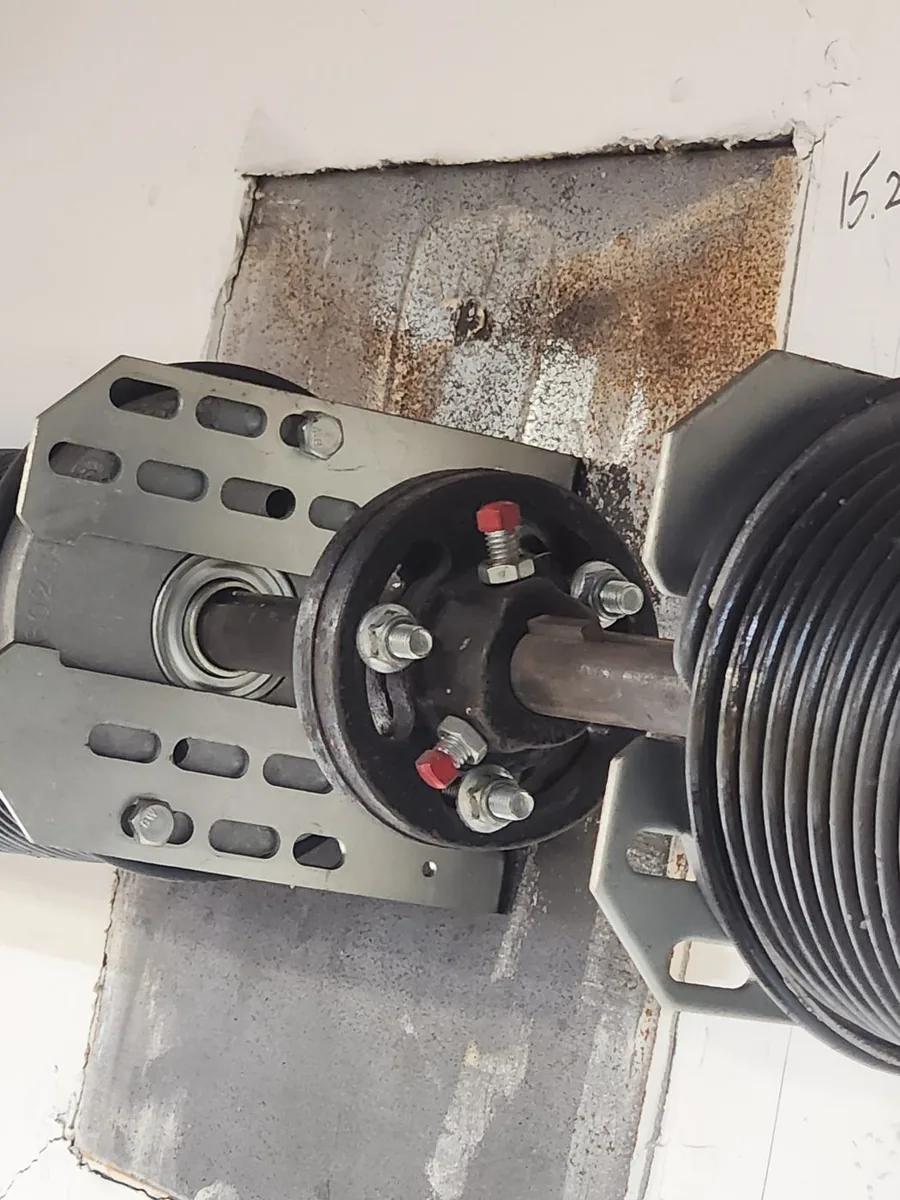
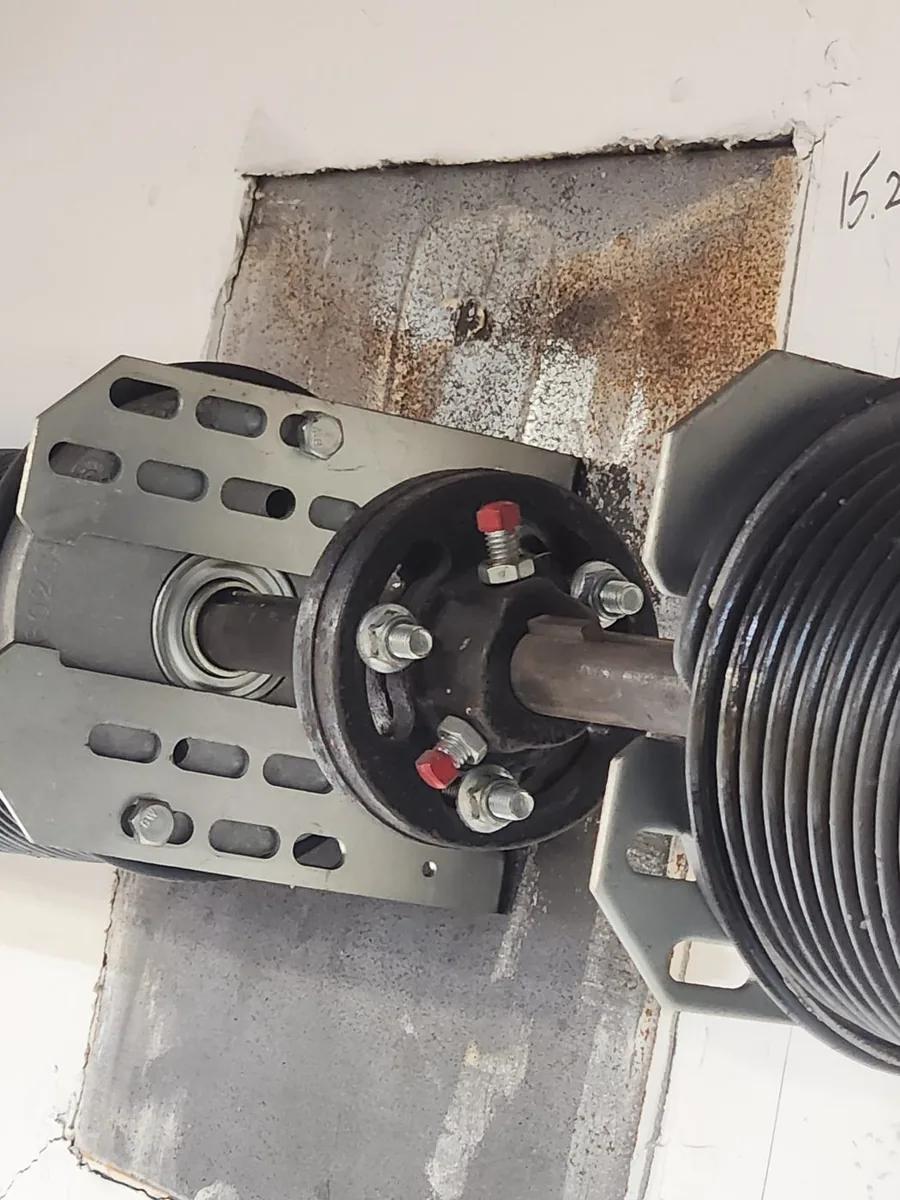
An end bearing plate is a galvanised steel plate with a pressed-in ball bearing (1" bore, usually a race with a plastic or steel cage) and a pattern of slots so it can bolt to the flag bracket. The plate size is named by how far the bearing centre sits from the mounting face: 3 3/8" and 4 3/8" are the common residential sizes, chosen so the shaft lines up with the drums and the cables run straight down to the bottom brackets. Commercial doors use heavier plates, often with a flanged bearing. The plate takes the cable load from the drum right next to it, so it is the hardest-working bearing of the three.
Centre bearing and bracket
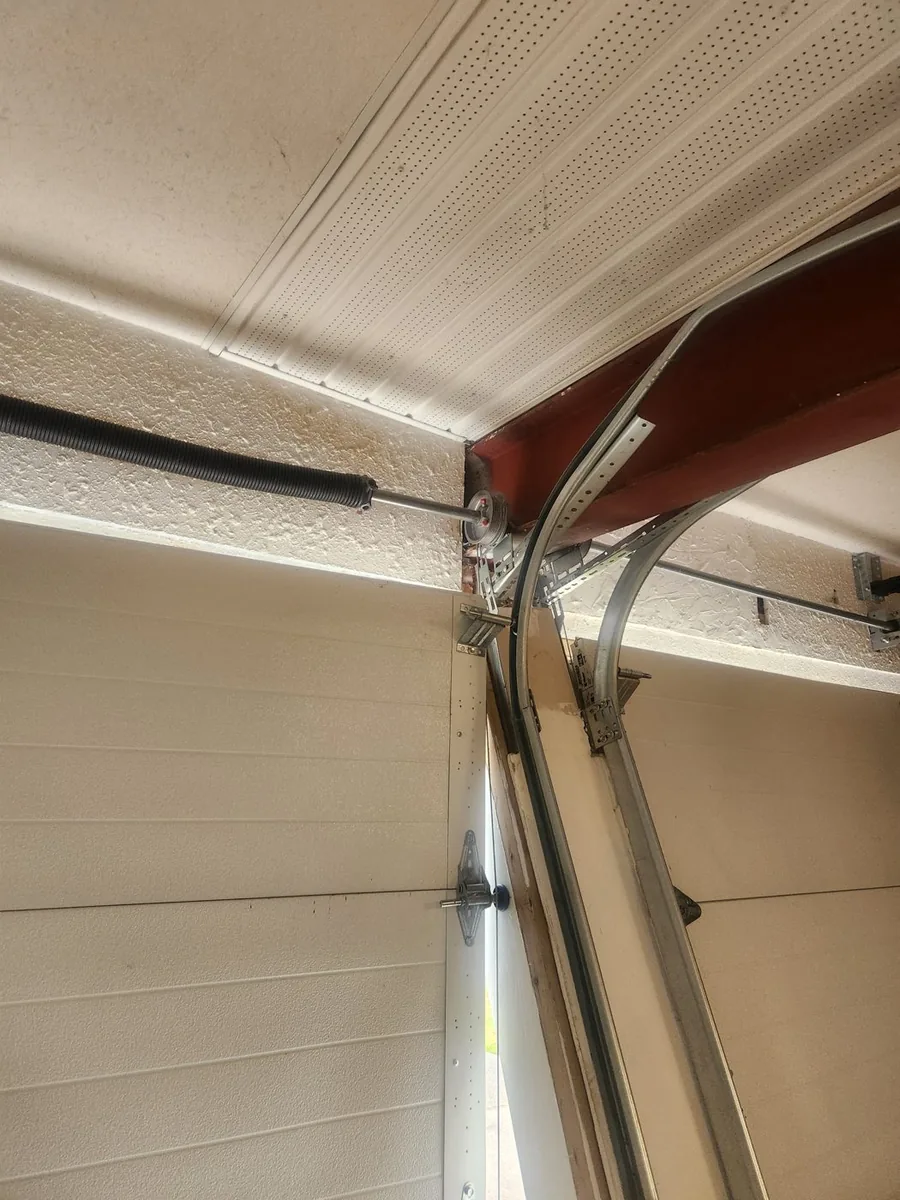
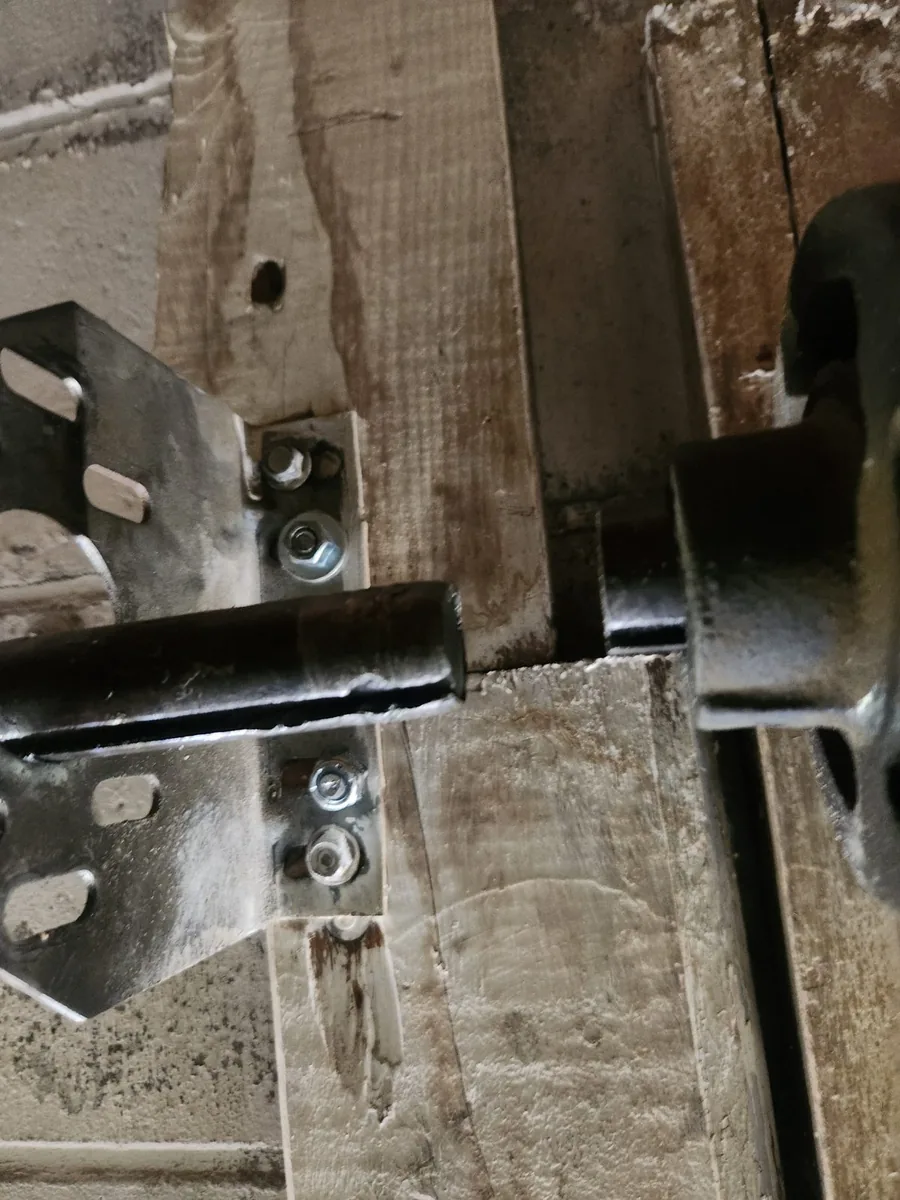
The centre bracket is the steel angle lagged into the header above the middle of the door. It does two jobs: the stationary cones of both springs bolt to it, so it takes the full spring torque, and it carries the centre bearing that keeps the shaft from sagging between the springs. The centre bearing is a 1" bore bearing in a pressed steel housing, sometimes a plain nylon bushing on cheaper installs. When the centre bearing seizes, the springs' stationary cones take the shaft's rotation as friction, the shaft wears a groove, and the door gets stiff at the top of travel. On wood-header doors like the one in the photo on the torsion spring page, the lag bolts in the bracket also need checking: a bracket pulling out of soft wood is one of the more dangerous things we find.
Flag brackets
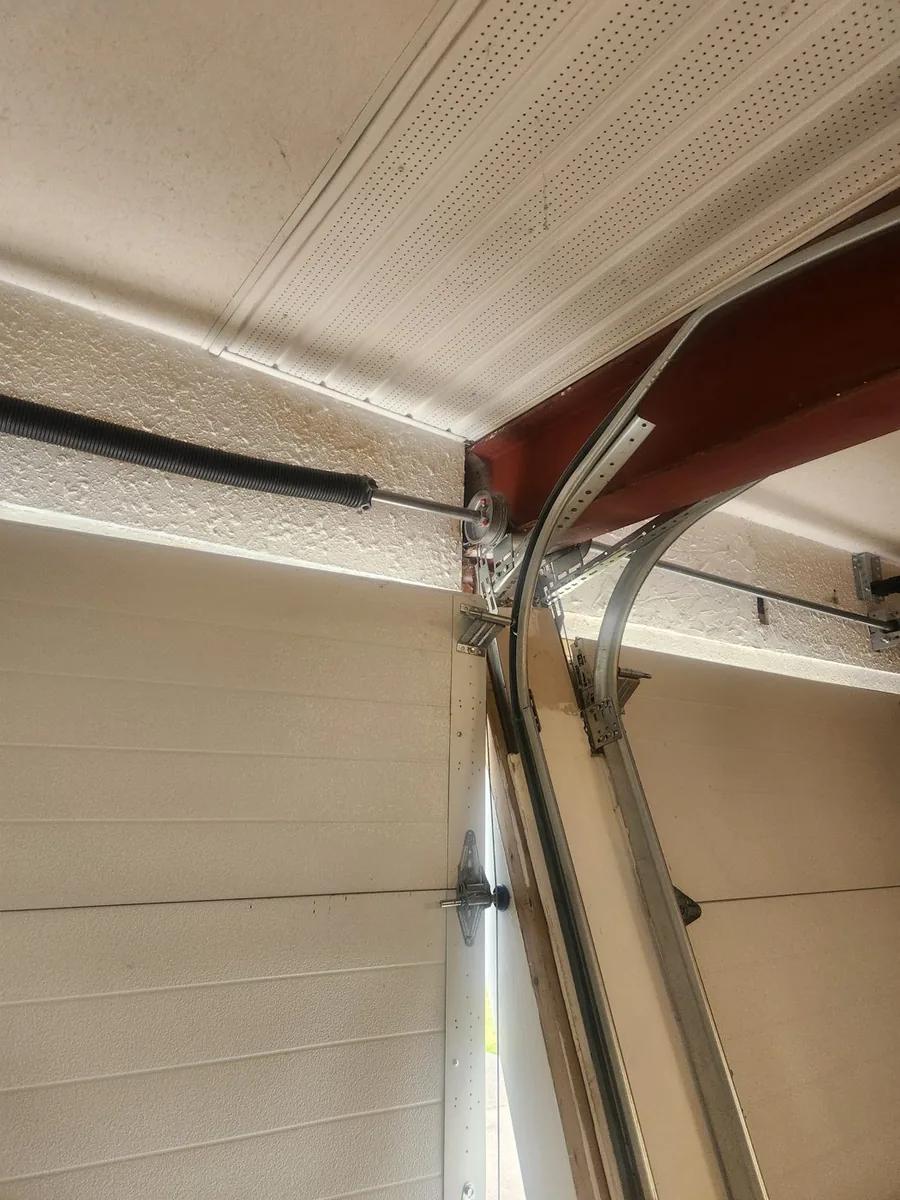
The flag bracket is the tall, flag-shaped plate at the top of each vertical track. It bolts to the jamb, ties the vertical track to the horizontal track at the curve, and carries the end bearing plate. Flag brackets come in left and right and are sized for 2" or 3" track. A bent flag bracket, usually from a car hitting the door or from the door going off track, puts the end bearing out of line, which tilts the drum and makes the cable walk off its groove. We straighten or replace them as part of an off-track repair.
| Part | Common sizes | What it does | What goes wrong |
|---|---|---|---|
| End bearing plate | 3 3/8", 4 3/8"; 1" bore; left/right or universal | Supports the shaft at each drum | Dry or rusted bearing, grooved shaft, plate cracked at the slots |
| Centre bearing | 1" bore, in pressed housing or nylon bushing | Supports the shaft between the springs | Seizes, shaft wears, springs bind |
| Centre bracket | Single-spring or double-spring, 2" or 3" track | Anchors the stationary cones; carries centre bearing | Lag bolts loosen in wood; bracket bends on heavy doors |
| Flag bracket | 2" or 3" track; left/right | Joins vertical and horizontal track; carries the end bearing plate | Bent by impact; bolts loosen in the jamb |
| Torsion shaft | 1" solid or tubular; keyed for commercial | Carries springs and drums | Grooved by a dry bearing; bowed on wide doors |
What a dry bearing does to a spring
This is the part people do not expect. A bearing that no longer turns means the shaft has to grind inside it. The spring now has to overcome that friction on every cycle, so it is effectively lifting a heavier door. The opener compensates, the door still moves, and nobody notices until the spring breaks early or the opener gear strips. A squeak or grind at the end of the shaft, a rust-coloured dust on the drum, or a door that is stiff by hand with the opener disconnected are the tells. A drop of light oil on each of the three bearings twice a year, as laid out in the lubrication guide, is the cheapest spring insurance there is.
When we replace them
We replace end bearings on every spring job where they are rough or the shaft shows wear, because the spring is already off and the parts are a few dollars. A bearing that is only slightly notchy on a tune-up gets oiled and noted. A seized bearing with a grooved shaft means new bearings and sometimes a new shaft, which is a bigger job and a good time to move to a two-spring setup or a higher-cycle spring if the door is busy. Either way, the shaft has to be unloaded first, so it is a technician job with the springs unwound; see broken spring repair for what a visit involves.
Not sure which part you need?
Send a photo of the part to (778) 873-7282 on WhatsApp or text, or use the contact page. We identify it, bring the right one, and fit it the same visit.
Contact us(778) 873-7282