

What the cable and drum do
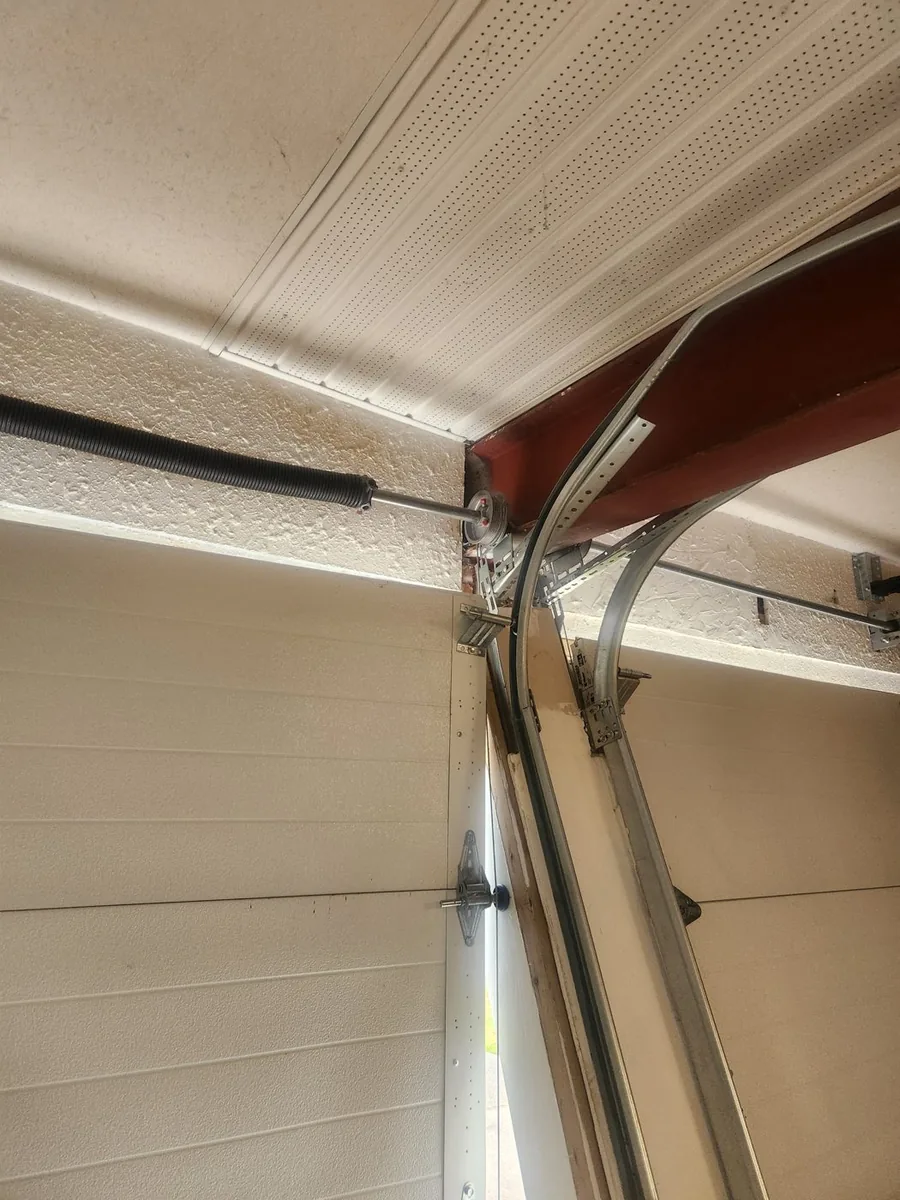
On a torsion door, a cable runs from the bottom bracket on each side of the door straight up to a drum on the end of the torsion shaft. When the spring turns the shaft, the drums wind the cables on and the door lifts; when the door closes, the cables pay out and the spring winds back up. The drum's diameter sets how much cable comes in per turn of the shaft, which is why the drum model is one of the inputs on the spring calculator: a bigger drum needs more spring torque per turn but fewer turns.
Cable sizes
| Cable | Construction | Typical use | Notes |
|---|---|---|---|
| 3/32" | 7x7 galvanised | Light single doors, extension-spring doors | Smallest common size; frays fast if the door is heavier than it looks |
| 1/8" | 7x7 or 7x19 galvanised | Most residential torsion doors to about 350 lb | Our standard residential cable |
| 5/32" | 7x19 galvanised | Heavy residential, commercial, high-lift, vertical-lift | Needs a drum grooved for 5/32" |
| 3/16" | 7x19 galvanised | Large commercial and industrial doors | Commercial drums only |
7x7 vs 7x19. The numbers are strands times wires per strand. A 7x7 cable has seven strands of seven wires; it is stiffer and wears well on a flat drum where the cable lies in a straight groove. A 7x19 has seven strands of nineteen finer wires; it is more flexible, bends around smaller radii without work-hardening, and is what high-lift and vertical-lift drums want because the cable climbs the taper. For a standard residential door either works; we fit 7x19 on anything with a tapered drum or a sheave.
Length. Cable length is the distance from the bottom bracket to the drum with the door closed, plus enough to make one and a half to two wraps on the drum when the door is fully down (so the cable is never pulled straight off the hub). For a 7' standard-lift door that works out to about 8'6" of cable plus the loop. The loop end at the bottom bracket is pressed with an aluminium sleeve; the drum end is either a bare end clamped under the drum set screw, or a swaged stop that sits in the drum slot.
Cable drums
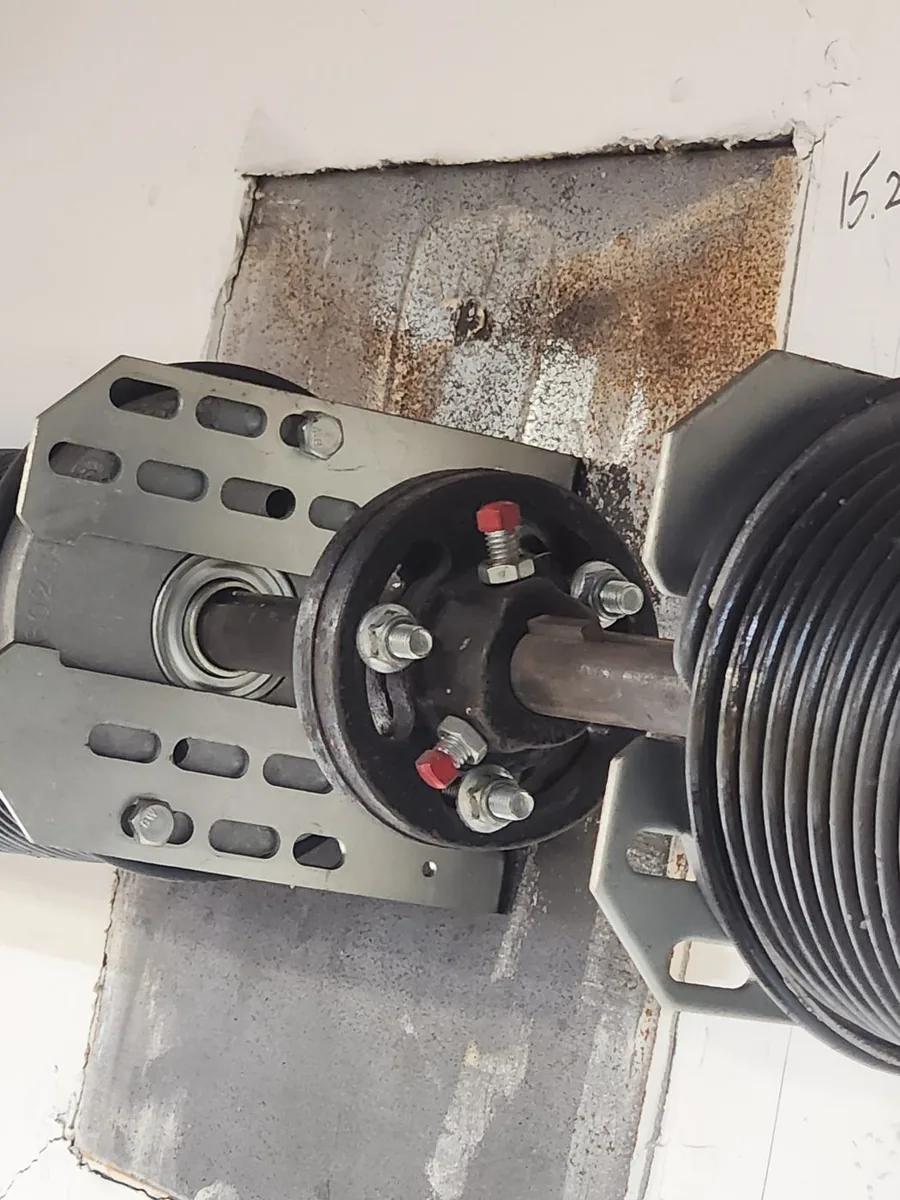
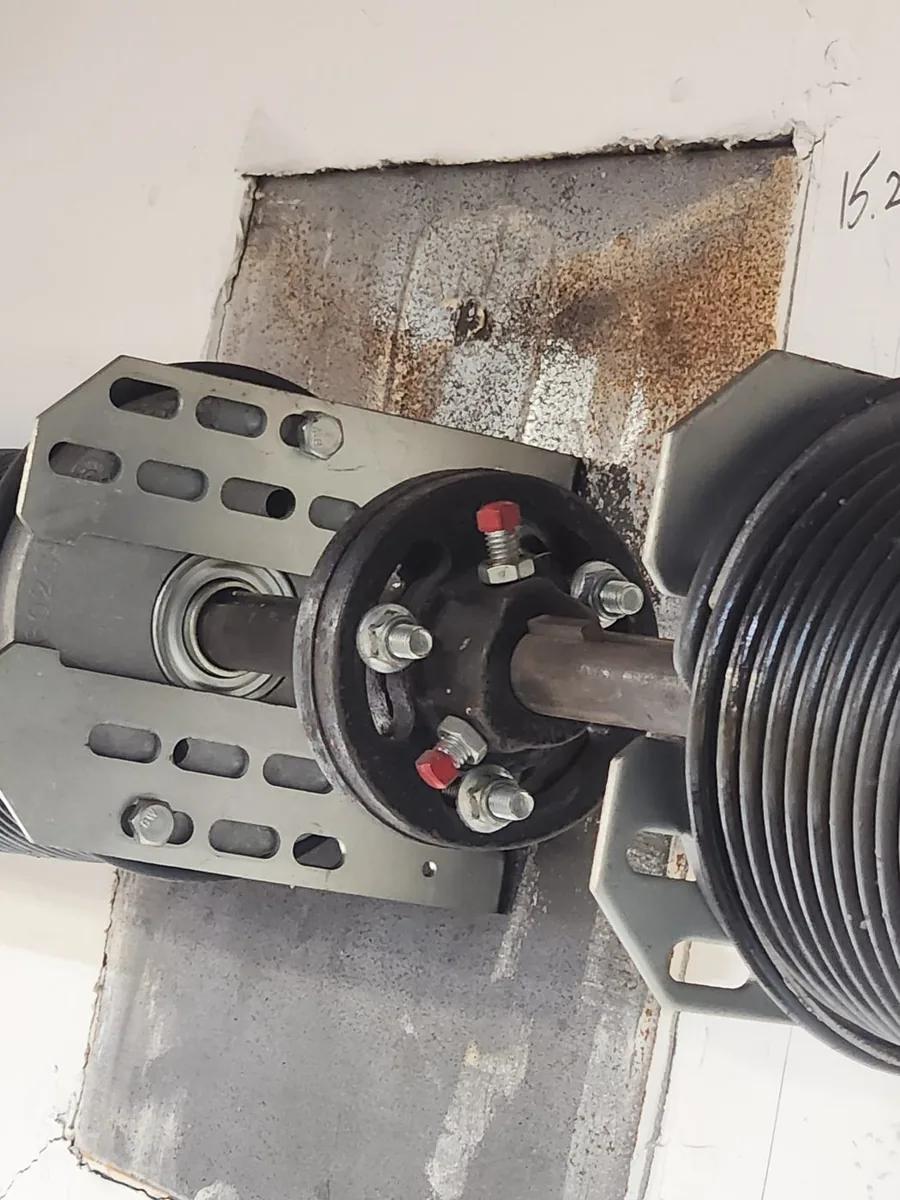
Drums are cast aluminium, grooved for the cable, with a hub that slides over the shaft and two set screws that lock it. The model number tells you the lift type and capacity.
| Drum | Lift type | Diameter | For doors | Cable per turn |
|---|---|---|---|---|
| 400-8 | Standard lift | 4" | Up to 8' high | About 12.6" |
| 400-12 | Standard lift | 4" | Up to 12' high | About 12.6" |
| D525-144 | High lift | 5.25" flat, tapered | Up to 144" of total lift | Varies along the taper |
| 5250-18 | Standard lift, commercial | 5.25" | Up to 18' high | About 16.5" |
| Vertical-lift drums | Vertical lift | Full cone | Doors that go straight up | Increases as the door rises |
A standard-lift drum is flat: every turn takes in the same length of cable, so a spring with a fixed torque per turn balances the door evenly. A high-lift drum has a flat section for the vertical run and then a taper; as the door moves onto the curved track and the lever arm changes, the taper changes the effective radius to keep the door balanced. Vertical-lift drums are pure cones for doors that go straight up with no horizontal track, common in shops with high ceilings. Those tapered drums need more spring torque, which is why high-lift conversions usually mean new springs as well as new drums and cables.
How cables fail
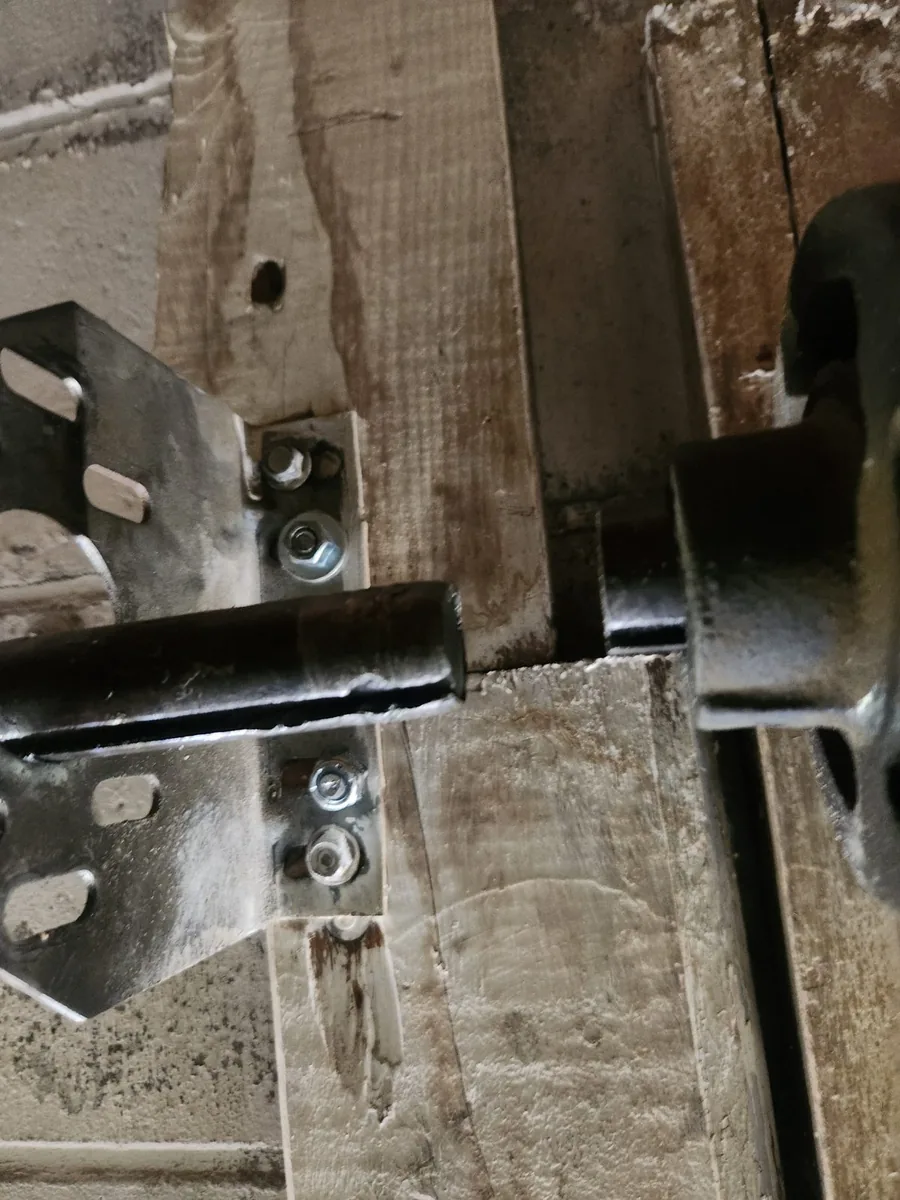
- Fraying at the bottom bracket. The loop sits an inch off the slab. Water, salt from the car and grit sit in it all winter. Broken wires sticking out of the cable just above the loop are the usual first sign.
- Fraying at the drum. If the cable has been running in the wrong groove, over the drum edge or against the bearing plate, it wears through at the top instead.
- Cable off the drum. Usually after a spring breaks, the door hits something on the way down, or the door is raised unevenly: the cable goes slack, jumps the groove and wraps itself around the shaft. The door then sits crooked and jams. This is the standard off-track call.
- Stretched cable. One side longer than the other; the door closes with a gap at one bottom corner. Adjust at the drum, which means the spring has to be unwound first.
- Drum set screws loose. The drum spins on the shaft, the cable goes slack on that side, and the door racks. The photo at the top shows the two set screws that have to bite the shaft.
Why this is not a DIY part
With the springs wound, each cable is holding half the door and the spring is trying to wind the drum. Loosening a bottom bracket, a cable clip or a drum set screw releases that load in an instant, usually through whatever is in the way. We change cables as a pair, check the drums and set screws, re-level the door at the drums with the spring under control, and run the balance test afterwards. The whole job is on the cable replacement page. If a spring is also near the end of its life we will say so, because cables and springs usually go together.
Not sure which part you need?
Send a photo of the part to (778) 873-7282 on WhatsApp or text, or use the contact page. We identify it, bring the right one, and fit it the same visit.
Contact us(778) 873-7282