

Struts
A strut is a length of galvanised steel, roll-formed into a U or a hat section, bolted horizontally across the inside of a door section. It stiffens the panel so it stays flat under its own weight and under the pull of the opener. On a single-car door the panels are short enough to hold their own shape. On a 16' or 18' double door, a bare top panel bows in the middle when the opener arm pulls it, cracks at the hinge holes, and eventually the panel folds. The strut is what prevents that.
| Strut | Section | Typical use |
|---|---|---|
| 2 1/4" strut | U-bar, about 2 1/4" tall, 20 or 18 gauge | Residential doors 9' to 16' wide; top section on every opener-driven double door |
| 3" strut | U-bar, 3" tall, 18 or 16 gauge | Doors over about 16' wide, heavy insulated or full-view sections, wind-load doors |
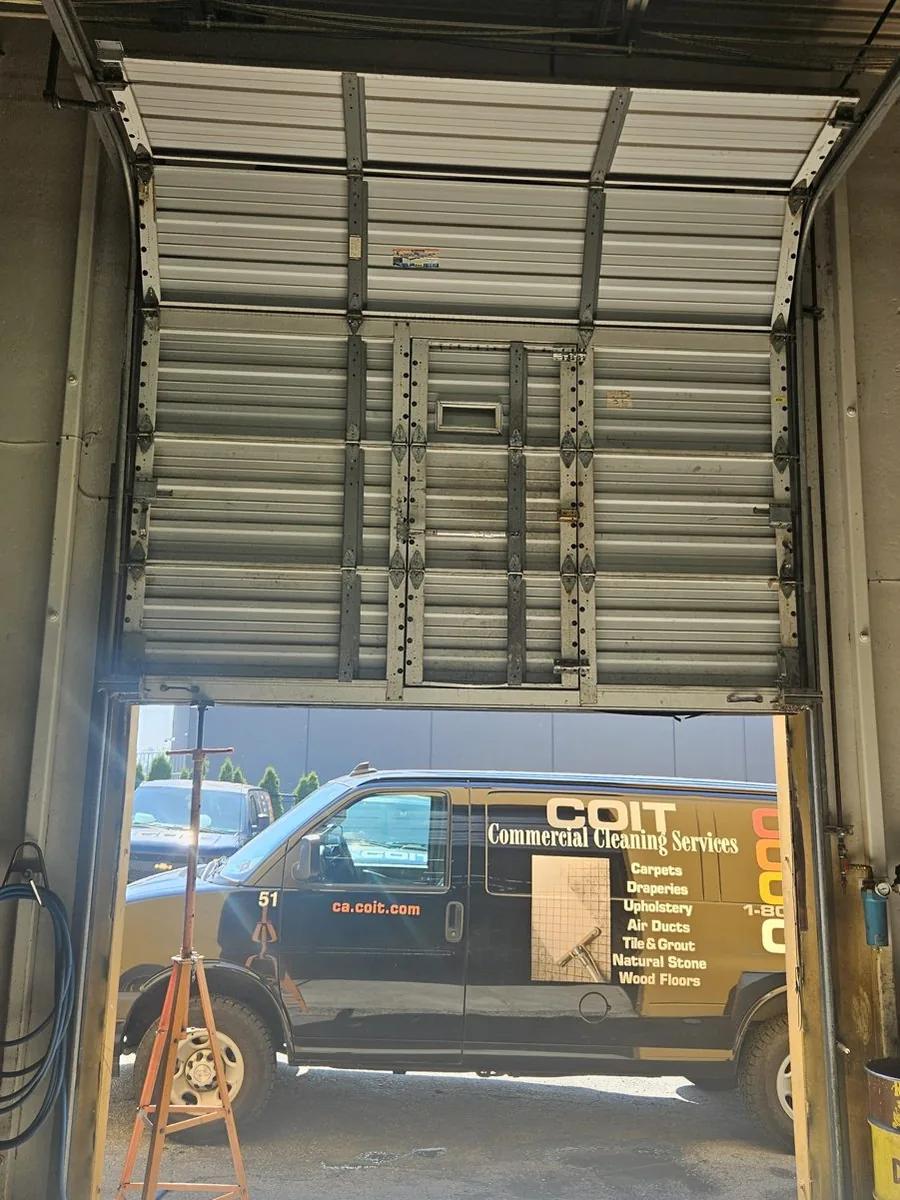
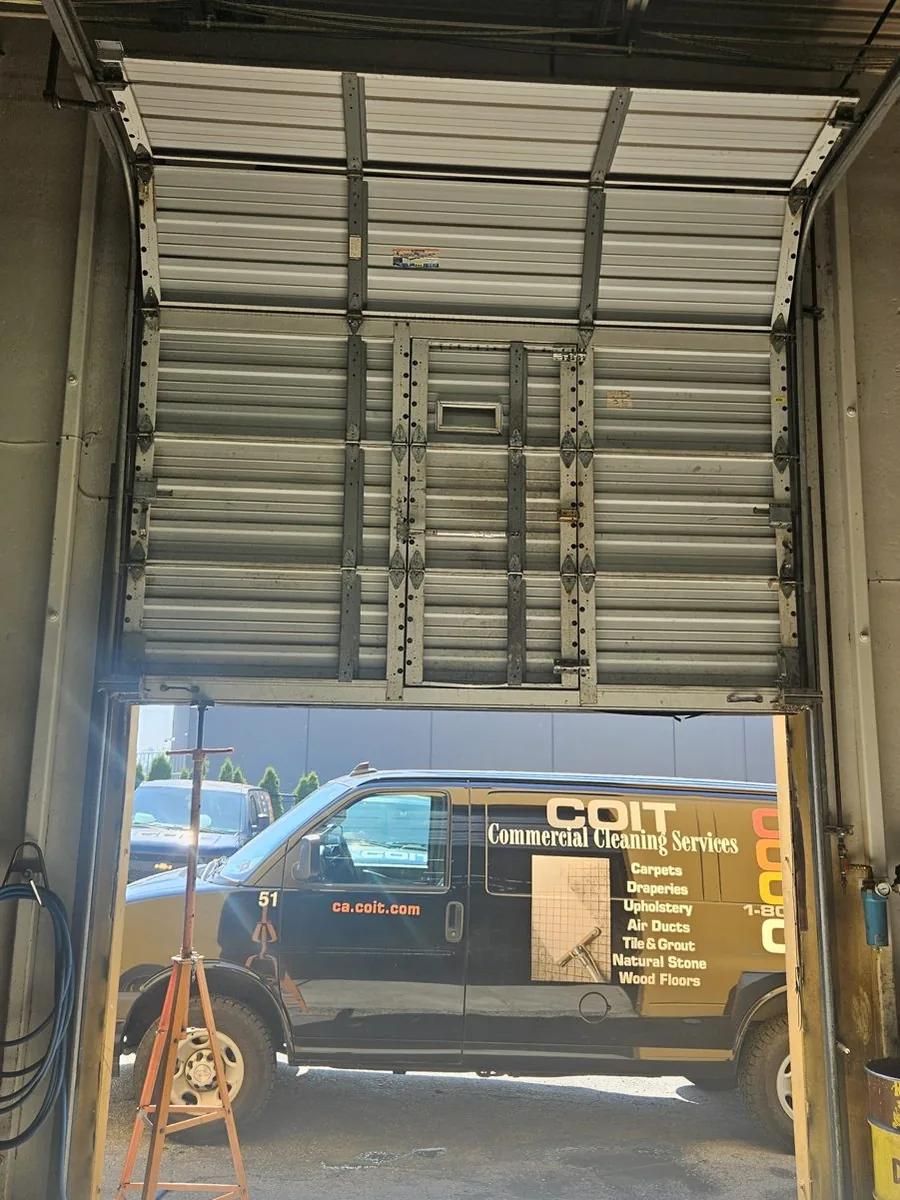
| Truss / hat-section strut | Deeper formed section | Commercial doors; vertical struts on ribbed steel doors as in the photo below |
How many struts a door needs depends on width, panel construction and whether it has an opener. The rule of thumb we work to: every opener-driven door 12' or wider gets a strut on the top section; 16' doors get one on the top and one on the bottom; heavy or 18' doors get one on every section. Thin-skin, non-insulated steel doors need them sooner than three-layer insulated doors, because the foam core does some of the stiffening. If your door has started to bow (look along the top section from the side with the door closed), a strut will usually straighten it enough to stop the damage, but not reverse a crease. Adding a strut adds weight, a few pounds per 16' length, which the springs have to carry; see added weight and springs.
Track: 2" or 3"
Residential sectional doors run on 2" track: the open face of the channel measures 2" and takes a 2" roller. Commercial, industrial and most strata parkade doors run on 3" track with 3" rollers, which spreads the load of a heavier, taller door and tolerates more abuse. The track gauge (steel thickness) also varies: residential track is usually 16 gauge, commercial 14 or 12. You cannot mix them; the hinges, rollers, flag brackets and bearing plates are all specific to the track width. The rollers page covers what rides in each.
Radius: 12" or 15"
The curved piece joining the vertical track to the horizontal track is sold by radius. A 12" radius track needs about 12" of headroom above the top of the opening (plus a little for the shaft) and is the standard on most houses because it fits most garages. A 15" radius needs 15" of headroom, gives the door a gentler curve, and is noticeably smoother and quieter on heavy or 8'-high doors. If you have the headroom, we prefer 15". Hörmann and some other European-style doors and most commercial doors run larger radii still.
Lift types
- Standard lift. Vertical track, a 12" or 15" radius, then horizontal track back into the garage. Needs roughly 12" to 15" of headroom. Nearly every house.
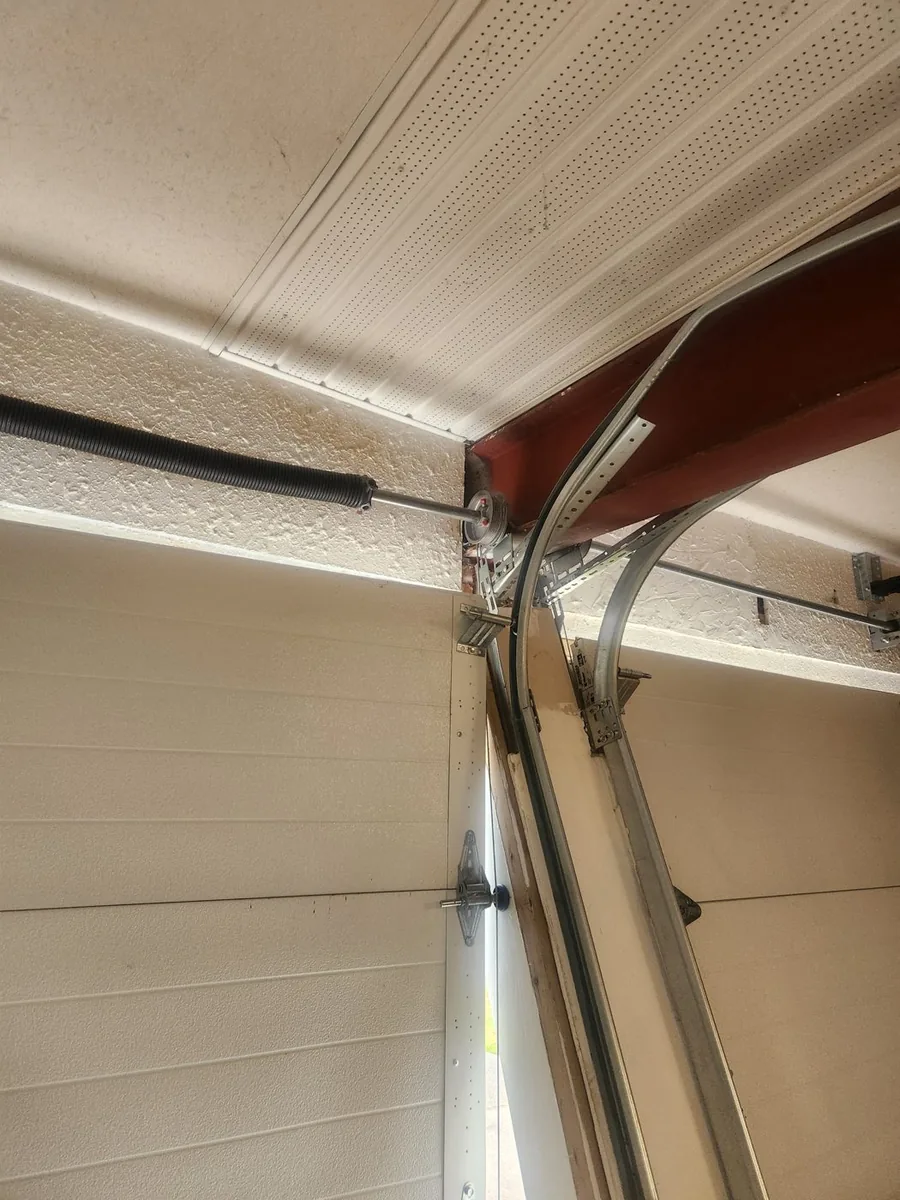
- High lift. The vertical track continues up past the top of the opening before curving back, so the door sits higher and leaves ceiling room for a car lift, storage or a lifted truck. Needs tapered drums (D525-144 type), longer cables and springs sized for the extra turns; see cables and drums. Common in Richmond and Surrey shops and in houses with a hoist.
- Vertical lift. No horizontal track at all; the door goes straight up the wall. Needs headroom equal to the door height plus a bit. Shops and loading docks.
- Low headroom. For garages with less than 12" above the opening. A second, short horizontal track carries the top rollers so the top section can clear the header, and the torsion shaft usually moves to the back of the horizontal tracks (rear torsion). Common on older Vancouver houses and in condo parkades with tight slabs.
- Follow-the-roof / pitched. Horizontal track angled up to follow a sloped ceiling. Spring and drum sizing is the same as standard lift.
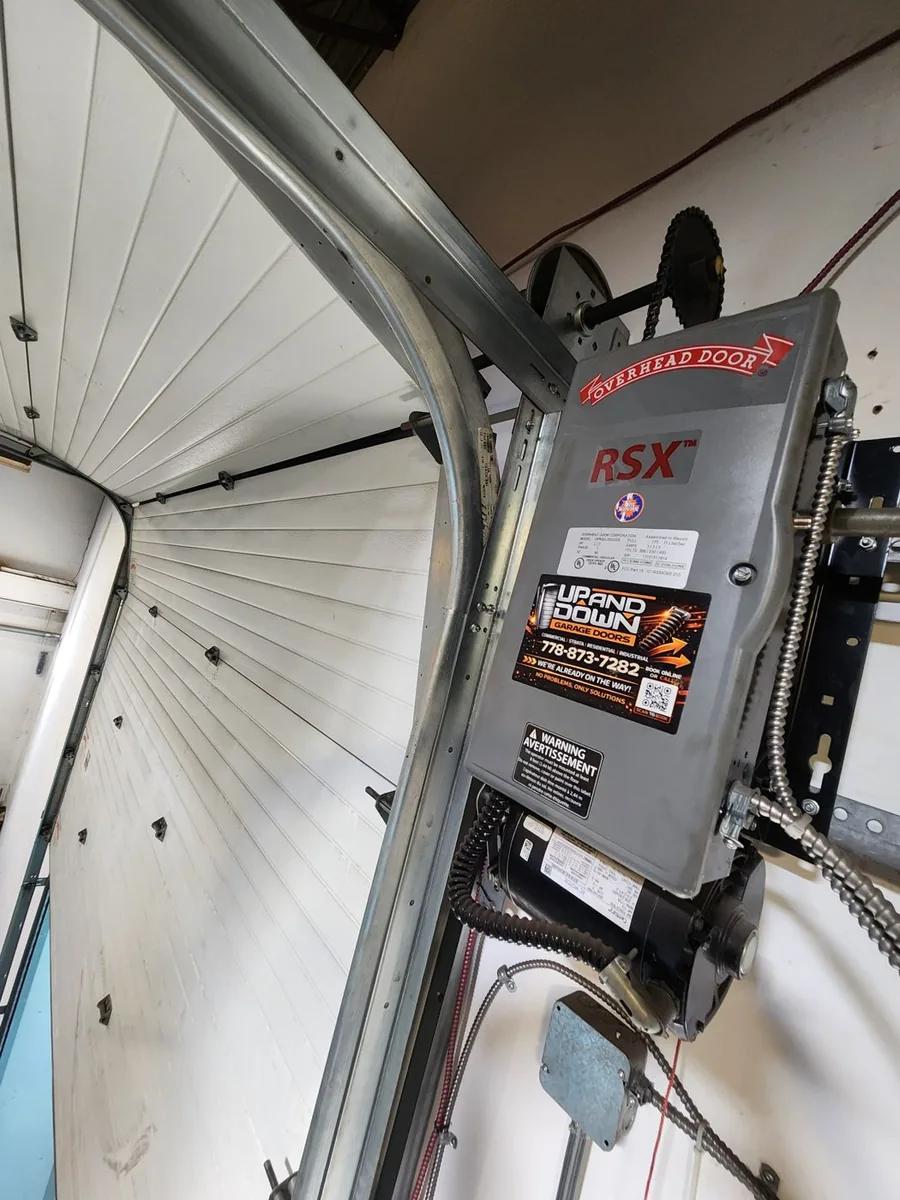
How track goes wrong
- Bent vertical track. A car bumper, a bike, a ladder. The door rollers jam at the bend. Small bends can be straightened; big ones need a new length. This is the usual off-track call.
- Loose track brackets. The jamb brackets that hold the vertical track work loose in wood or in old concrete anchors. The track leans in, the rollers bind at the bottom. Tightening and sometimes re-anchoring is part of a tune-up.
- Track out of plumb or out of parallel. From settling or a bad install. The door rubs the jamb on one side, or one side closes first. Fixed by re-setting the brackets, not by forcing the door.
- Rust at the bottom. Water pools where the vertical track meets the slab. Flaking track at the bottom foot is common in Richmond and Delta garages built on fill. If the lip has rusted through the rollers can come out; replace the vertical section.
- Horizontal track hangers. The perforated angle hanging the back of the horizontal track from the ceiling loosens or was never braced sideways. The track sways, the door bangs at the top of travel.
DIY or tech
Adding a strut to a closed door is a bolt-on job: measure the section width, cut the strut to length, clamp it along the top edge of the section between the end hinges, drill through the panel and bolt it with 1/4" carriage bolts and nuts. Keep it clear of the opener bracket and the top roller brackets. Track work is different: anything that involves the door being partly open, the vertical track being unbolted, or the horizontal track being moved, means the door can come down. We treat track straightening, replacement and re-alignment as technician jobs, and high-lift or low-headroom conversions as a half-day with new springs.
Not sure which part you need?
Send a photo of the part to (778) 873-7282 on WhatsApp or text, or use the contact page. We identify it, bring the right one, and fit it the same visit.
Contact us(778) 873-7282