

Open 24/7 · Licensed & insured · Richmond, BC简体中文繁體中文Doors & openersAboutContact(778) 873-7282
CallTextWhatsAppWeChatEmailBook a time

Garage Door Hinges, #1 to #10

The number stamped on a hinge is a position, not a strength. Put a #1 where a #3 goes and the door binds in the track. Here is the system, and how to replace one safely.

  • Licensed & insured
  • Open 24 hours
  • Based in Richmond
  • 5.0 on Google
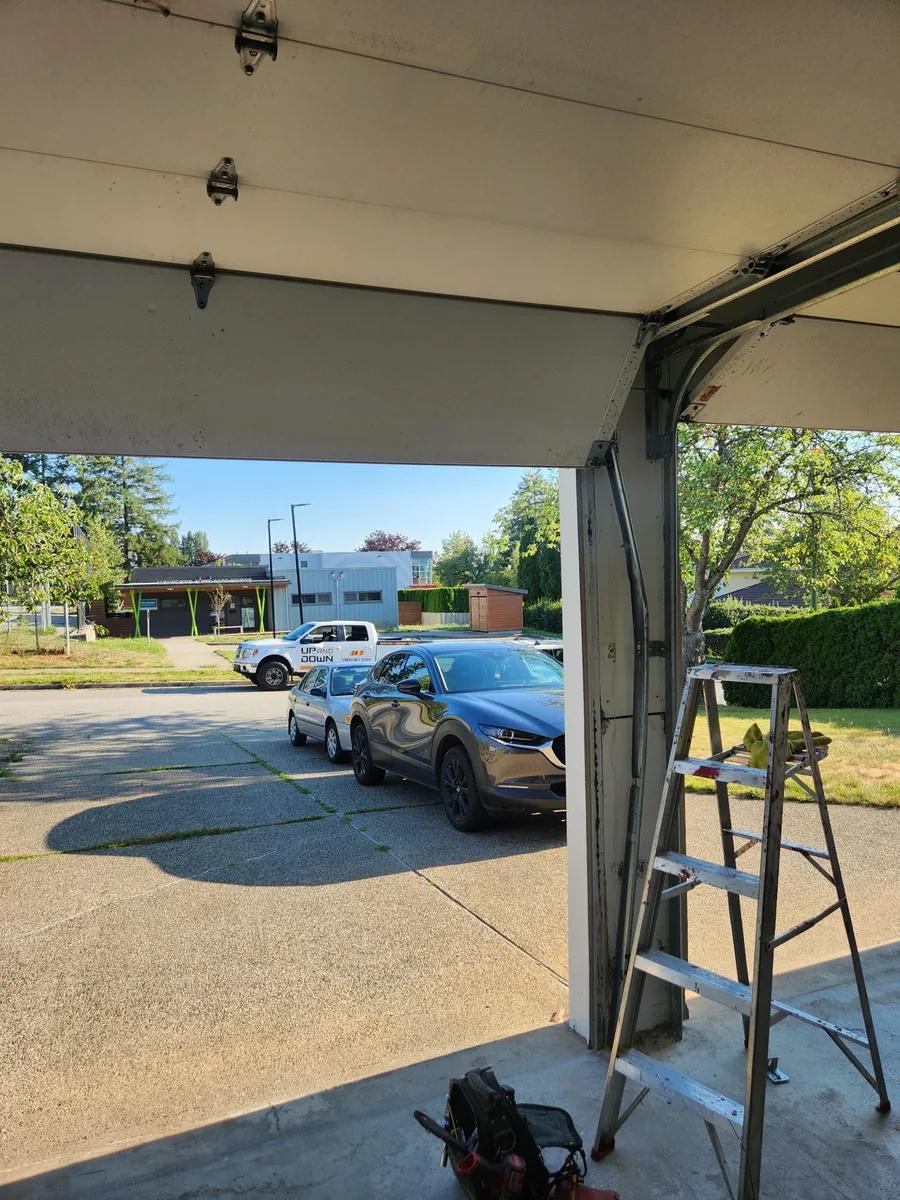
Underside of a sectional door seen from inside, hinges and roller stems along each panel joint
Hinges along each joint
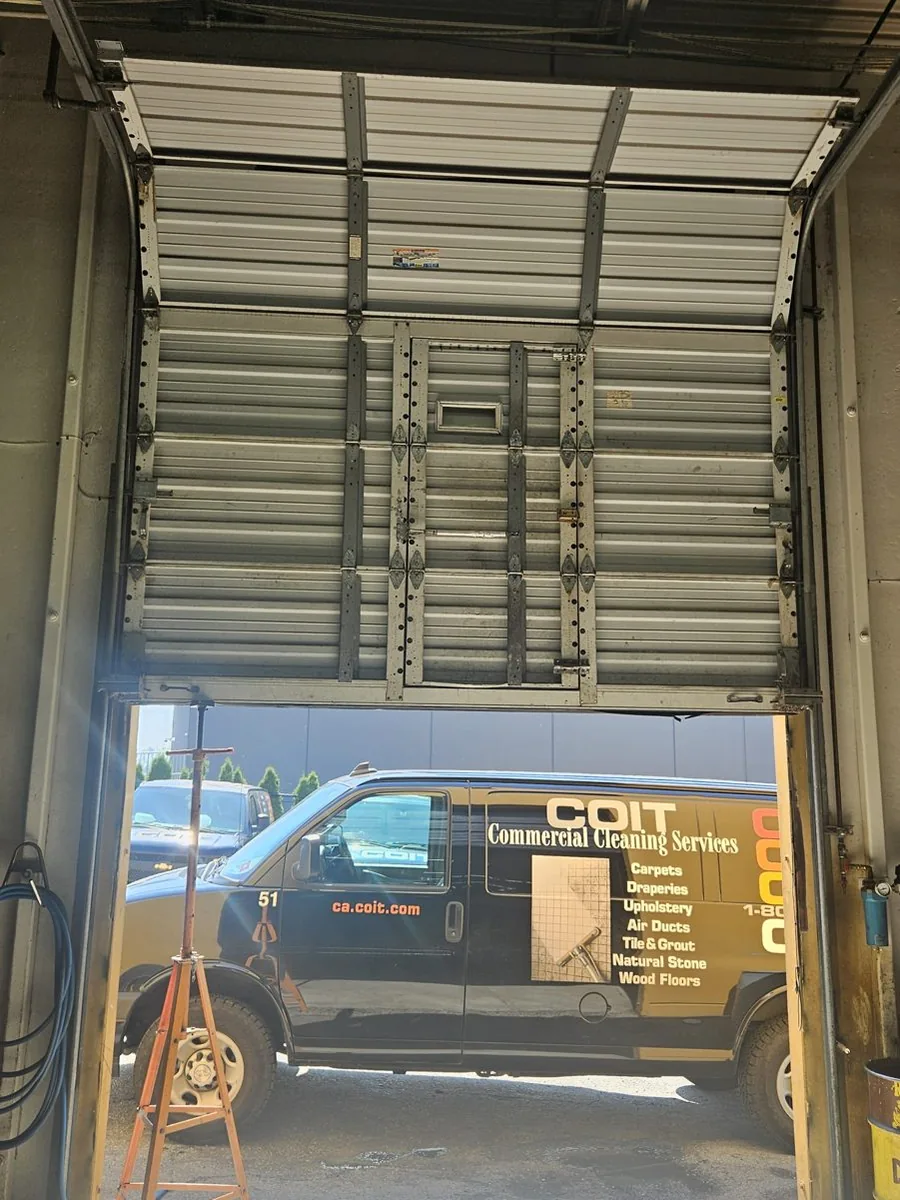
Ribbed steel commercial sectional door from inside, heavy-gauge hinges, vertical struts and a pass door
Commercial 11-gauge hinges
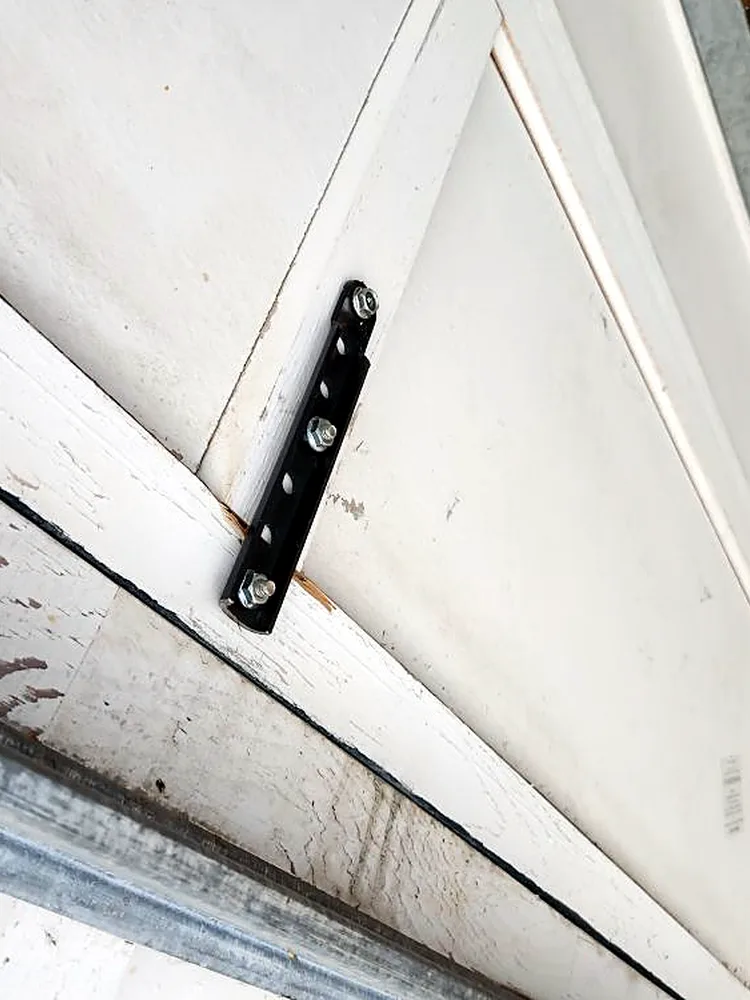
Slotted steel plate bolted across a panel joint on an older painted wood garage door
Repair plate on a wood door
01 / 03

What the number on a hinge means

Every hinge on a sectional door has a number pressed into the leaf: #1, #2, #3 and so on. The number tells you which joint it belongs on, counting up from the bottom. #1 hinges sit on the joint between the bottom section and the second section; #2 on the next joint up; #3 above that. On a four-section door the top section carries an adjustable top bracket instead of a hinge. Taller commercial doors run up to #5, #6 or higher, and the heavy 11-gauge range goes to #10.

The reason the number matters is the roller. The end hinges on each joint carry a roller stem through a tube on the hinge, and the tube sits a little farther from the door face on each higher number. That offset is what lets a flat door follow a curved track: as the door goes around the radius, each section leans back slightly more than the one below it, and the stepped rollers keep every wheel centred in the track. Swap a #1 and a #3 and the rollers bind at the curve, the door jerks, and the hinge leaf eventually tears out of the panel.

Hinge numbers: the number is the joint it sits on, and each number steps the roller farther out#1 hinge at joint 1#2 hinge at joint 2#3 hinge at joint 3Top bracket (adjustable)Bottom bracket (cable, under tension)Roller offset from door face#1 leaf#2 leaf#3 leaf#4 leaf
Hinge numbers: the number is the joint it sits on, and each number steps the roller farther out

End hinges and centre hinges

Each joint has two end hinges (one each side, with the roller tube) and one or more centre hinges in the middle of the door with no tube. Centre hinges are all #1 regardless of joint because they do not carry a roller; they just hold the sections together. Wide doors have two or three centre hinges per joint. A 16' door with three centre hinges on three joints is nine centre hinges plus six end hinges plus two top brackets: seventeen pieces of hardware doing the bending.

14 gauge or 11 gauge

TypeSteelWhere it goesNotes
Residential hinge, #1 to #414 gauge galvanisedHouses, 2" track, doors to about 18' wideWide leaf; takes 1/4" carriage bolts or 1/4"-20 bolts and nuts
Commercial hinge, #1 to #1011 gauge galvanised3" track, 2" or 3" rollers, heavy or tall doorsLarger roller tube; often with a 7" or 7.5" stem roller
Double-end hinge11 or 14 gaugeDoors over about 400 lb, wind-load doorsTwo roller tubes stacked; takes long-stem rollers
Wide-body / strut hinge14 gaugeThin-skin steel doors prone to tearingLonger leaf spreads the load over more skin
Gate / side-hinged hingeVariesSwing-out carriage doors, pass doorsNot interchangeable with sectional hinges

The gauge is the thickness of the steel: 14 gauge is about .075", 11 gauge about .120". On a residential door in Surrey or Langley the standard 14-gauge hinge is right. On a commercial door, a tall strata parkade door, or a heavy insulated or full-view aluminium door, the thicker hinge is the difference between hardware that lasts and hardware that cracks at the knuckle. Mixing the two on one door is a problem because the hole patterns and roller tubes differ.
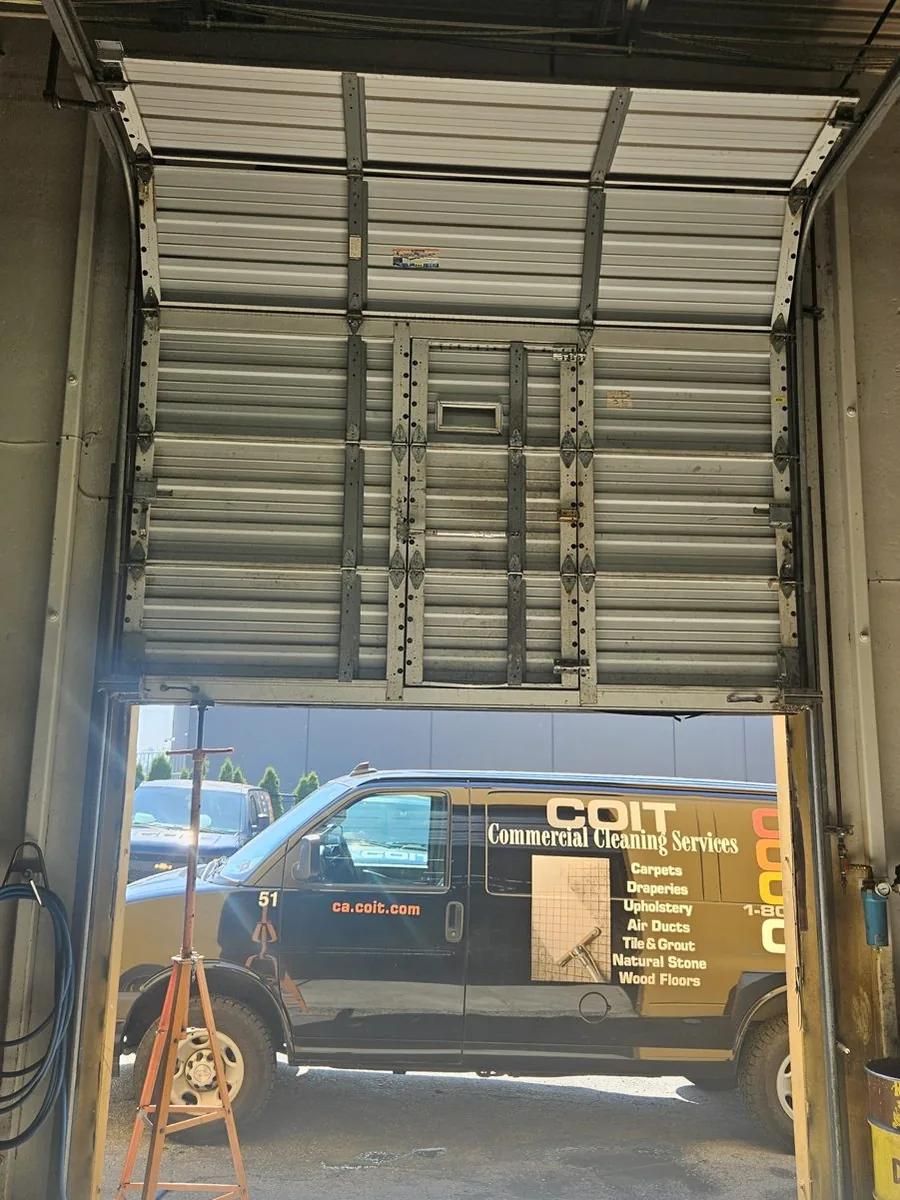
Ribbed steel commercial sectional door from inside, heavy-gauge hinges, vertical struts and a pass door
Commercial ribbed-steel door from inside: heavy 11-gauge hinges at every joint, with vertical struts and a pass door in the middle.

How hinges fail

  • Cracked knuckle. The rolled part of the hinge splits along the pin. Common on #1 end hinges, which carry the most sideways load at the curve. Shows as a click or clunk at the same point in every cycle.
  • Elongated bolt holes. The hinge is fine but the panel skin around it has stretched or torn. On thin-skin steel doors this is the usual failure. The repair is a wide-body hinge, a backing plate or, on an old door, a strut behind the hinge line.
  • Seized pin. Rust in the knuckle so the hinge does not pivot and the panel joint cracks open at the curve instead. Classic in damp garages; a drop of oil on each pin twice a year prevents it (see the lubrication guide).
  • Wrong number fitted. A previous repair with whatever hinge was on hand. The tell is a roller that rides hard against the outer wall of the track on one section only.

Which hinges are safe to replace yourself

Centre hinges and end hinges on joints #2 and up are ordinary hardware. Close the door, unplug the opener, clamp the track above a roller so the door cannot move, remove one hinge at a time, and bolt the new one in the same holes with the same number. The bottom bracket is a different matter: it carries the cable, and the cable carries the spring tension. A bottom bracket, or the #1 end hinge directly above it on some doors, must not be loosened with the spring wound. That is the line: anything attached to the cable is our job; everything above it you can do with a socket set if you want to.

Replacing hinges on wood doors

Wood doors in older Vancouver and Richmond houses are a different animal. The hinge screws pull out of soft, wet wood, and the fix is longer screws into sound timber, or through-bolts with a backing plate across the joint like the slotted plate in the photo below. If the stiles are rotten the hinge will not hold whatever you bolt it to, which is when panel replacement or a new door comes into the conversation.
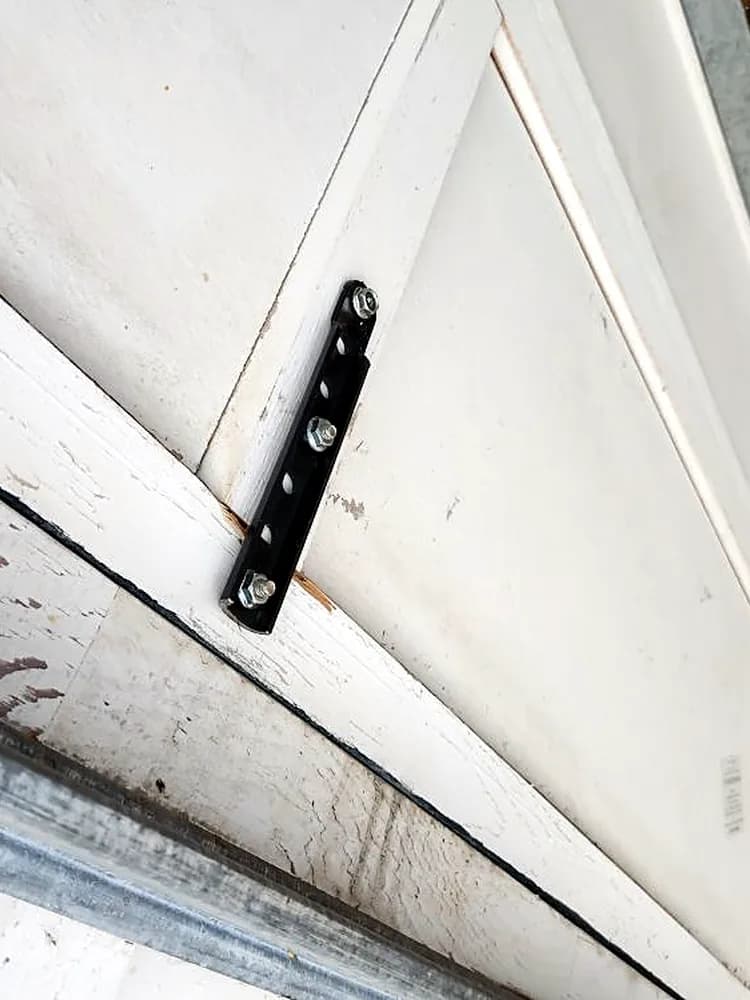
Slotted steel plate bolted across a panel joint on an older painted wood garage door
Slotted steel plate through-bolted across a joint on a wood door where the original screws had pulled out of the stile.

Not sure which part you need?

Send a photo of the part to (778) 873-7282 on WhatsApp or text, or use the contact page. We identify it, bring the right one, and fit it the same visit.

Contact us(778) 873-7282

Questions we get about this part

What does the number on a garage door hinge mean?

It is the joint the hinge belongs on, counting up from the bottom. #1 goes on the joint above the bottom section, #2 on the next joint, and so on. Each number also moves the roller tube a little farther from the door face so the rollers stay centred in the curved track.

Can I use a #1 hinge in place of a #2?

Not on an end position. The roller offset is different, so the roller will bind in the track at the curve and the hinge will eventually tear the panel. In the centre of the door, where there is no roller, all hinges are #1.

What is the difference between 14-gauge and 11-gauge hinges?

14-gauge steel is about .075 inch thick and is standard on residential doors with 2 inch track. 11-gauge is about .120 inch and is used on commercial doors with 3 inch track and on heavy residential doors. The two have different hole patterns and roller tube sizes.

Is replacing a garage door hinge a DIY job?

Hinges above the bottom section are, with the door closed, the opener unplugged and the door clamped. The bottom bracket and anything attached to the lift cable are not, because the cable is under spring tension.

Why does my garage door click at the same spot every time?

Usually a cracked hinge knuckle or a seized hinge pin on one joint, which lets the sections move against each other as that joint goes around the curve. Find the joint, and that hinge is the one to replace.

How many hinges does a 16-foot garage door have?

Typically six end hinges, six to nine centre hinges, and two top brackets on a four-section door. Five-section doors add one more joint of hardware.

中文: 车库门维修(温哥华 · 简体)車庫門維修(溫哥華 · 繁體) · Richmond garage door repair

Reviews

5.0 from every Google review.

amazing service and great pricing. Fixed our mechanic shop door within 1 hour of the call. Super friendly and proffessional tech and no upselling which is rare to find. Would defently recommend to my friends. Thank you Up and Down Team!!!
AutoMind PerformanceMechanic shop · Google review
My garage door suddenly stopped working, so I called Up and Down Garage Doors. They were able to come out the same day, which was a huge relief. The technician was friendly, professional, and easy to deal with. He did a full inspection at no extra charge and found a couple of issues I didn’t even know about. Everything was explained clearly, with no pressure, and all the repairs were completed the same day. The pricing was fair, and my garage door is working perfectly now. Great service from start to finish—I wouldn’t hesitate to recommend them.
Crystal JiGoogle review
I had a broken spring on my garage door and Max come in 30mins to safe my day. Prompt and professional job done, checked all other components making sure everything is working smooth again. Replaced all the bushings, lub the belt and adjust every blots too. Is such a comprehensive service that I haven’t experienced a long time in Canada. Thanks again!
David ChanBroken spring · Google review
Amazing service and excellent expertise. Max helped us switch out the motor of our garage door, and now it’s basically silent. He has amazing attention to detail, making sure to explain each step of the replacement. Additionally, he helped me set up the app associated with my new garage door, and explained the different settings to me. He is also punctual, helpful, and gave me advice on my other home improvement projects.
Coco OoiOpener replacement · Google review