

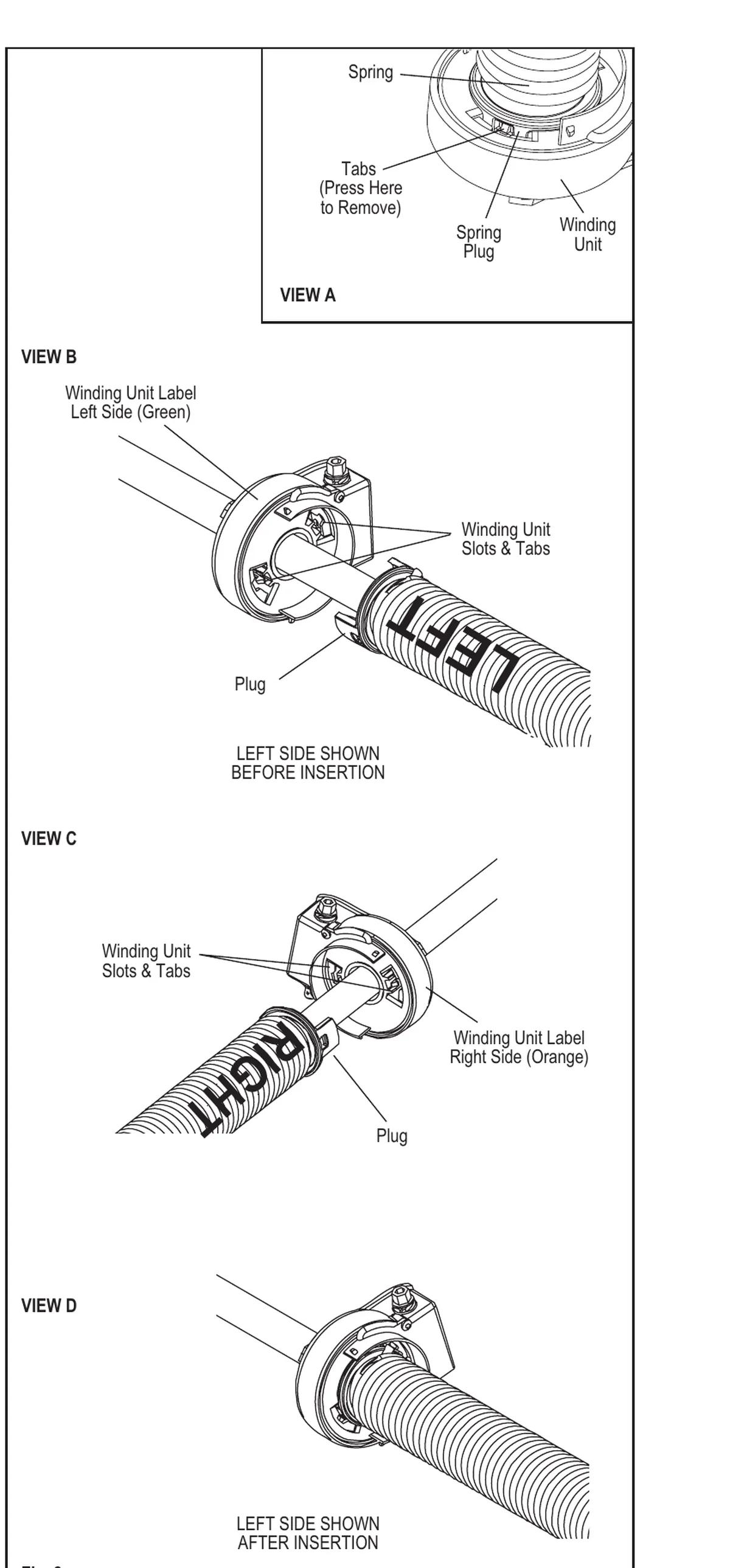
Short answer. The Clopay EZ-SET spring system comes in a torsion version and an extension version. On EZ-SET torsion, each spring ends in a plug that snaps into a plastic winding unit on the end bracket. The left unit is green and the right one orange, and a drill does the winding. One spring doors use an end bearing support on the right. The extension version puts each spring in a housing with a worm drive and needs 5 1/2 inches of sideroom. Both are still under full spring tension once set.
How the EZ-SET spring system differs
A standard torsion spring has bar holes in a cast cone. The EZ-SET spring system replaces that cone with a spring plug and a winding unit. Clopay's assembly sheet lists a 3/8 inch reversible power drill and a 1/4 inch insert bit among the tools, along with locking pliers and wrenches. The drill turns the winding unit, and the unit holds the tension.
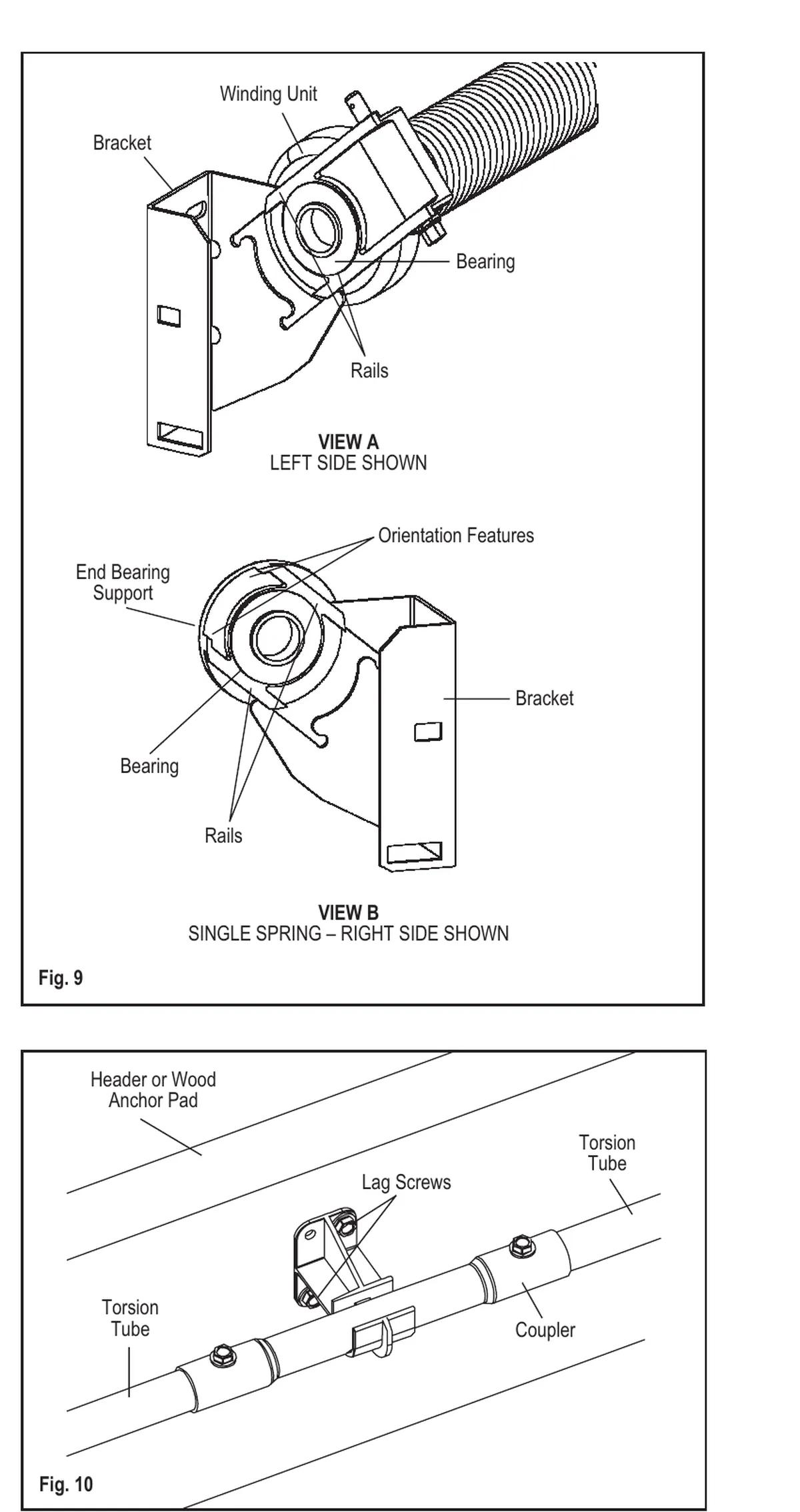
The springs also move. On a standard door they sit at the middle over a center bearing plate. On EZ-SET torsion they sit toward the ends, with the winding units mounted on brackets at the flag brackets and a center support holding the tube.
One spring or two
Clopay's parts list covers three setups. Single car with one spring, double car with one spring and double car with two springs. It counts any door wider than 11 feet as a double car door. On a one spring door the spring stenciled LEFT and its green L winding unit go on the left, and an end bearing support takes the right side. On a two spring door the RIGHT spring and the orange R unit go on the right.
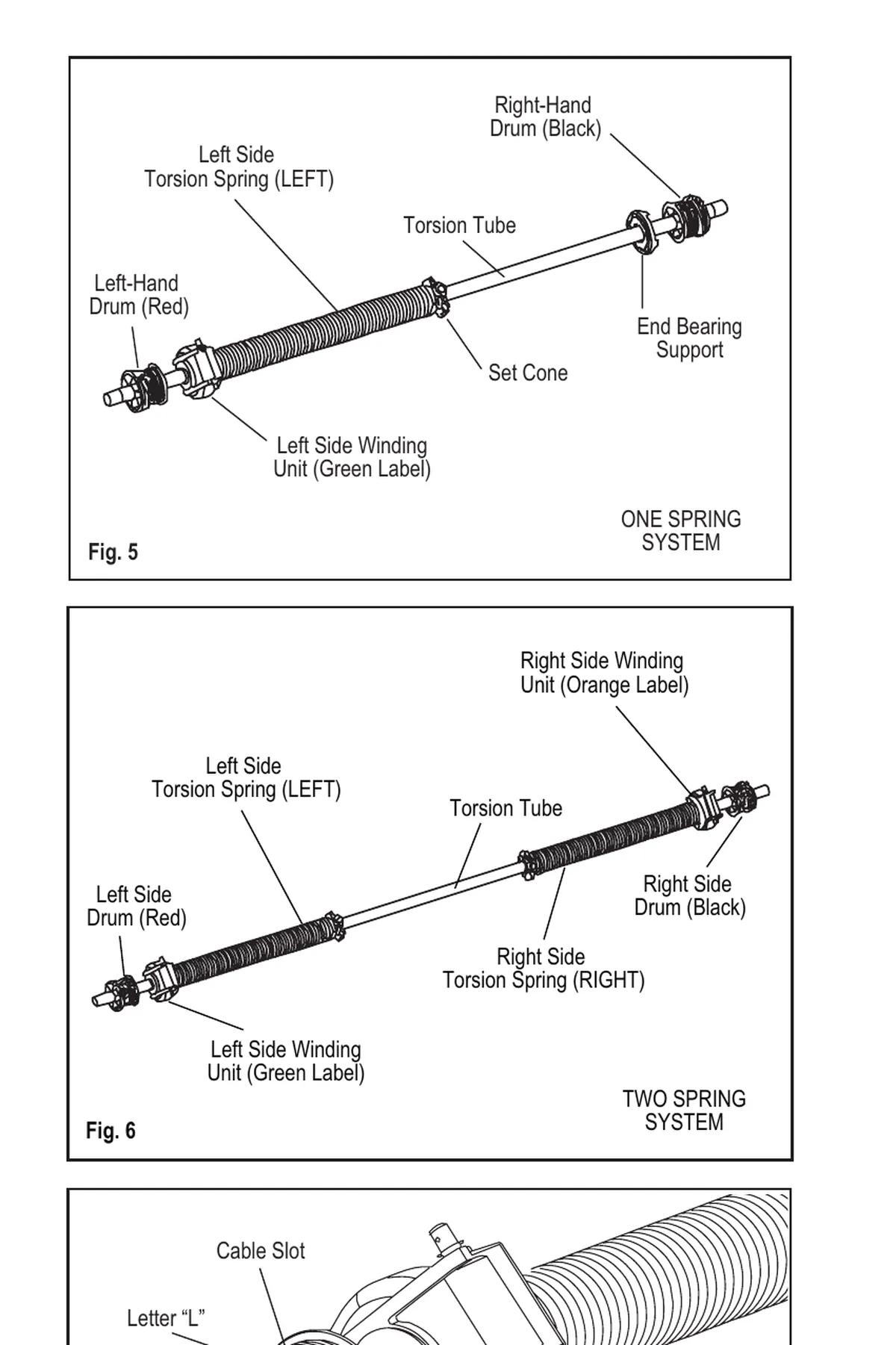
Drums are marked too. The L drum carries red paint and the R drum black. Clopay notes springs may be different sizes depending on the weight of the door, so the pair is not always matched in size, only in purpose.
Stenciled lengths matter
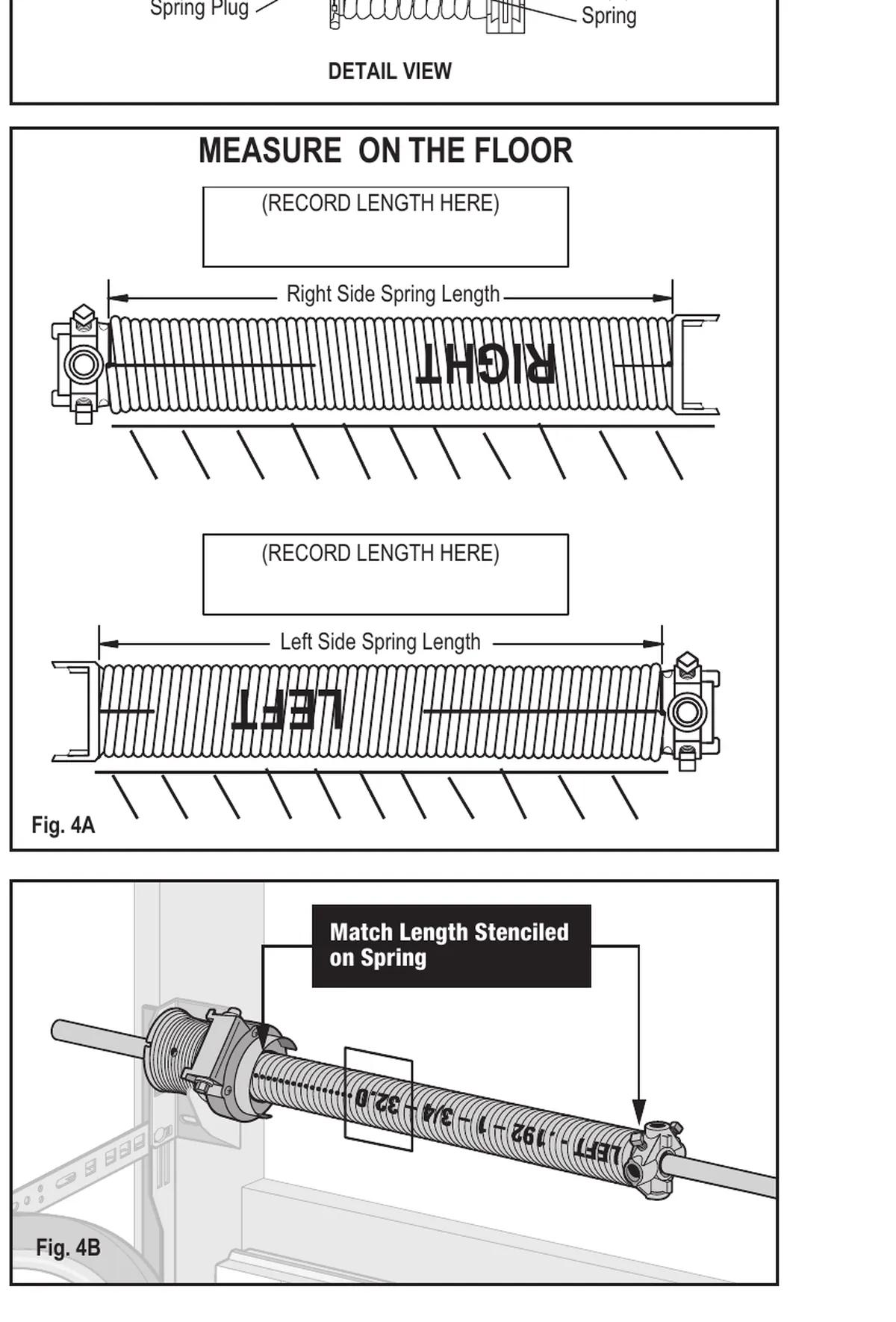
Each EZ-SET torsion spring carries its side and a length stenciled on the coil. Clopay has the installer lay the springs flat and record each length, and stretch a spring that measures short to the stenciled length. A spot of paint on the spring refers to its strength, not its side. The wording is what decides left or right.
The connection between plug and winding unit is the critical joint. Clopay warns that both ears of the spring plug must be intact and engaged, and both tabs in the winding unit must lock. Releasing a plug takes two small screwdrivers and extra care, in Clopay's own words.
The EZ-SET extension version
Clopay also makes an EZ-SET extension spring system. Each spring sits in a housing with a worm drive, mounted on the horizontal angle. Clopay says the door must stay closed during installation and that it needs 5 1/2 inches of sideroom, compared with 3 3/4 inches for standard extension springs. With less sideroom you have to convert to standard extension springs with lift cables and containment cables.
Our take on EZ-SET
We like the EZ-SET torsion design for one reason. There is no bar to slip out of a cone. That removes the most common way people get hurt winding a spring. But the stored energy is the same as any torsion spring on the same door, and a cracked winding unit or a half seated plug is dangerous. We treat EZ-SET work exactly like any other spring job.
The plastic units also age. On older Clopay doors we check them for cracks every service. A cracked unit gets replaced, it does not get taped.
Need help with an EZ-SET door
Call (778) 873-7282 or see broken spring repair. For the parts behind it, read torsion springs. The extension springs page has the other half. The other enclosed design is on our TorqueMaster springs guide, and standard cones are on winding cones.