

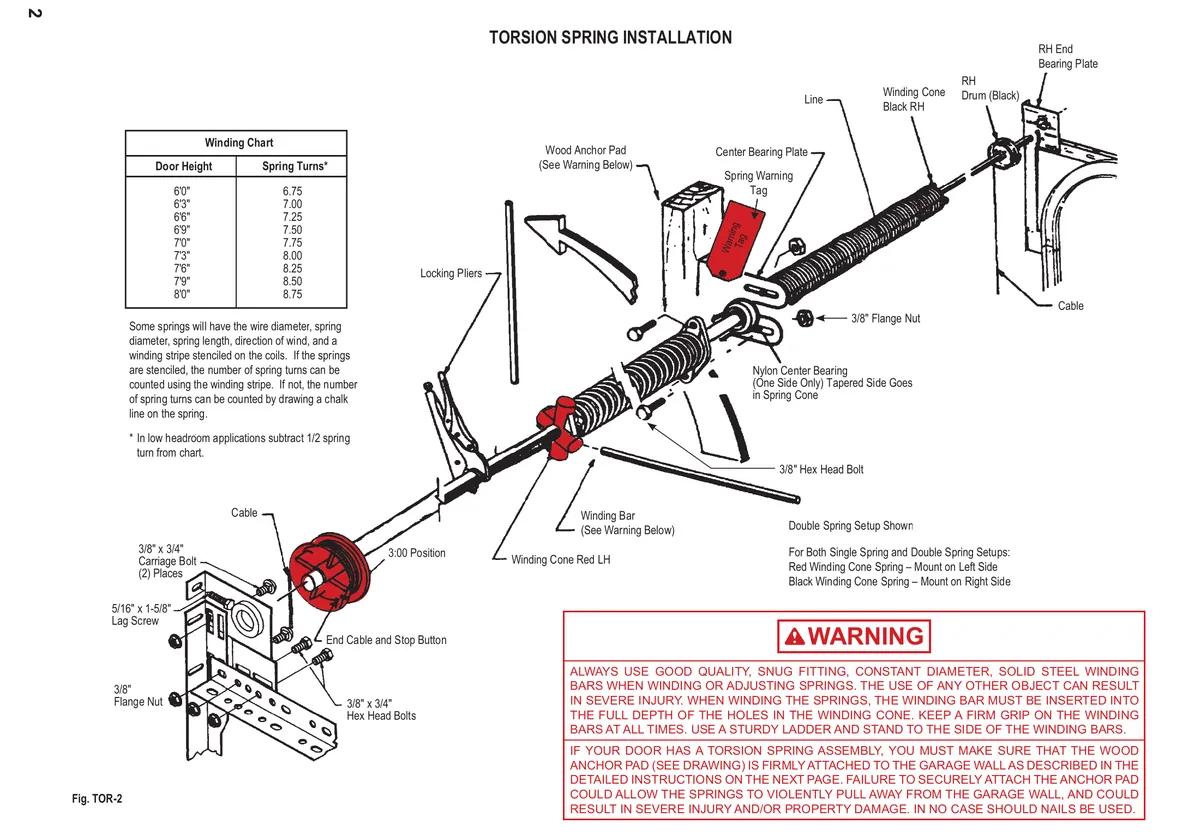
Short answer. Galvanized garage door springs carry a bright zinc coat, and oil tempered springs are dark. Clopay installs both with the same hardware and the same turns table. Its one warning is that a galvanized spring can make a door run slightly hot at first. It then relaxes into balance within a few weeks. Finish does not change how much the spring lifts. Rust is the real enemy, because it pits the wire and fatigue cracks start there.
Telling them apart
Clopay's torsion spring instructions say it in two lines. An oil tempered spring is dark. A galvanized one wears a shiny zinc coat that looks silver. From the floor with a flashlight you can tell in a second. Old oil tempered springs often look black and dusty. Galvanized garage door springs go dull grey over time.
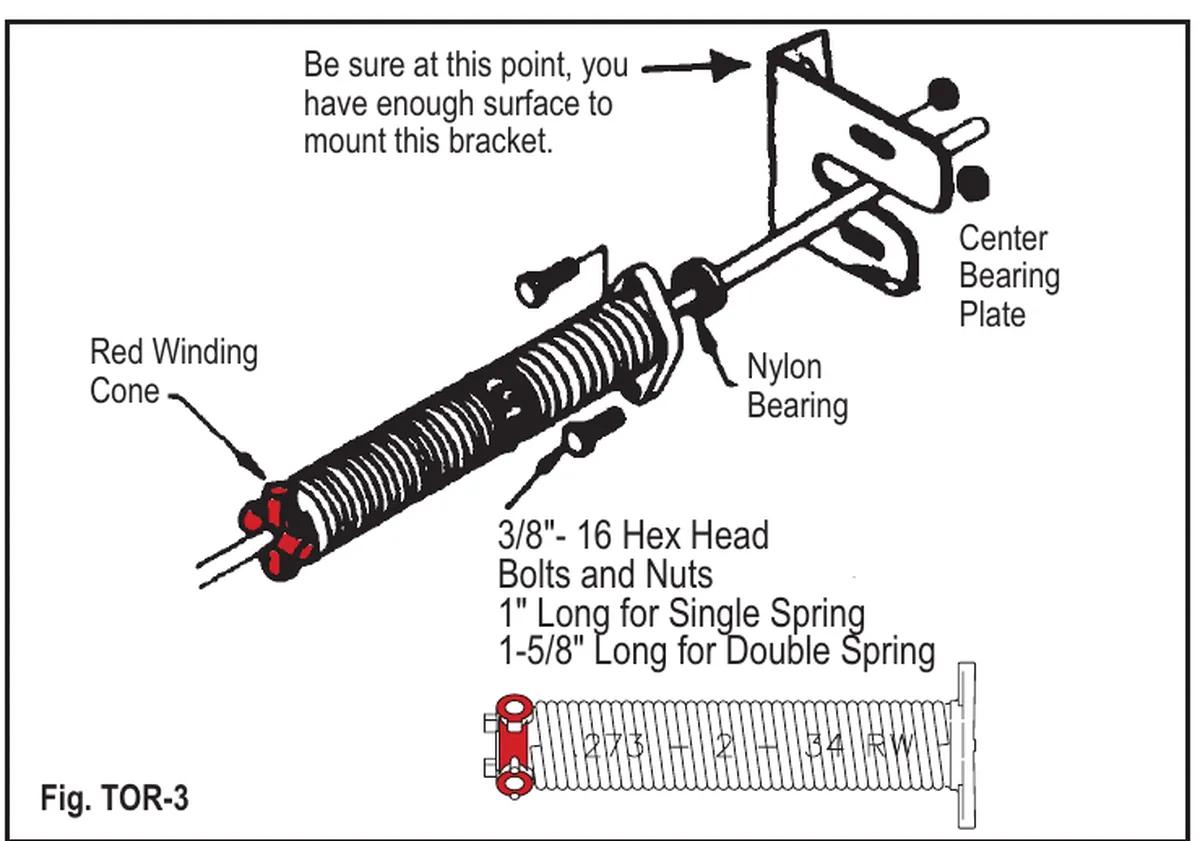
Both carry a stenciled size description on the coils. Clopay uses that stencil as a straight line for counting turns. A faded stencil is one more reason we measure every spring before ordering. Our spring measurement guide shows how.
Why galvanized garage door springs settle
The one behaviour difference in the Clopay paperwork is this. With galvanized springs the door may look slightly hot with the turns in the table. That means it drifts upward. The springs then self adjust and relax a little, and the door ends up balanced within a few weeks of normal use.
For you that means a door that feels light for the first couple of weeks after a galvanized spring change. That is expected. What is not expected is a door that keeps climbing after a month, or one that starts to feel heavy. Both need a balance check, which we explain on our spring balance page.
Rust is what shortens spring life
DASMA wrote a full paper, TDS 190, on what cuts a spring's life short. It wants springs stored dry, since rust eats into the wire and leaves less steel to carry the load. Rust also leaves corrosion pits where fatigue cracks can grow and cut cycle life short.
On use it lists climates with frequent rain and sites near salt water as hard on springs, and says doors there should be kept closed where possible. It also says regular greasing of the springs, as the door maker asks, helps them reach their cycle life. A Richmond garage near the river or a Steveston carport gets all of that at once.
Which one we fit
Our honest view is that the finish matters less than people think. A galvanized spring that is never wiped down still rusts at the cones and where the coils rub. An oil tempered spring in a dry, closed garage can run its full rated life. What decides lifespan is wire size and length. See wire size and how long springs last.
Where a garage is damp, we lean galvanized. We also tell the owner to keep a light coat of lubricant on the coils as the maker suggests. Where it is dry, either is fine. We match a pair on a two spring door, so you never end up with one of each.
Colour marks are a separate thing
Do not confuse the finish with the paint mark. The paint stripe on a spring or its cone is a size code. DASMA sets those colours in TDS 171. Our spring colour code page explains why that mark alone is not enough to order a spring.
Need a spring replaced
Spring work is for trained techs with the right bars. If your spring has snapped or you can see rust pits along the coils, keep the door closed and call (778) 873-7282. Prices for a spring job are on our spring replacement cost page, and the service itself is on broken spring repair.