

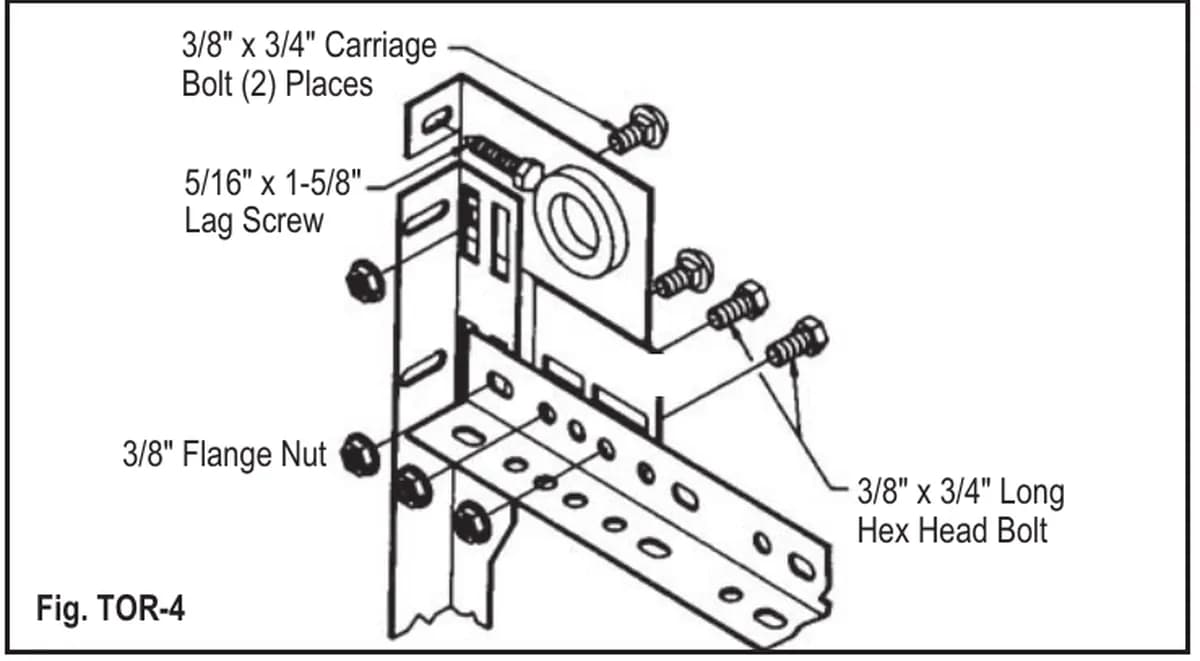
Short answer. On a torsion door, three bearing plates carry the tube. The center bearing plate holds the stationary end of the springs and takes all their torque into a wood anchor pad on the header. The two end bearing plates hold the tube level at each side. Clopay wants the pad in Grade 2 southern yellow pine, fixed into the framing with four lag screws. Red headed screws mean spring tension. Leave them alone.
The three plates on a torsion door
Clopay's torsion spring supplement lists the hardware for a standard house door. Two end bearing plates and a center bearing plate with a nylon bearing. Then the torsion tube and two cable drums. Single car doors get one spring. Double car doors get one or two. Those bearing plates are the frame the whole counterbalance hangs from.
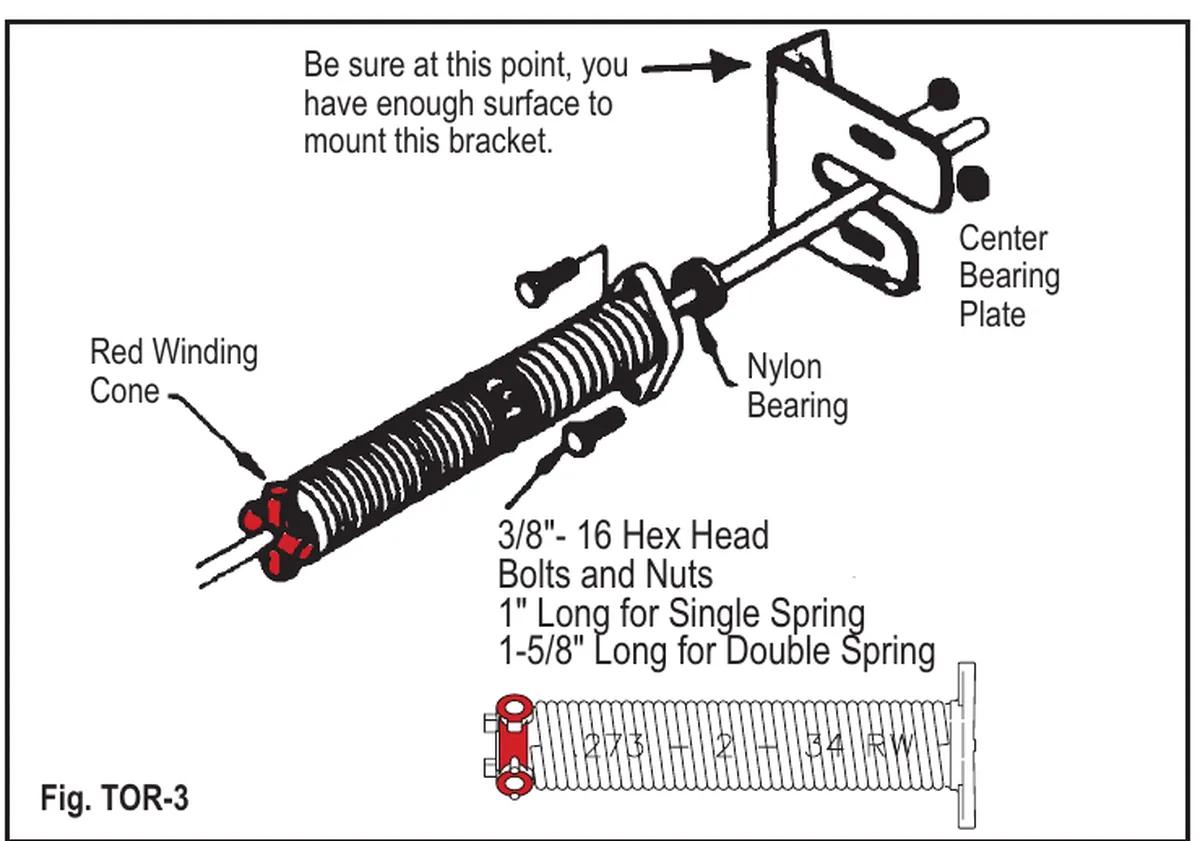
The center bearing plate sits over the middle of the opening. The stationary ends of the springs bolt to it, so it holds back every bit of their torque. The end bearing plates sit at each side, on the horizontal angle, and carry the tube in a bearing so it can turn. The drums seat up against them.
Bearing plates and the 12 or 15 inch track
Clopay end bearing plates come as one stamping you break apart by hand at the tabs. Each has two rows of slots. The bottom two slots are for 12 inch radius horizontal track and the upper two for 15 inch radius. Pick the wrong row and the tube sits at the wrong height, the cables run at an angle and the drums wear.
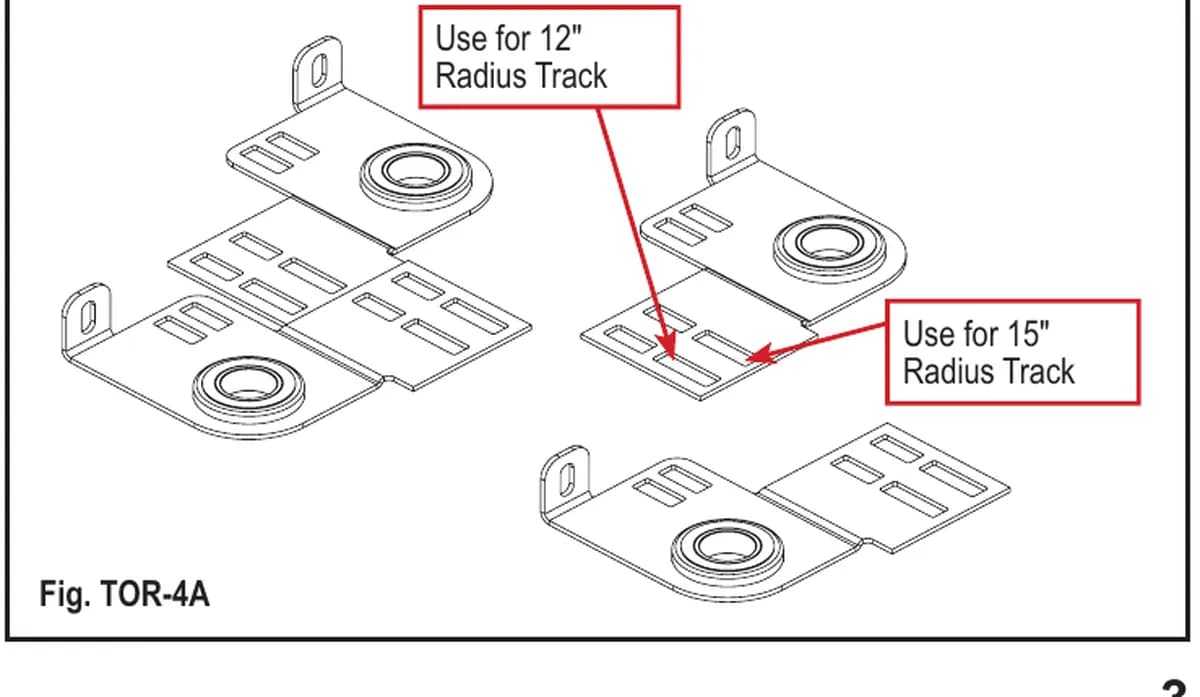
Clopay also wants the tube level and straight once mounted. When we see a tube that sags at one end, the end bearing plate is usually in the wrong slots or its lag screw has pulled out of a soft jamb.
The wood anchor pad behind the center plate
Here is where old Vancouver garages catch people out. Clopay is specific about the pad. Clopay calls for southern yellow pine, grade 2 at minimum. Clopay also accepts a short list of hardwoods such as oak. No splits or cracks. Lumber stamped SPF, spruce pine fir, is ruled out by name. Plenty of garage framing in this province is exactly that.
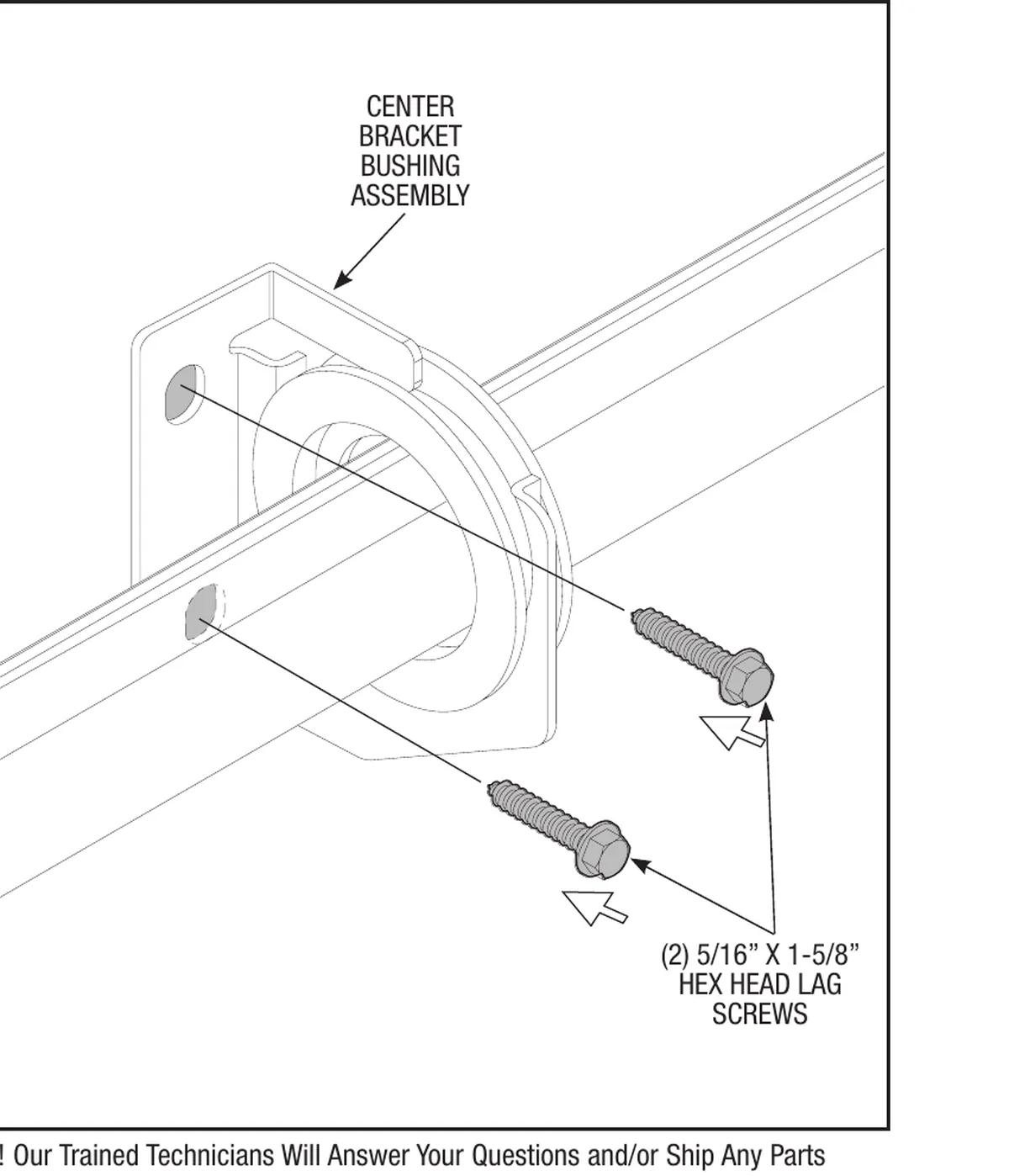
Four lag screws, 3/8 by 4 inch, hold the pad to a wood frame, or four 3/8 by 4 inch sleeve anchors on concrete. Keep them an inch and a half or more in from every edge, driven into the frame, not the drywall. No nails. The side jambs and the pad sit 12 inches above the opening for 12 inch radius track and 15 inches for 15 inch radius.
DASMA backs this up in its code inspection sheet, TDS 151. It asks that torsion spring pads be structurally sound and fastened to load bearing members. A pad that has split around its lags is a stop using the door call.
Red headed screws
The center bearing plate goes on with red headed 5/16 by 1 5/8 inch lag screws. Clopay prints the warning in capitals. Never adjust the center bearing plate or the red headed fasteners after the springs are wound. Red means the fastener is holding spring tension. Take it out and the plate can rip off the wall with the springs still loaded.
That is our one hard rule on this page. If a renovator wants to move something near that pad, they call us first. We would keep ceiling racks and shelving off that header entirely.
TorqueMaster and EZ-SET are different
A Wayne Dalton TorqueMaster has a center bracket too, but it only holds the tube. The springs anchor themselves inside the tube. A Clopay EZ-SET uses brackets with winding units at the ends. Both are on our TorqueMaster guide and EZ-SET guide.
What we check on a visit
We look at the pad first, then the plates, then the springs. Cracks around lag heads. A pad that moves when the door runs. Squealing bearings, or a tube that wanders side to side. More on parts on our bearings and plates page and torsion springs. The cones that bolt to the center plate are on winding cones. Call (778) 873-7282 or book through broken spring repair.