

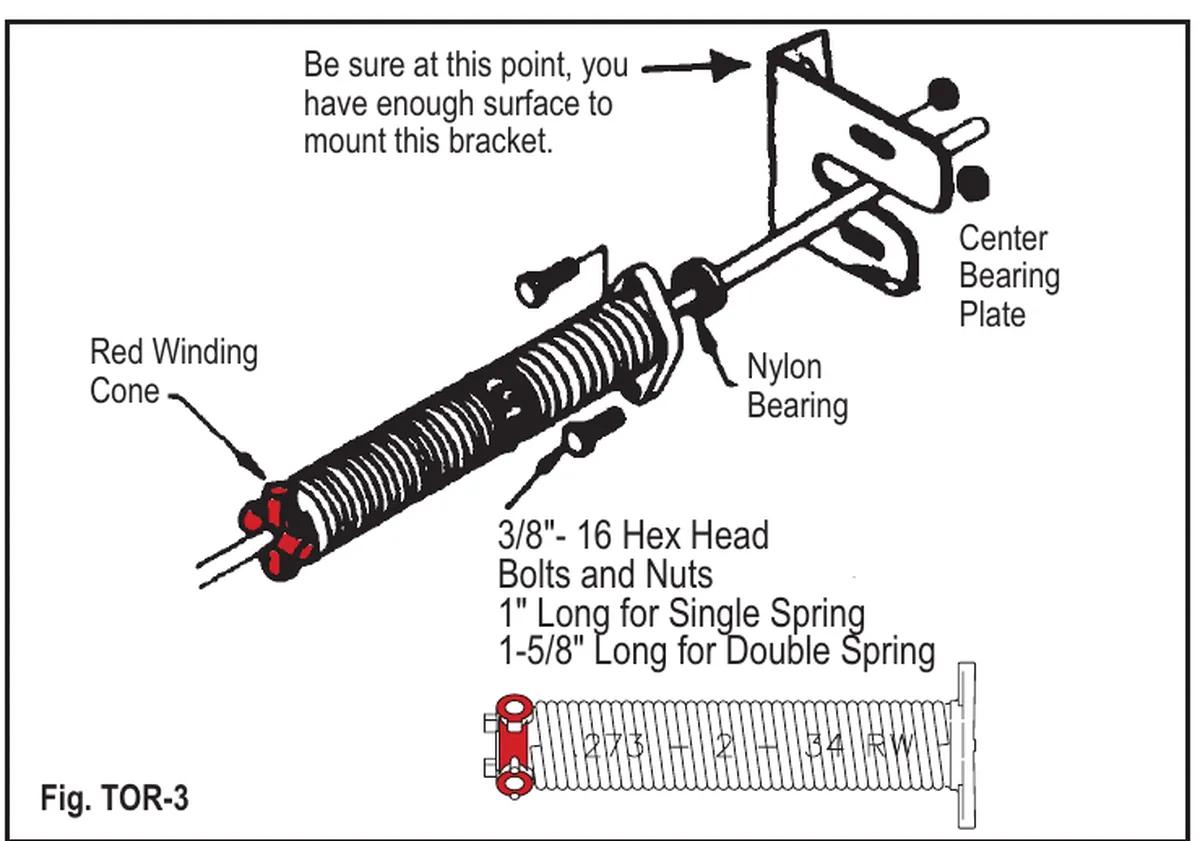
Short answer. Garage door winding cones are the cast ends on a torsion spring. The stationary end bolts to the center bearing plate. The winding cone sits out at the end of the tube, takes the winding bars and locks with two set screws. On Clopay doors the red or black cone colour tells you which side the spring belongs on. A cracked cone, a loose set screw or a chewed bar hole means a new spring. Winding is trained tech work only.
What garage door winding cones do
Look up at a torsion spring above a house door and you see a long coil on a tube. At each end there is a cast plug pushed into the coil. Those are the cones. Clopay's torsion spring supplement describes each spring as spring coils plus a stationary cone and a winding cone. Garage door winding cones are the business end, because that is where the tension goes in and where it is locked.
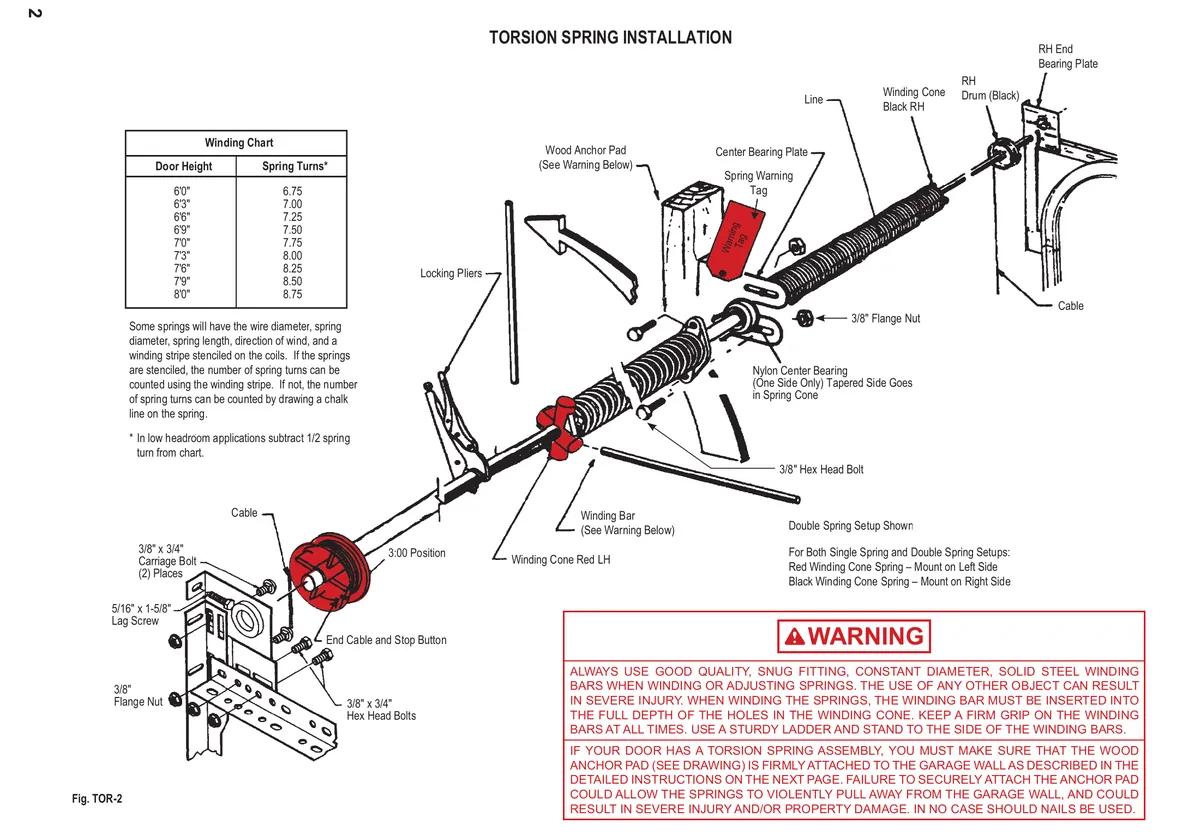
The stationary cone bolts to the center bearing plate over the middle of the door and stays put. Out by the drum, the winding cone rides on the tube. It has holes around it for winding bars and two set screws that grip the tube once the spring is wound.
Plain warning before anything else. A wound spring stores enough energy to break bones. Clopay tells installers never to use screwdrivers or other substitutes for winding bars and to stand to the side. Our position is simpler. If you are not a trained tech with proper solid steel bars, you do not touch a cone.
Red cone, black cone
Clopay paints its winding cones. Their supplement says the colour helps an installer put each spring on its proper side. Black winding cone springs stenciled LW go on the right side, and red winding cone springs stenciled RW go on the left, as seen from inside the garage looking out. Put one on the wrong side and the door works badly and can hurt someone.
Other makers use their own colours. Wayne Dalton marks the left hand TorqueMaster spring with a red slash on the cone and leaves the right one grey or silver. So the colour means nothing across brands. It only tells you the side on that maker's door.
Set screws, the small part that matters
Once the turns are on, two set screws lock the winding cone to the tube. Clopay's residential sheet says they go 3/4 to one full turn after they make contact with the tube. Too loose and the cone walks along the tube or spins. Too tight and a hollow tube gets crushed. On a two spring door, each spring gets its own set screws.
A cone that has slipped leaves a shiny ring on the tube beside it. The door also starts feeling heavy on one side. If you see that ring, stop using the opener and call us.
When a cone is damaged
The DASMA paper on spring life, TDS 190, cautions that a dropped or thrown torsion spring can crack its cast fittings. A cracked fitting can then fail while it is being wound. It also says the live coils should not be allowed to spin when a cone is being fitted. The cone and coil leave the factory as a matched pair.
That is why we never reuse cones. When a spring breaks we replace the whole spring with its cones, sized for your door. Some handymen keep old cones to save a part. We think that is a bad bet on a part holding a few hundred pounds of torque.
Cones on other spring systems
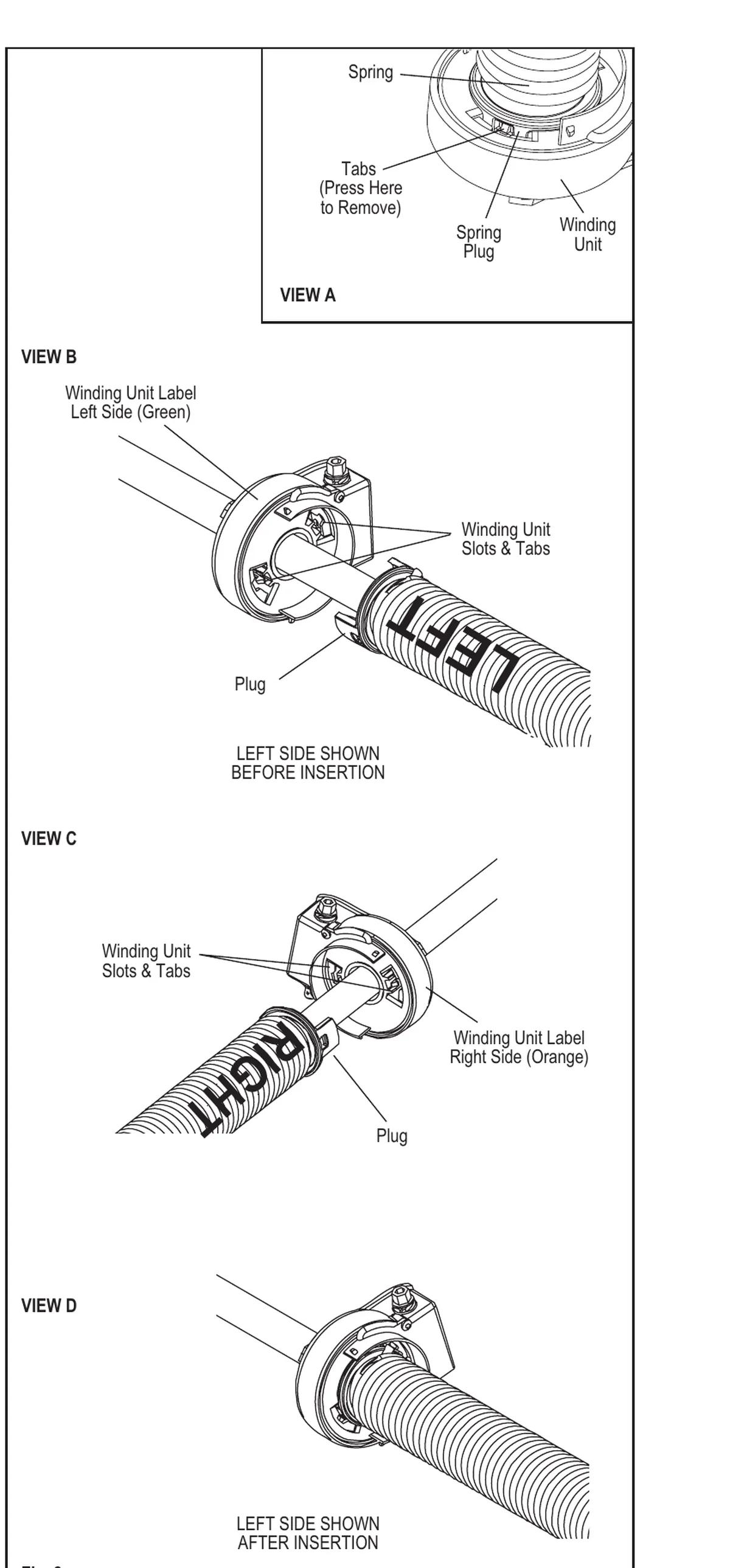
Not every door has open cones you can see. A TorqueMaster hides its springs inside the tube, with teardrop shaped anchor cones locking inside. A Clopay EZ-SET torsion system swaps the bar holes for a winding unit that a drill turns. Both have their own pages, our TorqueMaster guide and the EZ-SET guide.
What to do next
From the floor, with the door shut, look for a gap between the last coil and the cone, rust on the set screws or that shiny ring on the tube. Then leave it alone and call us at (778) 873-7282. The spring itself is on torsion springs, sizing on the spring measurement guide, and the plate the cones bolt to on bearing plates and anchor pads. Broken already. Go straight to broken spring repair.