

Short answer. A garage door spring inspection is a look, not a touch. DASMA's home inspector checklist starts with labels, a spring warning label on the spring or its bracket, then a visual check of springs and hardware with the door closed. Extension springs must have a containment cable through them. Torsion pads must be sound and fastened into framing. A door that will not hold at a balance point needs a tech. Never loosen or adjust anything under spring tension.
Where the checklist comes from
DASMA is the door and operator makers' association. It publishes a checklist for home inspectors and owners, Technical Data Sheet 167. It opens with a warning in bold. Springs and spring hardware are under high tension. If a spring is broken, do not run the door until it is replaced. Do not try to repair or adjust springs or anything they are fastened to. A garage door spring inspection done right never puts a hand on any of them.
A companion sheet, TDS 174, says the same to building occupants and adds a balance check. And TDS 151 gives code inspectors the pad and containment rules. This page boils the three down for a house sale.
Labels first
From inside the garage with the door fully closed, TDS 167 asks three label questions. Is a spring warning label on the spring or the spring bracket. Is a general warning label on the back of a door section. Are two warning labels near the bottom corner brackets, unless the brackets are tamper resistant. Missing labels do not mean the door is unsafe. They often mean someone has worked on it without the manufacturer's parts.
Garage door spring inspection for containment
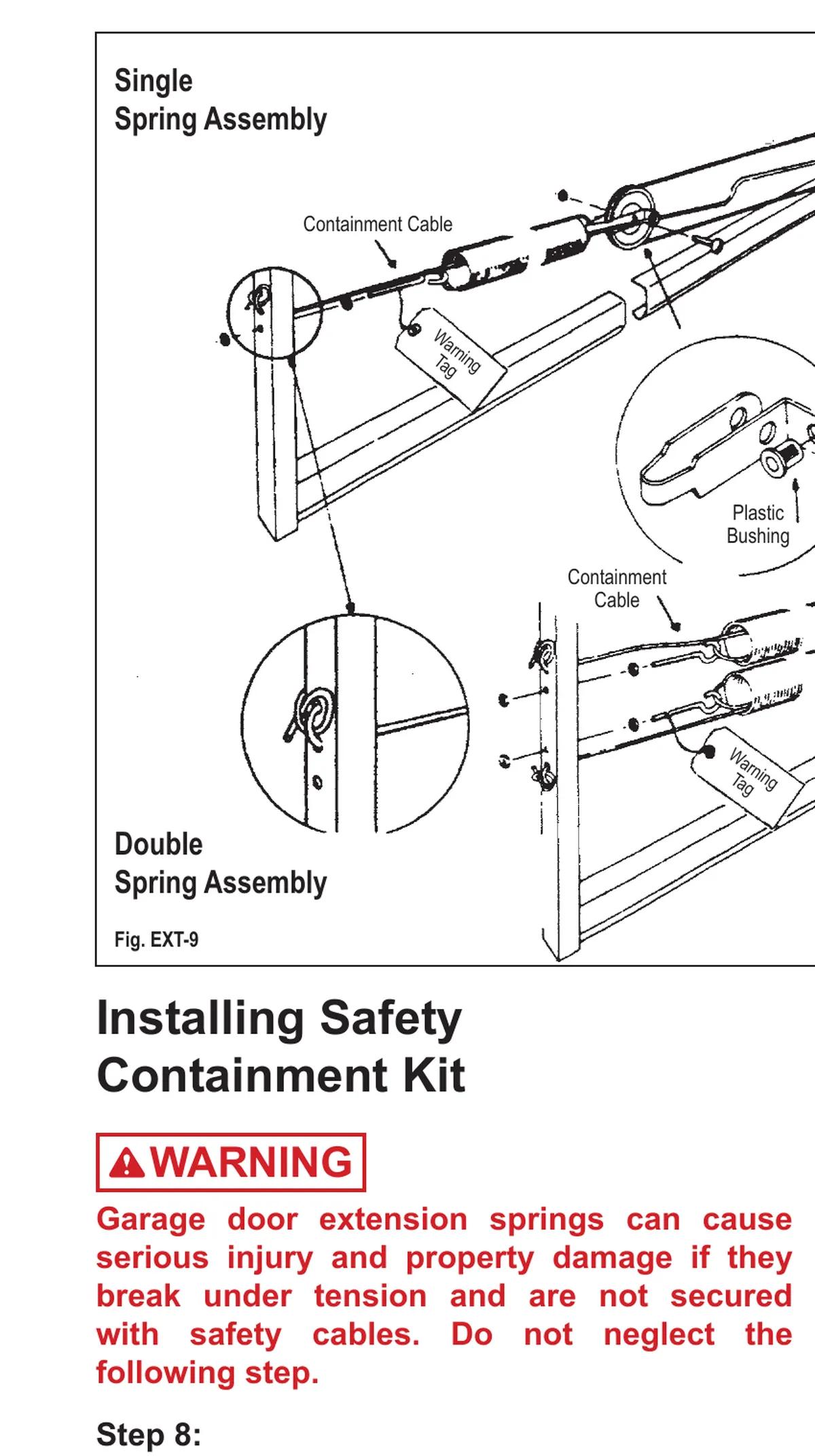
Still with the door closed, look over the springs and their hardware for damage. Then the containment question. TDS 167 explains that torsion springs on a shaft are contained by design. Extension springs must have a secure cable running through the center of each spring so broken pieces cannot fly. Clopay's own extension sheet says those doors must never run without that cable.
For a buyer that is the single most useful item on the list. Older Metro Vancouver houses still have side springs with no cable. It is a small fix and a real hazard if left. Our extension to torsion conversion page covers the bigger fix.
Torsion pads and brackets
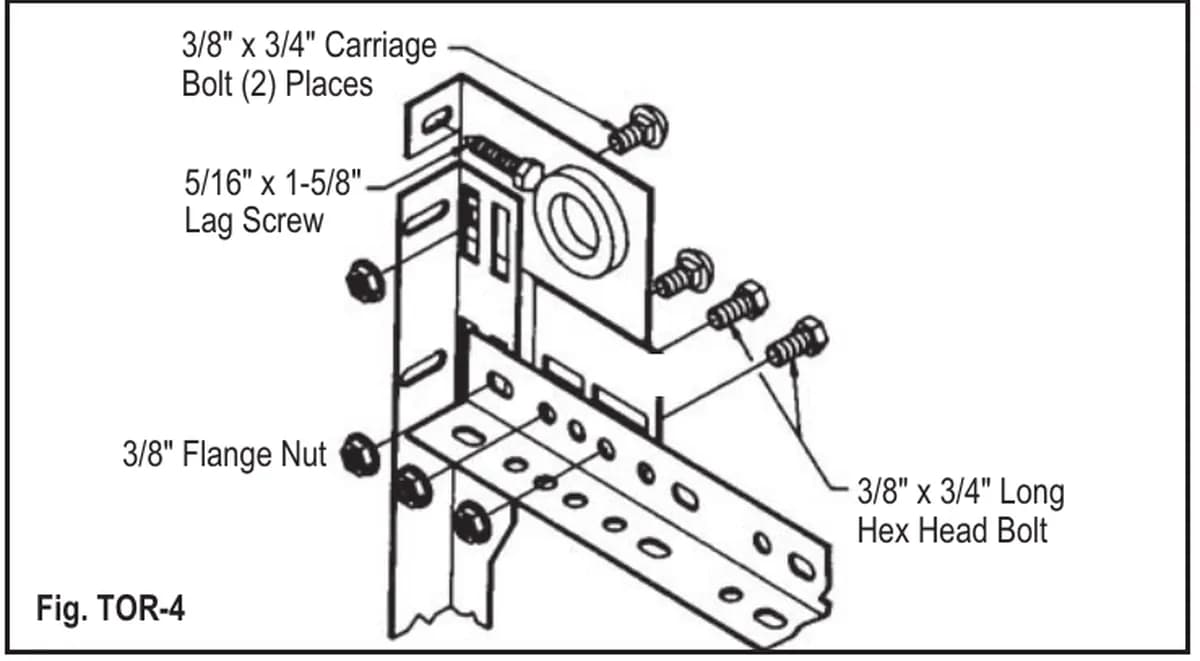
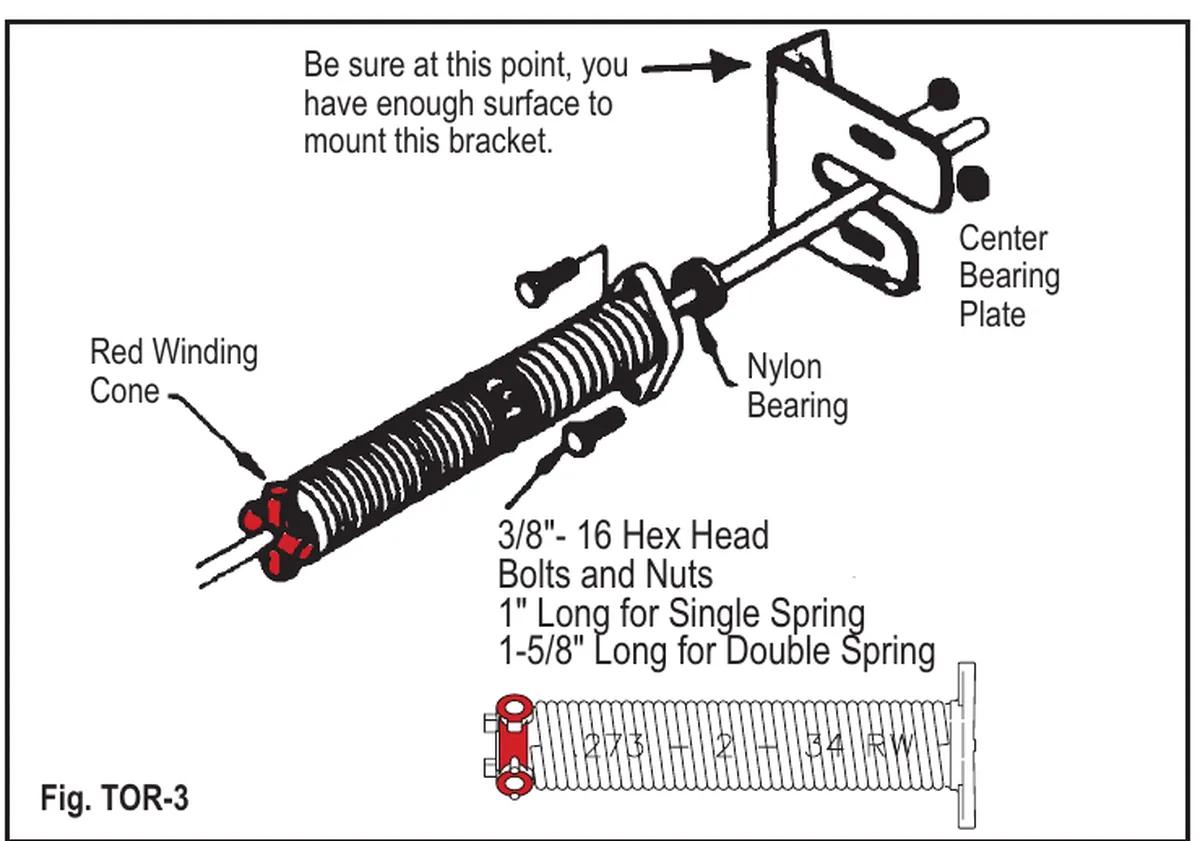
TDS 151 says torsion spring pads must be structurally sound and fastened to load bearing members, and that inspectors look at spring anchor brackets and the parts cables attach to without touching them. If anything under tension looks loose, the owner calls a trained tech. Look for a split wood pad over the door, lag heads pulling out, or a center plate that is not flat to the pad. More on what good looks like is on our bearing plates and anchor pads page.
The balance check, carefully
TDS 174 describes lifting the door by hand, with the opener released, until it reaches a point where it takes as much force to lift it as to close it. That is a balance point. If the door slams or races up, stop. Our spring balance page explains the test, and we only suggest it for someone comfortable releasing an opener and holding a heavy door.
What we tell buyers
Our opinion. A garage door spring inspection takes ten minutes and the fixes it turns up are usually small. A missing containment cable, a tired spring, a pad that needs a second look. Get them done before you move a car in. Call (778) 873-7282 and ask us to look at the door before closing day, or read our maintenance checklist and how long springs last. If a spring is already broken, go to broken spring repair.