

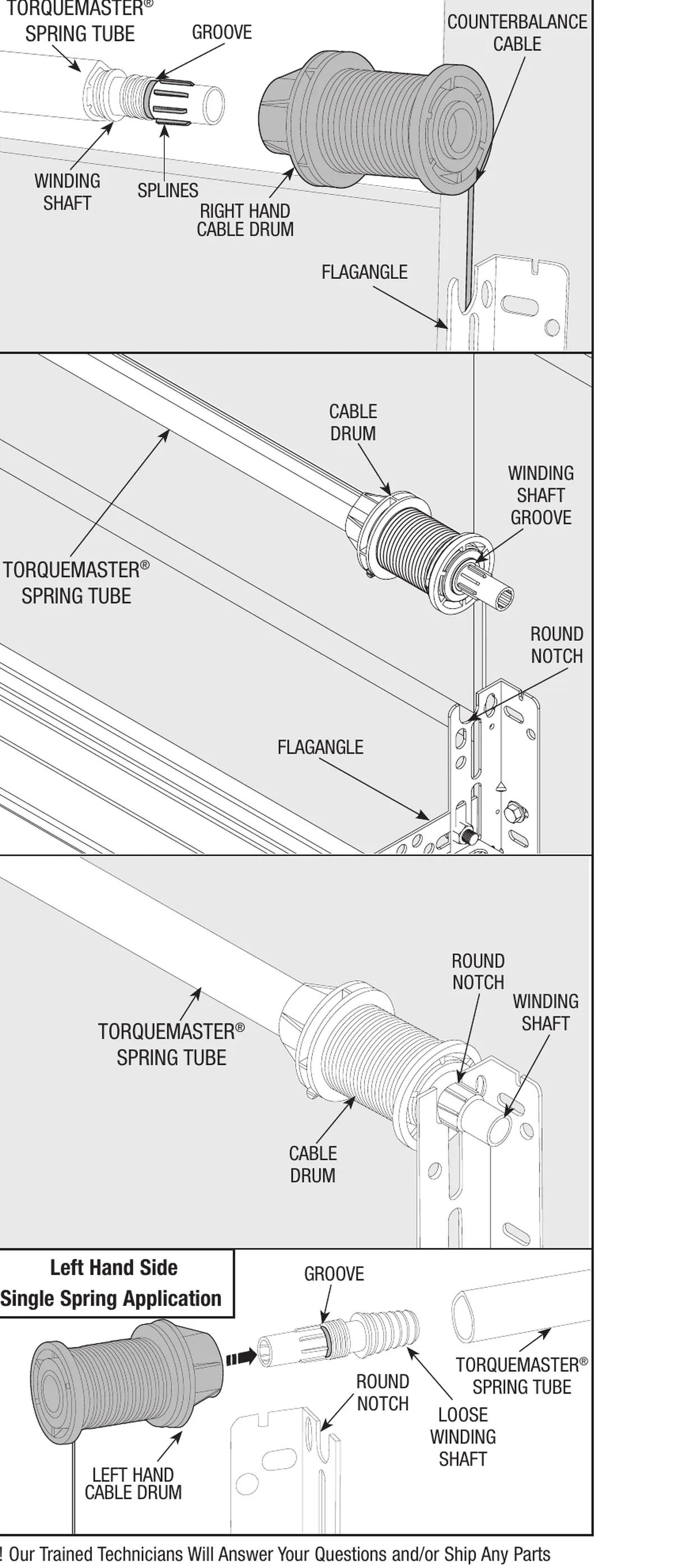
Short answer. TorqueMaster springs sit inside a teardrop shaped tube above the door instead of out on a bar. Wayne Dalton winds them through a gear at the end brackets with a counter that shows the turns. The left spring has a red marked cone and the right one grey or silver. A single spring system serves doors up to 110 lb and always sits on the right. A broken TorqueMaster spring is hidden, so the first sign is usually a door that will not lift.
How TorqueMaster springs are built
Most torsion doors have springs you can see on a round bar. A Wayne Dalton TorqueMaster puts its TorqueMaster springs inside the spring tube itself. Wayne Dalton's replacement notes explain that the tube is teardrop shaped, and so is the anchor cone on the inner end of the spring. When the spring is wound, that cone locks into the tube. Nothing inside the tube connects to it.
At the outer ends, the springs connect to winding shafts that pass through the cable drums into gears at the end brackets. The left bracket on a single spring door has no dial. A double spring system has a dial on both ends.
Red cone, grey cone
The factory sheet marks the left hand spring with a red slash of paint on the winding cone. The right hand cone is grey or silver. Left and right are always read from inside the garage looking out. The plastic sleeves on old springs are only noise dampeners, and Wayne Dalton says springs can run without them.
One spring or two
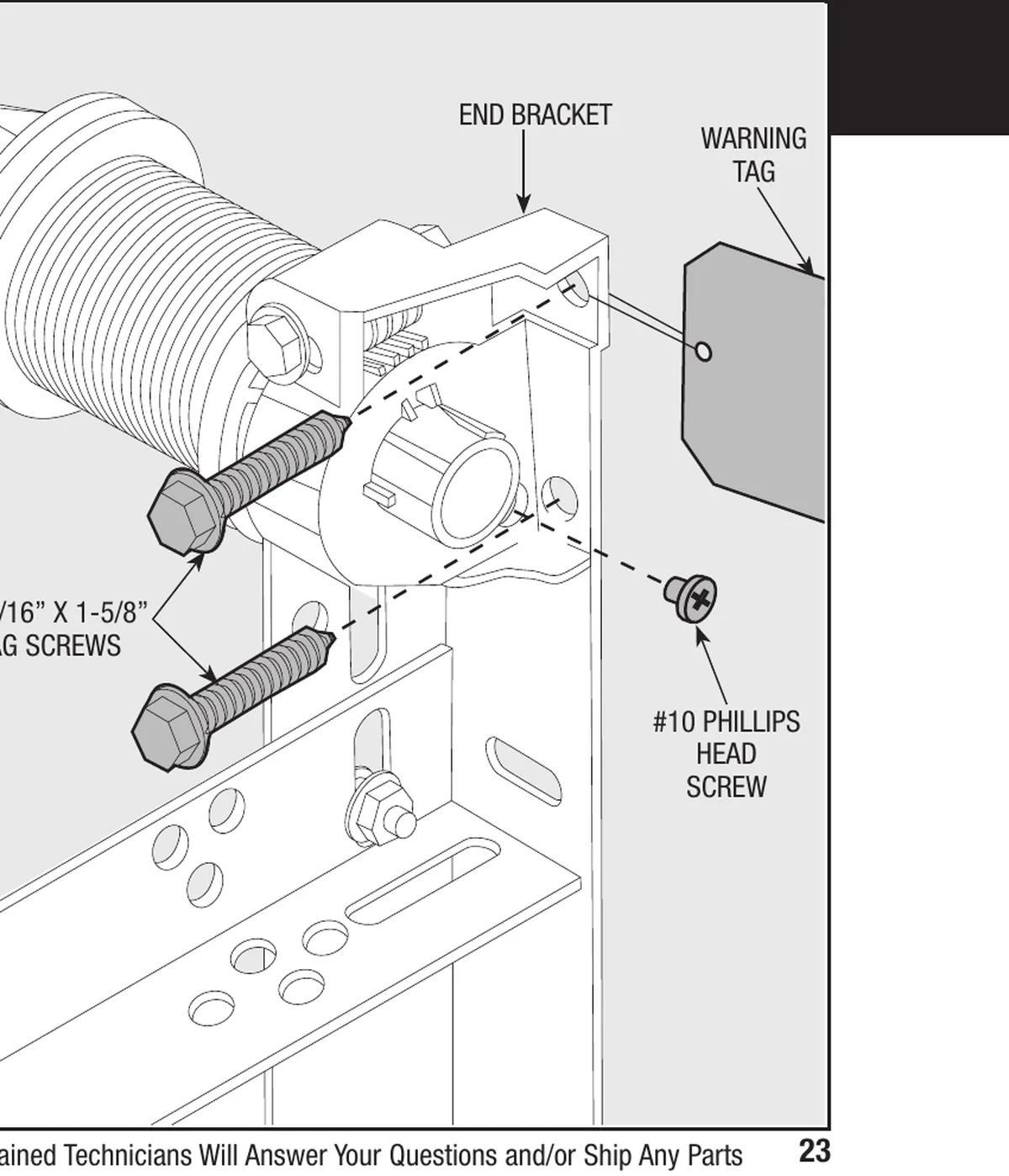
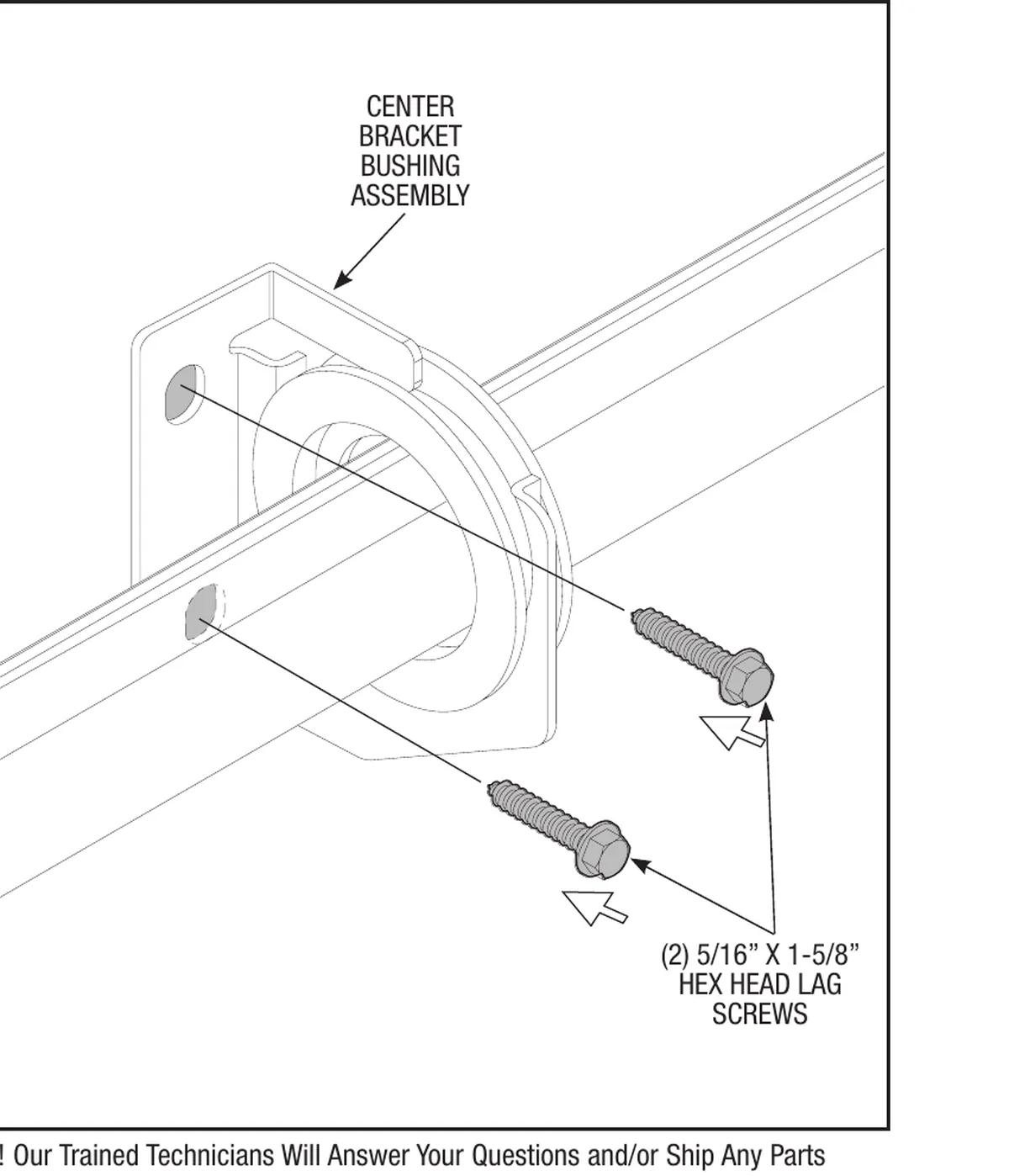
Wayne Dalton states that the single spring system is for doors of 110 lb and below, and the single spring always goes on the right. Doors of 110 lb and up get the double system. Converting a door to one spring means the left spring and its gears come out. An old left cone is then reused as a spacer to support the assembly.
The turns go on with a drill and a 7/16 inch hex driver on the winding bolt. The counter cover shows the count. The factory table runs from 14 turns for a 6 foot door to 18 turns for an 8 foot door. Wayne Dalton is clear that the actual turns may vary from the chart and are adjusted by a quarter turn at a time until the door balances. It also says no impact gun when unwinding.
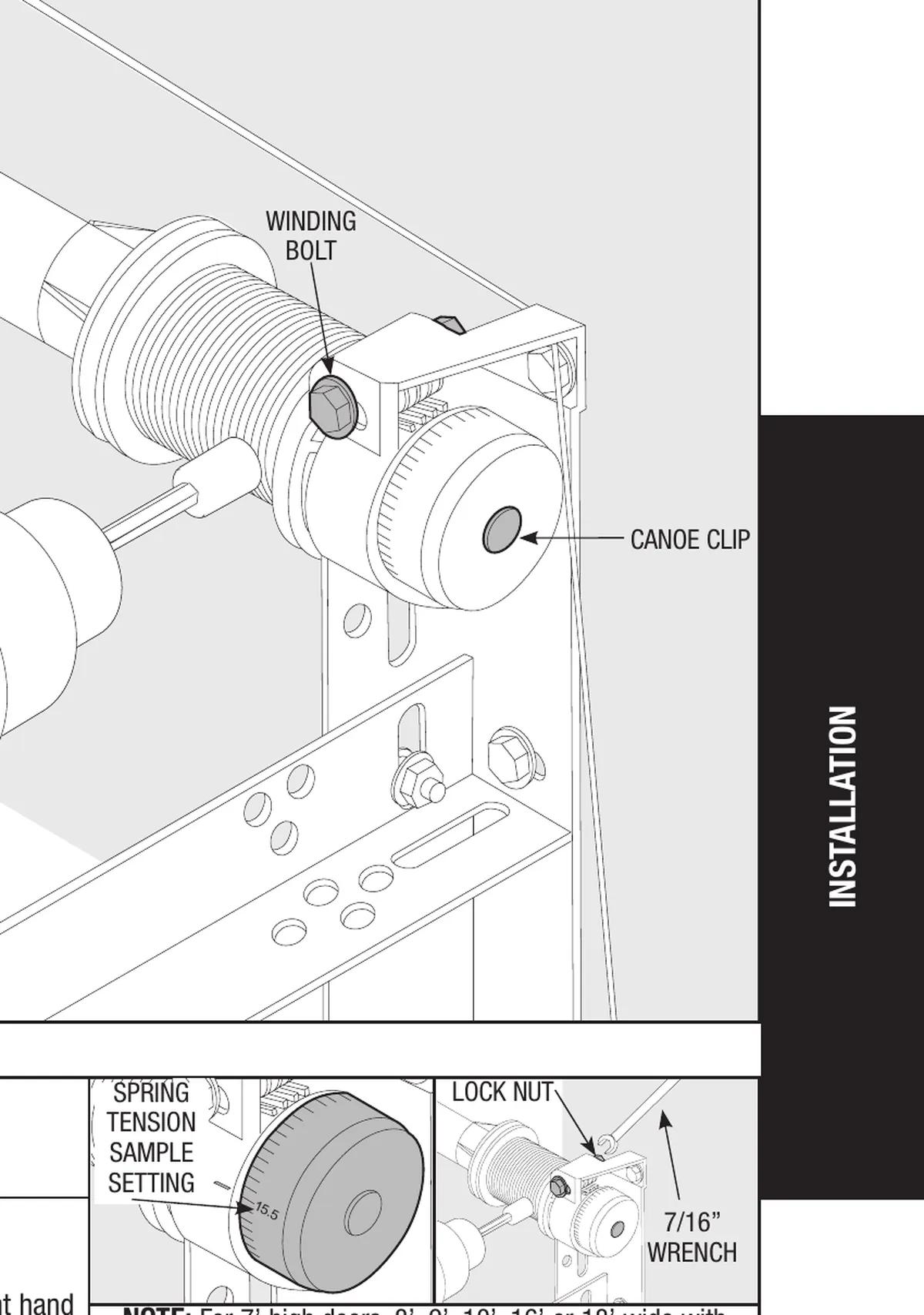
We list those numbers so you can check a tech's work, not to wind it yourself. The factory notice says it straight. A powerful spring releasing its energy suddenly can cause severe, even fatal, injury.
Why replacement springs look different
People often call us worried that a new TorqueMaster spring is shorter than the old one. Wayne Dalton expects that. Their FAQ explains the switch from oil tempered spring to a high tensile music wire spring, so a replacement can look different from the old spring and still be correct. Some newer springs also no longer need the inner rod, and the old rod can be thrown out.
Door width does not decide the spring. The springs float inside the tube, so the tube has to be emptied of every broken piece before a new one goes in.
Our view on TorqueMaster
Our honest view is mixed. The enclosed tube keeps broken spring ends contained, which is a real safety plus. But you cannot see a broken spring. The gears and counter parts also wear. When a TorqueMaster door is old and parts are getting hard to source, converting to a standard torsion system with open springs and steel bearing plates is often the better long term repair. Ask us to quote both.
Signs and next steps
The door will not lift. The opener strains. One cable hangs slack. Those all point at a broken spring inside the tube. Keep the door shut and call (778) 873-7282. See broken spring repair, the cable off drum page and torsion vs extension springs. For another closed system, read the Clopay EZ-SET guide.